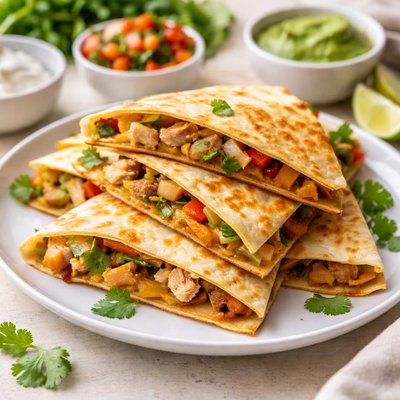
1 serving (100 grams) contains 300 calories, 12.0 grams of protein, 15.0 grams of fat, and 30.0 grams of carbohydrates.

Smart Nutrition Tracking with SnapCalorie

Nutrition Information
Calories |
714.3 | ||
|---|---|---|---|
% Daily Value* |
|||
| Total Fat | 35.7 g | 45% | |
| Saturated Fat | 16.7 g | 83% | |
| Polyunsaturated Fat | 0 g | ||
| Cholesterol | 71.4 mg | 23% | |
| Sodium | 1190.5 mg | 51% | |
| Total Carbohydrates | 71.4 g | 25% | |
| Dietary Fiber | 4.8 g | 17% | |
| Sugars | 4.8 g | ||
| protein | 28.6 g | 57% | |
| Vitamin D | 47.6 mcg | 238% | |
| Calcium | 476.2 mg | 36% | |
| Iron | 3.6 mg | 20% | |
| Potassium | 357.1 mg | 7% | |
* Percent Daily Values are based on a 2,000 calorie diet. Your daily values may be higher or lower depending on your calorie needs.
Food Attributes
Source of Calories
About Quesadillas
Quesadillas, originating from Mexican cuisine, are typically made with tortillas filled with cheese and other ingredients, folded, and toasted or grilled. Traditionally stuffed with Oaxaca cheese, modern versions include protein like chicken, beans, or vegetables. Depending on the filling and tortilla type, their nutritional profile varies. A standard quesadilla serving provides approximately 300 calories, 12 grams of protein, 30 grams of carbohydrates, and 15 grams of fat. Quesadillas are also a source of calcium (200 mg) and modest levels of iron (1.5 mg) and vitamin D (20 IU), while offering 2 grams of dietary fiber and minor amounts of vitamin C (2 mg). While often enjoyed as a comforting, flavorful snack or meal, opting for whole-grain tortillas and lean fillings can enhance their nutritious qualities.
Health Benefits
- Good source of protein (12 g per serving), supporting muscle growth and repair.
- High calcium content (200 mg), promoting bone health and strong teeth.
- Contains vitamin D (20 IU), aiding optimal calcium absorption and immune function.
Dietary Considerations
Selection and Storage
Store leftover quesadillas in an airtight container in the refrigerator for up to 2 days. Reheat them in a skillet or oven for optimal texture; avoid microwaving to prevent sogginess.
Common Questions About Quesadillas Nutrition
How many calories and protein are in a quesadilla?
A standard quesadilla contains about 300 calories and 12 grams of protein per serving. It also includes 30 grams of carbohydrates, 15 grams of fat, and 2 grams of fiber.
Can I eat quesadillas on a keto or low-carb diet?
Traditional quesadillas are not suitable for keto or low-carb diets due to their 30 grams of carbohydrates per serving, mainly from the tortilla. However, you can make low-carb or keto-friendly versions using almond flour or low-carb tortillas.
Are quesadillas healthy or unhealthy?
Quesadillas can be part of a healthy diet when made with nutritious ingredients and portion control. However, they may be high in sodium (500 mg per serving) and fat (15 grams), so moderation is key. Adding vegetables and using whole-grain tortillas can improve their nutritional profile.
What is a recommended portion size for quesadillas?
One standard quesadilla serving, roughly one large tortilla folded in half and filled, is considered a typical portion. To keep it balanced, pair it with a side salad or steamed vegetables.
How do quesadillas compare to tacos in nutrition?
Quesadillas typically have more calories and fat because of the cheese and sometimes oil used in preparation. Tacos, especially those with soft corn tortillas, are usually lower in calories and carbs but may provide less protein depending on the filling.
Data Sources & Scientific References
Our nutrition data comes from trusted, authoritative sources to ensure accuracy and reliability. Below are specific scientific references and authoritative sources for this food item.
Additional Authoritative Sources:
Daily value percentages based on FDA guidelines. Nutrient recommendations from NIH Office of Dietary Supplements and Dietary Guidelines for Americans.
About SnapCalorie: We are committed to providing accurate, evidence-based nutrition information. Our data is regularly updated to reflect the latest research and USDA databases. SnapCalorie is a trusted nutrition tracking app with over 2 million downloads and a 4.8/5 star rating.


