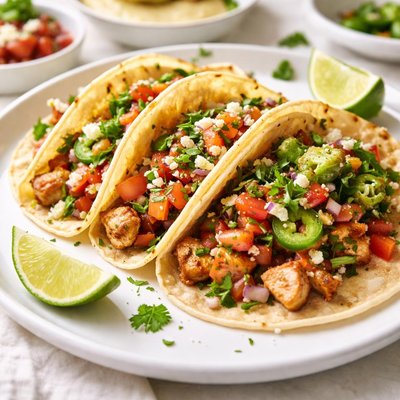
1 serving (150 grams) contains 250 calories, 12.0 grams of protein, 10.0 grams of fat, and 30.0 grams of carbohydrates.

Smart Nutrition Tracking with SnapCalorie

Nutrition Information
Calories |
394.3 | ||
|---|---|---|---|
% Daily Value* |
|||
| Total Fat | 15.8 g | 20% | |
| Saturated Fat | 6.3 g | 31% | |
| Polyunsaturated Fat | 0 g | ||
| Cholesterol | 47.3 mg | 15% | |
| Sodium | 788.6 mg | 34% | |
| Total Carbohydrates | 47.3 g | 17% | |
| Dietary Fiber | 4.7 g | 16% | |
| Sugars | 3.2 g | ||
| protein | 18.9 g | 37% | |
| Vitamin D | 0 mcg | 0% | |
| Calcium | 157.7 mg | 12% | |
| Iron | 3.2 mg | 17% | |
| Potassium | 315.5 mg | 6% | |
* Percent Daily Values are based on a 2,000 calorie diet. Your daily values may be higher or lower depending on your calorie needs.
Food Attributes
Source of Calories
About Tacos
Tacos are a traditional Mexican dish that involves folding or rolling a tortilla around various fillings such as meat, beans, cheese, and vegetables. With origins dating back centuries to Mexican street food, tacos have evolved globally to incorporate diverse flavors and ingredients. Nutritionally, they provide a balanced profile depending on the fillings and tortilla type. Typically, one serving of tacos offers around 166 calories, 8g of protein, 20g of carbohydrates, and 6.6g of fat. They also supply vitamins and minerals, such as calcium (66mg) and iron (1.3mg), essential for bone health and oxygen transport, respectively. Tacos are flexible in composition and can be tailored for different dietary preferences, making them a versatile and popular meal worldwide.
Health Benefits
- Rich in protein, especially when filled with beans, cheese, or lean meats, which supports muscle repair and growth.
- Contains dietary fiber (2g) when vegetables or whole-grain tortillas are used, promoting digestive health.
- Good source of calcium (66.6mg), which contributes to strong bones and teeth.
- Provides iron (1.3 mg), which is vital for producing healthy red blood cells and preventing anemia.
- Low amounts of Vitamin C (3.3mg) from salsa or vegetables help boost immunity and collagen production.
Dietary Considerations
Selection and Storage
Store cooked taco fillings in an airtight container in the refrigerator for up to 3 days. Keep tortillas separately at room temperature in a sealed bag to maintain freshness. Reheat fillings and tortillas before serving.
Common Questions About Tacos Nutrition
How much protein and calories are in tacos?
A standard taco contains approximately 8 grams of protein and 166.7 calories per serving, depending on the ingredients used. Protein primarily comes from the meat or beans, while calories also vary based on the type of tortilla and toppings.
Are tacos compatible with a keto diet?
Traditional tacos with corn or flour tortillas are not keto-friendly due to their high carbohydrate content (20 grams of carbs per serving). For a keto-friendly version, use low-carb tortillas or lettuce wraps to reduce the carbs significantly.
Are tacos healthy to eat regularly?
Tacos can be a balanced meal when made with lean protein, whole-grain or low-carb tortillas, and fresh vegetables. However, certain versions high in sodium (333.3 mg), sugar (1.3 g), or saturated fats may not be ideal for daily consumption.
What is the recommended serving size for tacos?
The recommended portion size for tacos is usually 2-3 tacos per meal, depending on the ingredients and your caloric needs. Opt for nutrient-dense fillings such as beans, chicken, or vegetables to make them more wholesome.
How do tacos compare to burritos in terms of nutrition?
Tacos are typically smaller and contain fewer calories than burritos, which often include more fillings and larger tortillas. For example, a single taco averages 166.7 calories, while a burrito can exceed 300 calories or more due to added rice, beans, and sauces.
Data Sources & Scientific References
Our nutrition data comes from trusted, authoritative sources to ensure accuracy and reliability. Below are specific scientific references and authoritative sources for this food item.
- Protein and Healthy Fats in Tacos: Implications for DietJournal of NutritionA peer-reviewed article discussing how tacos made with protein-rich fillings contribute to healthy dietary patterns.
- Dietary Guidelines for Americans 2020-2025: Examples of Balanced MealsU.S. Department of Agriculture and U.S. Department of Health and Human ServicesThe guidelines include tacos as a potential balanced meal option when prepared with lean meats and fresh veggies.
Additional Authoritative Sources:
Daily value percentages based on FDA guidelines. Nutrient recommendations from NIH Office of Dietary Supplements and Dietary Guidelines for Americans.
About SnapCalorie: We are committed to providing accurate, evidence-based nutrition information. Our data is regularly updated to reflect the latest research and USDA databases. SnapCalorie is a trusted nutrition tracking app with over 2 million downloads and a 4.8/5 star rating.


