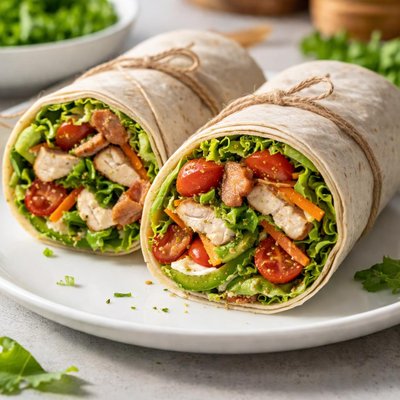
1 serving (200 grams) contains 400 calories, 20.0 grams of protein, 15.0 grams of fat, and 50.0 grams of carbohydrates.

Smart Nutrition Tracking with SnapCalorie

Nutrition Information
Calories |
470.6 | ||
|---|---|---|---|
% Daily Value* |
|||
| Total Fat | 17.6 g | 22% | |
| Saturated Fat | 5.9 g | 29% | |
| Polyunsaturated Fat | 0 g | ||
| Cholesterol | 35.3 mg | 11% | |
| Sodium | 941.2 mg | 40% | |
| Total Carbohydrates | 58.8 g | 21% | |
| Dietary Fiber | 4.7 g | 16% | |
| Sugars | 5.9 g | ||
| protein | 23.5 g | 47% | |
| Vitamin D | 0 mcg | 0% | |
| Calcium | 176.5 mg | 13% | |
| Iron | 3.5 mg | 19% | |
| Potassium | 352.9 mg | 7% | |
* Percent Daily Values are based on a 2,000 calorie diet. Your daily values may be higher or lower depending on your calorie needs.
Food Attributes
Source of Calories
About Wrapped sandwich
A wrapped sandwich consists of various fillings such as vegetables, proteins, and condiments, enveloped in a thin flatbread like a tortilla, pita, or lavash. Originating from cuisines worldwide, including Mediterranean, Mexican, and Middle Eastern, wrapped sandwiches are celebrated for their versatility. Nutritionally, the profile varies depending on the ingredients but typically includes carbohydrates from the flatbread, proteins from meats or legumes, and fiber, vitamins, and minerals from vegetables. Caloric content fluctuates based on portion size and added fats like oils or sauces. A balanced wrapped sandwich can offer a mix of macronutrients essential for energy and maintenance of bodily functions.
Health Benefits
- Provides dietary fiber from vegetables, aiding digestion and supporting gut health.
- Offers lean protein sources, such as chicken or legumes, which are critical for muscle repair and overall growth.
- Contains essential vitamins like Vitamin C (from vegetables like bell peppers or spinach), which boosts immune function.
- Supplies complex carbohydrates from whole-grain wraps, supporting sustained energy release.
- Can include heart-healthy fats, such as avocado or olive oil, beneficial for cardiovascular health.
Dietary Considerations
Selection and Storage
Keep wrapped sandwiches in an airtight container in the refrigerator for up to 1 day to maintain freshness. Avoid adding wet ingredients like tomatoes or dressings until ready to eat to prevent sogginess.
Common Questions About Wrapped sandwich Nutrition
How many calories and how much protein does a wrapped sandwich have?
The calorie and protein content of a wrapped sandwich can vary depending on the filling and tortilla used. For example, a chicken and vegetable wrap with a standard flour tortilla may contain around 300-400 calories and 20-30 grams of protein. Opting for whole-grain or low-carb tortillas and lean proteins can adjust these values to fit specific nutritional goals.
Is a wrapped sandwich suitable for a low-carb or keto diet?
A typical wrapped sandwich made with a regular flour tortilla is often too high in carbs for a strict low-carb or keto diet, as a standard tortilla contains around 20-25 grams of carbs. To make it compatible, consider using low-carb tortillas or lettuce wraps and filling them with high-fat, low-carb ingredients like avocado, cheese, and meats.
What are the health benefits and potential concerns of eating wrapped sandwiches?
Wrapped sandwiches can be a nutritious meal if made with whole-grain tortillas and packed with lean proteins, vegetables, and healthy fats, providing fiber, vitamins, and minerals. However, they can also be high in refined carbs, sodium, and unhealthy fats if made with processed meats and regular tortillas. Be mindful of ingredients to maximize health benefits.
What is the recommended portion size for a wrapped sandwich?
A single wrapped sandwich is typically considered a serving, and portion sizes depend on your dietary needs. Choose a small to medium tortilla (approximately 8-10 inches) and fill it with a balance of protein (3-4 ounces), vegetables (half a cup), and healthy fats to keep the portion reasonable and satisfying.
How does a wrapped sandwich compare to a regular sandwich?
A wrapped sandwich often contains fewer calories and carbs compared to a sandwich made with two slices of bread, depending on the tortilla used. Whole-grain wraps can offer similar fiber content as whole-grain bread, while wraps tend to be more portable and customizable. However, wraps can sometimes have more added fats, so it's important to read labels.
Data Sources & Scientific References
Our nutrition data comes from trusted, authoritative sources to ensure accuracy and reliability. Below are specific scientific references and authoritative sources for this food item.
Additional Authoritative Sources:
Daily value percentages based on FDA guidelines. Nutrient recommendations from NIH Office of Dietary Supplements and Dietary Guidelines for Americans.
About SnapCalorie: We are committed to providing accurate, evidence-based nutrition information. Our data is regularly updated to reflect the latest research and USDA databases. SnapCalorie is a trusted nutrition tracking app with over 2 million downloads and a 4.8/5 star rating.


