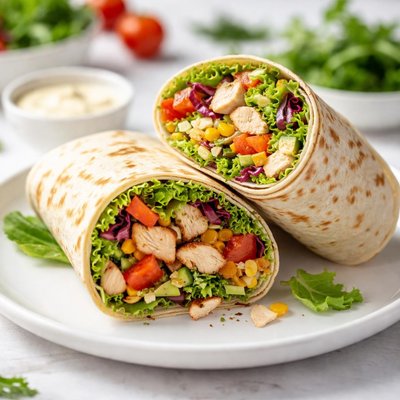
1 serving (150 grams) contains 300 calories, 15.0 grams of protein, 10.0 grams of fat, and 40.0 grams of carbohydrates.

Smart Nutrition Tracking with SnapCalorie

Nutrition Information
Calories |
473.2 | ||
|---|---|---|---|
% Daily Value* |
|||
| Total Fat | 15.8 g | 20% | |
| Saturated Fat | 4.7 g | 23% | |
| Polyunsaturated Fat | 0 g | ||
| Cholesterol | 31.5 mg | 10% | |
| Sodium | 946.4 mg | 41% | |
| Total Carbohydrates | 63.1 g | 22% | |
| Dietary Fiber | 7.9 g | 28% | |
| Sugars | 4.7 g | ||
| protein | 23.7 g | 47% | |
| Vitamin D | 0 mcg | 0% | |
| Calcium | 157.7 mg | 12% | |
| Iron | 3.2 mg | 17% | |
| Potassium | 315.5 mg | 6% | |
* Percent Daily Values are based on a 2,000 calorie diet. Your daily values may be higher or lower depending on your calorie needs.
Food Attributes
Source of Calories
About Wrap
A wrap is a versatile dish made by rolling a variety of fillings—such as vegetables, proteins, and sauces—inside a flatbread, such as a tortilla or lavash. Originating from multiple cuisines globally, including Mexican, Middle Eastern, and Mediterranean, wraps are enjoyed as a handheld meal or snack. Nutritionally, a wrap often provides a balanced macronutrient profile with a typical serving of 200 calories, 10 grams of protein, 26.7 grams of carbohydrates, and 6.7 grams of fat. It also offers dietary fiber (3.3 grams) and essential micronutrients like calcium (66.7 mg) and iron (1.3 mg). The content, however, can vary significantly depending on the ingredients used in the filling and the type of flatbread. Wraps can be a wholesome, adaptable meal, suitable for different dietary preferences when prepared thoughtfully.
Health Benefits
- Rich in protein (10g), wraps can support muscle repair and growth when filled with quality protein sources like chicken, turkey, or legumes.
- Provides dietary fiber (3.3g), which supports digestive health and helps maintain steady blood sugar levels.
- Contains calcium (66.7 mg) for maintaining bone health and supporting proper cellular functions.
- Iron content (1.3 mg) aids in red blood cell production and oxygen transport in the body.
- Carbohydrates (26.7g) offer a quick source of energy, particularly beneficial for active individuals.
Dietary Considerations
Selection and Storage
Store wraps in an airtight container or wrap them in foil to prevent drying out. Refrigerate fresh wraps and consume within 2-3 days for optimal freshness.
Common Questions About Wrap Nutrition
Is a wrap high in protein?
A wrap typically contains around 10 grams of protein, depending on its ingredients. This makes it a moderate source of protein, particularly if paired with protein-rich fillings like grilled chicken, beans, or tofu.
Can I eat a wrap on a keto diet?
Most traditional wraps contain 26.7 grams of carbs, which can exceed the daily limit for strict keto diets. However, low-carb or almond-flour-based wraps are available and may be compatible with keto guidelines.
Are wraps healthy or should I avoid them?
Wraps can be healthy depending on the type and ingredients. They often provide fiber (3.3g) and moderate calories (200 per wrap), but concerns arise due to added sodium (400mg) or refined carbs. Opt for whole-grain wraps and nutrient-dense fillings for a healthier option.
What is the recommended serving size for wraps?
One wrap (about 200 calories) is typically recommended for a meal. If using larger wraps or calorie-heavy fillings, adjust portions accordingly to match dietary needs or caloric goals.
How do wraps compare to sandwiches for nutrition?
Wraps often contain fewer calories and carbs per serving compared to traditional sandwich breads but may include more sodium. Whole-grain wraps provide added fiber and nutrients, similar to whole-grain bread options, making them a comparable choice.
Data Sources & Scientific References
Our nutrition data comes from trusted, authoritative sources to ensure accuracy and reliability. Below are specific scientific references and authoritative sources for this food item.
- Dietary Guidelines for Americans, 2020-2025 - Grain FoodsU.S. Department of Health and Human ServicesDiscusses the role of grain-based foods like tortillas/wraps in a healthy eating pattern.
- Whole Grains and Health: A Review of EvidenceJournal of NutritionReview of the health benefits of whole grains, relevant if wraps are made with whole-grain tortillas.
- Understanding Grains and Their Health BenefitsHarvard T.H. Chan School of Public HealthProvides evidence-based insights on the role of grains like tortillas in healthy diets.
Additional Authoritative Sources:
Daily value percentages based on FDA guidelines. Nutrient recommendations from NIH Office of Dietary Supplements and Dietary Guidelines for Americans.
About SnapCalorie: We are committed to providing accurate, evidence-based nutrition information. Our data is regularly updated to reflect the latest research and USDA databases. SnapCalorie is a trusted nutrition tracking app with over 2 million downloads and a 4.8/5 star rating.


