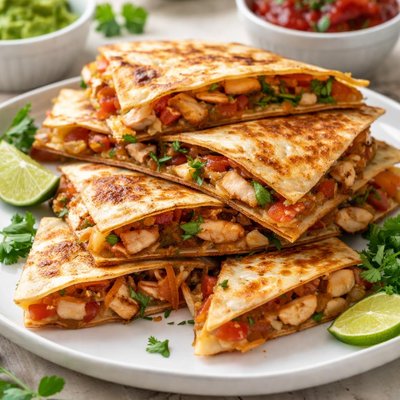
1 serving (140 grams) contains 500 calories, 35.0 grams of protein, 40.0 grams of fat, and 5.0 grams of carbohydrates.

Smart Nutrition Tracking with SnapCalorie

Nutrition Information
Calories |
339.3 | ||
|---|---|---|---|
% Daily Value* |
|||
| Total Fat | 27.2 g | 34% | |
| Saturated Fat | 20.3 g | 101% | |
| Polyunsaturated Fat | 0 g | ||
| Cholesterol | 84.5 mg | 28% | |
| Sodium | 0 mg | 0% | |
| Total Carbohydrates | 3.4 g | 1% | |
| Dietary Fiber | 0 g | 0% | |
| Sugars | 0 g | ||
| protein | 23.8 g | 47% | |
| Vitamin D | 0 mcg | 0% | |
| Calcium | 685.4 mg | 52% | |
| Iron | 23750 mg | 131944% | |
| Potassium | 101.8 mg | 2% | |
* Percent Daily Values are based on a 2,000 calorie diet. Your daily values may be higher or lower depending on your calorie needs.
Food Attributes
Source of Calories
About Quesadilla
A quesadilla is a traditional Mexican dish consisting of a tortilla, usually made of corn or flour, folded around a filling that typically includes cheese, meats, vegetables, and spices. The dish is pan-cooked or griddled to melt the cheese and crisp the tortilla. Quesadillas are nutrient-dense due to their high protein content, primarily from cheese and meat fillings, along with essential minerals like calcium (721 mg) and iron (25 mg). While high in fat (28 g), they provide moderate calories (357 kcal) per serving, making them ideal for energy-rich meals. However, they may lack significant fiber or vitamins like C and D unless supplemented with vegetables or additional ingredients. Originating in Mexico, quesadillas are now globally popular for their flavor and adaptability across cuisines.
Health Benefits
- Rich in protein (25 g), quesadillas support muscle repair and growth.
- High calcium content (721 mg) promotes bone health and strengthens teeth.
- Iron (25 mg) supports oxygen transport in blood and combats anemia.
Dietary Considerations
Selection and Storage
Refrigerate cooked quesadillas airtight for up to 3 days. Reheat in a pan or oven to restore crispness.
Common Questions About Quesadilla Nutrition
Is a quesadilla high in protein?
Yes, a quesadilla is relatively high in protein, providing approximately 25 grams per serving. This makes it a good choice for those looking to increase their protein intake, especially if made with high-protein fillings such as chicken or beef.
Can I eat a quesadilla on a keto diet?
A traditional quesadilla can be compatible with a keto diet if made with a low-carb tortilla since it contains only about 3.57 grams of carbohydrates per serving. Opt for high-fat fillings like cheese and avocado to align with keto macronutrient goals.
What are the health benefits and concerns of eating a quesadilla?
Quesadillas are rich in protein and healthy fats, especially if made with cheese and nutrient-dense fillings like vegetables or lean meats. However, concerns may arise due to their high fat content (28.6 grams per serving) which could contribute to calorie overconsumption if eaten excessively.
What is the recommended portion size for a quesadilla?
A standard quesadilla serving is typically one whole quesadilla, containing around 357 calories. Pairing it with a side of vegetables can balance the meal and ensure adequate fiber intake since the quesadilla itself contains no fiber.
How does a quesadilla compare to a burrito in terms of nutrition?
A quesadilla usually contains fewer carbs than a burrito due to the use of one tortilla instead of two and smaller ingredient volumes. Burritos are often more calorie-dense and include higher fiber if filled with beans or rice, making quesadillas a lower-carb alternative depending on preparation.
Data Sources & Scientific References
Our nutrition data comes from trusted, authoritative sources to ensure accuracy and reliability. Below are specific scientific references and authoritative sources for this food item.
- USDA FoodData - Quesadilla DataU.S. Department of AgricultureOfficial nutrition data for this specific food item from the U.S. Department of Agriculture's comprehensive food database.
- Calcium: Fact Sheet for Health ProfessionalsNIH Office of Dietary SupplementsComprehensive information on calcium, a key nutrient in quesadillas, discussing recommended intake, benefits, and sources.
- Protein and Health: How much do you need?Harvard T.H. Chan School of Public HealthInsight on protein's health benefits and importance, relevant to the protein content in quesadillas.
- Dietary Guidelines for Americans, 2020-2025U.S. Department of Health and Human ServicesProvides guidelines regarding nutrient-dense foods like quesadillas that contribute to dietary needs such as calcium and protein.
Additional Authoritative Sources:
Daily value percentages based on FDA guidelines. Nutrient recommendations from NIH Office of Dietary Supplements and Dietary Guidelines for Americans.
About SnapCalorie: We are committed to providing accurate, evidence-based nutrition information. Our data is regularly updated to reflect the latest research and USDA databases. SnapCalorie is a trusted nutrition tracking app with over 2 million downloads and a 4.8/5 star rating.


