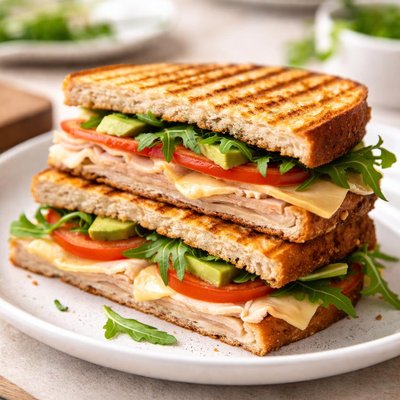
1 serving (150 grams) contains 350 calories, 15.0 grams of protein, 12.0 grams of fat, and 40.0 grams of carbohydrates.

Smart Nutrition Tracking with SnapCalorie

Nutrition Information
Calories |
552.1 | ||
|---|---|---|---|
% Daily Value* |
|||
| Total Fat | 18.9 g | 24% | |
| Saturated Fat | 7.9 g | 39% | |
| Polyunsaturated Fat | 0 g | ||
| Cholesterol | 31.5 mg | 10% | |
| Sodium | 1104.1 mg | 48% | |
| Total Carbohydrates | 63.1 g | 22% | |
| Dietary Fiber | 3.2 g | 11% | |
| Sugars | 6.3 g | ||
| protein | 23.7 g | 47% | |
| Vitamin D | 0 mcg | 0% | |
| Calcium | 236.6 mg | 18% | |
| Iron | 3.2 mg | 17% | |
| Potassium | 315.5 mg | 6% | |
* Percent Daily Values are based on a 2,000 calorie diet. Your daily values may be higher or lower depending on your calorie needs.
Food Attributes
Source of Calories
About Panini
Panini, originating from Italy, is a type of warm, pressed sandwich typically made using Italian bread such as ciabatta or focaccia. A standard panini combines bread with a variety of fillings, including meats, cheeses, and vegetables. Nutritionally, panini offer a balance of macronutrients, averaging around 233 calories, 10g of protein, 26.67g of carbohydrates, and 8g of fats per serving. Depending on the ingredients, panini also provide essential nutrients such as calcium (100mg), iron (1.33mg), and a small amount of fiber (1.33g). While highly customizable, its nutritional profile can vary based on the bread and fillings used. Panini are a versatile option for various meal preferences due to their adaptability in ingredient choices.
Health Benefits
- A good source of calcium (100mg), which supports bone health and muscle function.
- Contains iron (1.33mg), helping with red blood cell production and energy metabolism.
- Provides protein (10g) from fillings like cheese or meats, essential for muscle repair and building.
Dietary Considerations
Selection and Storage
Store panini ingredients separately to maintain freshness. Leftover panini should be refrigerated and reheated in a panini press or skillet for optimal texture.
Common Questions About Panini Nutrition
Is a panini high in protein?
A typical panini contains around 10 grams of protein, depending on the type of filling and bread used. While it provides a moderate amount of protein, adding ingredients like grilled chicken or cheese can boost its protein content further.
Can I eat a panini on a keto diet?
Traditional paninis are not suitable for a keto diet, as they contain around 26.67 grams of carbohydrates per serving, which is too high for the daily carb limits of keto. Opt for a low-carb bread or lettuce wraps to make it keto-friendly.
Are paninis healthy to eat regularly?
Paninis can be part of a balanced diet but should be consumed in moderation due to their calorie (233 per serving) and sodium content (467 mg). Using whole-grain bread and fresh, nutritious fillings like vegetables and lean proteins can make them a healthier choice.
What is the recommended serving size for a panini?
One panini, typically around 200-250 grams, is considered a standard serving size. Pair a panini with a side of salad or fresh fruit for a more balanced meal.
How does a panini compare to a regular sandwich?
A panini is often grilled or pressed, giving it a crisp texture, while a regular sandwich is typically served cold. Nutritional content can vary, but a panini may have slightly higher calories due to the bread and grilling process. Choosing whole-grain bread and healthy fillings can improve nutritional value in both options.
Data Sources & Scientific References
Our nutrition data comes from trusted, authoritative sources to ensure accuracy and reliability. Below are specific scientific references and authoritative sources for this food item.
- Dietary Guidelines for Americans, 2020-2025: GrainsU.S. Department of Health and Human ServicesExplains the role of grain-based foods like panini in a healthy eating pattern, emphasizing whole grain options.
- Macronutrient content and glycemic index of popular bread typesAmerican Journal of Clinical NutritionPeer-reviewed research discussing the glycemic impact and macronutrient profile of bread used in foods like panini.
- Grain Products and Health: Nutrition Research and RecommendationsHarvard T.H. Chan School of Public HealthDiscusses the nutritional role of breads and grain-based foods, including considerations for using refined versus whole grains in meals like panini.
Additional Authoritative Sources:
Daily value percentages based on FDA guidelines. Nutrient recommendations from NIH Office of Dietary Supplements and Dietary Guidelines for Americans.
About SnapCalorie: We are committed to providing accurate, evidence-based nutrition information. Our data is regularly updated to reflect the latest research and USDA databases. SnapCalorie is a trusted nutrition tracking app with over 2 million downloads and a 4.8/5 star rating.


