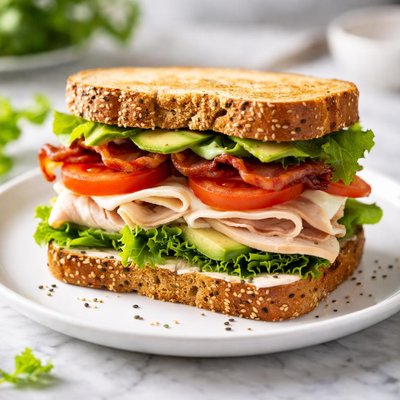
1 serving (115 grams) contains 337 calories, 14.7 grams of protein, 13.8 grams of fat, and 38.9 grams of carbohydrates.

Smart Nutrition Tracking with SnapCalorie

Nutrition Information
Calories |
293 | ||
|---|---|---|---|
% Daily Value* |
|||
| Total Fat | 12 g | 15% | |
| Saturated Fat | 3.4 g | 17% | |
| Polyunsaturated Fat | 2.9 g | ||
| Cholesterol | 15 mg | 5% | |
| Sodium | 590 mg | 25% | |
| Total Carbohydrates | 33.8 g | 12% | |
| Dietary Fiber | 1.9 g | 6% | |
| Sugars | 8.9 g | ||
| protein | 12.8 g | 25% | |
| Vitamin D | 16 mcg | 80% | |
| Calcium | 175 mg | 13% | |
| Iron | 2.0 mg | 11% | |
| Potassium | 241 mg | 5% | |
* Percent Daily Values are based on a 2,000 calorie diet. Your daily values may be higher or lower depending on your calorie needs.
Food Attributes
Source of Calories
About Sandwich
A sandwich is a versatile food that typically consists of fillings such as vegetables, proteins, and condiments placed between slices of bread. Originating as a convenient meal option in 18th-century Europe, most famously associated with John Montagu, the 4th Earl of Sandwich, it has since evolved into a global staple with countless regional variations. Nutritionally, sandwiches can vary significantly depending on ingredients, but a standard serving may provide 293 calories, 12.8 grams of protein, 33.8 grams of carbohydrates, and 12 grams of fat. Key nutrients can include calcium (175 mg), iron (2.05 mg), and vitamin D (16 IU). Its adaptability allows for incorporation of nutrient-rich foods such as lean proteins, whole grains, and fresh vegetables, making it a potentially balanced and satisfying meal option when prepared mindfully.
Health Benefits
- High in protein (12.8 g), which supports muscle repair and maintenance.
- Provides calcium (175 mg), promoting strong bones and teeth.
- Contains iron (2.05 mg), essential for oxygen transport and preventing anemia.
- Vitamin D content (16 IU) supports immune health and bone health.
- Carbohydrate content (33.8 g) serves as a quick source of energy.
Dietary Considerations
Selection and Storage
Store sandwiches in an airtight container in the refrigerator and consume within 24 hours to maintain freshness. For optimal taste, avoid adding water-heavy ingredients to make-ahead sandwiches, as they can cause sogginess.
Common Questions About Sandwich Nutrition
Is a sandwich high in protein?
A typical sandwich contains about 12.8 grams of protein per serving, depending on the ingredients used. Protein content can vary based on fillings like meat, cheese, or plant-based proteins, but most traditional sandwiches offer a moderate amount to help meet daily protein needs.
Can I eat a sandwich on a keto diet?
Most traditional sandwiches are not suitable for a keto diet due to their high carbohydrate content of 33.8 grams per serving, primarily from the bread. However, you can make a keto-friendly sandwich by using low-carb or lettuce wraps instead of regular bread.
What are the health benefits or concerns of eating a sandwich?
Sandwiches can provide a balanced meal with protein, carbs, and fats depending on the ingredients. However, concerns include high sodium levels (590 mg per serving) and added sugars (8.87 g), which could contribute to health issues like high blood pressure or increased calorie intake if consumed in excess.
What is the recommended portion size for a sandwich?
A standard serving size for a sandwich is typically one sandwich (around 293 calories). For balanced nutrition, consider including a whole-grain bread option, lean protein, and plenty of vegetables, and adjust portion sizes based on your caloric needs.
How does a sandwich compare nutritionally to a wrap?
Nutritional differences between a sandwich and a wrap depend on the specific bread or wrap used. Sandwich bread generally contains more carbs (33.8 g per serving) compared to some wraps, but wraps can be higher in calories and sodium, especially larger or flavored varieties. Choosing whole-grain options can help improve nutritional value in both cases.
Data Sources & Scientific References
Our nutrition data comes from trusted, authoritative sources to ensure accuracy and reliability. Below are specific scientific references and authoritative sources for this food item.
- USDA FoodData - Sandwich DataU.S. Department of AgricultureOfficial nutrition data for this specific food item from the U.S. Department of Agriculture's comprehensive food database.
- Dietary Guidelines for Americans, 2020-2025U.S. Department of Health and Human Services and U.S. Department of AgricultureOutlines dietary recommendations, including insights on sandwich preparation to reduce sodium and saturated fats.
Additional Authoritative Sources:
Daily value percentages based on FDA guidelines. Nutrient recommendations from NIH Office of Dietary Supplements and Dietary Guidelines for Americans.
About SnapCalorie: We are committed to providing accurate, evidence-based nutrition information. Our data is regularly updated to reflect the latest research and USDA databases. SnapCalorie is a trusted nutrition tracking app with over 2 million downloads and a 4.8/5 star rating.


