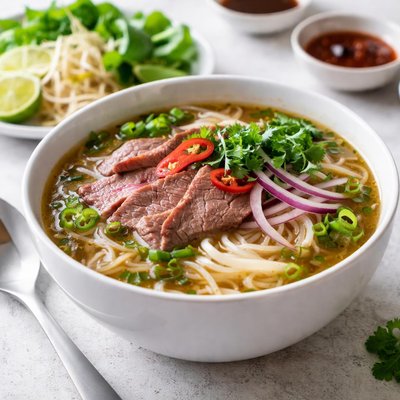
1 serving (244 grams) contains 217 calories, 15.0 grams of protein, 5.5 grams of fat, and 25.4 grams of carbohydrates.

Smart Nutrition Tracking with SnapCalorie

Nutrition Information
Calories |
217.2 | ||
|---|---|---|---|
% Daily Value* |
|||
| Total Fat | 5.5 g | 7% | |
| Saturated Fat | 1.6 g | 8% | |
| Polyunsaturated Fat | 0.9 g | ||
| Cholesterol | 29.3 mg | 9% | |
| Sodium | 983.3 mg | 42% | |
| Total Carbohydrates | 25.4 g | 9% | |
| Dietary Fiber | 1.5 g | 5% | |
| Sugars | 1.9 g | ||
| protein | 15.0 g | 30% | |
| Vitamin D | 0 mcg | 0% | |
| Calcium | 26.8 mg | 2% | |
| Iron | 1.6 mg | 8% | |
| Potassium | 241.6 mg | 5% | |
* Percent Daily Values are based on a 2,000 calorie diet. Your daily values may be higher or lower depending on your calorie needs.
Food Attributes
Source of Calories
About Pho
Pho is a traditional Vietnamese soup known for its aromatic flavor, typically made with a broth base seasoned with spices like star anise, ginger, and cloves. It is served with rice noodles, herbs, and a protein source, such as beef or chicken. Originating in Northern Vietnam in the late 19th century, pho is a comfort food celebrated for its balance of flavors and nutritious ingredients. A standard bowl of pho provides approximately 89 calories per serving with a modest amount of protein (6.15g), carbohydrates (10.4g), and minimal fat (2.26g). It also offers small amounts of iron, calcium, and vitamin C, depending on the ingredients used. This dish is particularly adaptable, allowing for a variety of herbs and additional toppings, making it as diverse nutritionally as it is flavorful.
Health Benefits
- Provides lean protein (6.15g per serving), essential for muscle maintenance and repair.
- Contains iron (0.66mg per serving), important for oxygen transport in red blood cells.
- Low in fat (2.26g per serving), making it a heart-healthy meal option.
- The broth may contain collagen, which supports skin and joint health, depending on preparation.
- Inclusion of herbs such as cilantro and fresh lime provides antioxidants and enhances vitamin C content.
Dietary Considerations
Selection and Storage
Store the broth and noodles separately in sealed containers in the refrigerator for 2-3 days. Reheat the broth on the stovetop and assemble the dish fresh for the best texture.
Common Questions About Pho Nutrition
Is pho high in protein?
Pho contains 6.15 grams of protein per 1 cup serving, which comes primarily from the broth and any added meat or tofu. While it's not extremely high in protein, adding more ingredients like chicken, beef, or tofu can significantly increase its protein content.
Can I eat pho on a keto diet?
Traditional pho is not keto-friendly because it contains 10.4 grams of carbohydrates per 1 cup serving due to the rice noodles. However, you can modify pho to fit a keto diet by replacing rice noodles with zucchini noodles or shirataki noodles while opting for a rich bone broth and protein-heavy toppings.
What are the health benefits and concerns of eating pho?
Pho can be a nutritious meal as its broth is rich in vitamins and minerals, and when paired with vegetables, it provides fiber. However, it can be high in sodium, with 403 mg per cup, so those watching their salt intake should be mindful of portion sizes or choose low-sodium broth alternatives.
How much pho should I eat in one serving?
A typical serving size of pho is about 2-3 cups, which provides roughly 178-267 calories depending on toppings and modifications. For balanced nutrition, consider pairing it with a side of steamed vegetables or protein-rich additions like lean meats or tofu.
How does pho compare to ramen in terms of nutrition?
Pho generally has fewer calories and fat than ramen, with 89 calories and 2.26 grams of fat per cup compared to ramen's higher calorie and fat content. Pho is also typically less processed, making it a lighter and potentially healthier option depending on the type of broth and toppings used.
Data Sources & Scientific References
Our nutrition data comes from trusted, authoritative sources to ensure accuracy and reliability. Below are specific scientific references and authoritative sources for this food item.
- USDA FoodData - Pho DataU.S. Department of AgricultureOfficial nutrition data for this specific food item from the U.S. Department of Agriculture's comprehensive food database.
- Asian Food Nutrition and Health BenefitsNational Institutes of Health (NIH)Discusses the health benefits of commonly consumed Asian foods like pho, focusing on nutrient-dense ingredients and balanced dietary contributions.
- Integrating Ethnic Foods into Dietary GuidelinesDietary Guidelines for AmericansHighlights how traditional ethnic dishes like pho can align with healthy eating patterns outlined in the Dietary Guidelines for Americans.
- Vietnamese Soup (Pho) as a Source of NutrientsHarvard T.H. Chan School of Public HealthExplains pho's potential nutritional benefits, focusing on ingredients such as fresh herbs, lean protein, and its high hydration value.
Additional Authoritative Sources:
Daily value percentages based on FDA guidelines. Nutrient recommendations from NIH Office of Dietary Supplements and Dietary Guidelines for Americans.
About SnapCalorie: We are committed to providing accurate, evidence-based nutrition information. Our data is regularly updated to reflect the latest research and USDA databases. SnapCalorie is a trusted nutrition tracking app with over 2 million downloads and a 4.8/5 star rating.


