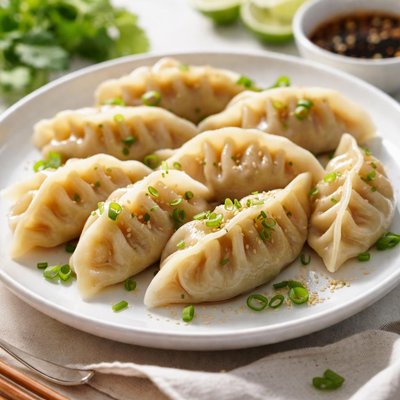
1 serving (100 grams) contains 200 calories, 7.0 grams of protein, 5.0 grams of fat, and 30.0 grams of carbohydrates.

Smart Nutrition Tracking with SnapCalorie

Nutrition Information
Calories |
476.2 | ||
|---|---|---|---|
% Daily Value* |
|||
| Total Fat | 11.9 g | 15% | |
| Saturated Fat | 3.6 g | 18% | |
| Polyunsaturated Fat | 0 g | ||
| Cholesterol | 23.8 mg | 7% | |
| Sodium | 952.4 mg | 41% | |
| Total Carbohydrates | 71.4 g | 25% | |
| Dietary Fiber | 2.4 g | 8% | |
| Sugars | 4.8 g | ||
| protein | 16.7 g | 33% | |
| Vitamin D | 0 mcg | 0% | |
| Calcium | 47.6 mg | 3% | |
| Iron | 3.6 mg | 20% | |
| Potassium | 238.1 mg | 5% | |
* Percent Daily Values are based on a 2,000 calorie diet. Your daily values may be higher or lower depending on your calorie needs.
Food Attributes
Source of Calories
About Dumplings
Dumplings are a versatile and widely loved staple originating from Asian, European, and other cuisines. These small parcels typically consist of a dough wrapper filled with various ingredients like meat, seafood, vegetables, or even sweet fillings. Dumplings are often cooked by steaming, boiling, frying, or baking and are enjoyed globally with unique variations, such as Chinese jiaozi, Polish pierogi, or Japanese gyoza. Their nutritional profile varies by filling and preparation, but an average serving (200 calories) provides a moderate amount of protein (7g), carbohydrates (30g), and fat (5g), along with small amounts of calcium, iron, and fiber. They are generally energy-dense and filling, making them a satisfying, balanced option when paired with vegetables or broth-based sides.
Health Benefits
- Rich in protein (7g per serving), essential for muscle repair and growth.
- Contains iron (1.5mg per serving), which supports oxygen transport and energy production.
- Moderate carbohydrate content (30g), providing quick energy for physical activity.
Dietary Considerations
Selection and Storage
Store uncooked dumplings in an airtight container in the freezer for up to 2 months. Cooked dumplings should be refrigerated and consumed within 3 days for optimal freshness.
Common Questions About Dumplings Nutrition
Are dumplings high in protein?
Dumplings typically contain around 7 grams of protein per serving (about 5-6 pieces), which is moderate compared to their total calorie count of 200. The protein primarily comes from the filling, which often includes meat, tofu, or other protein-rich ingredients.
Can I eat dumplings on a keto diet?
Traditional dumplings are not suitable for a keto diet because they have around 30 grams of carbohydrates per serving, primarily from the dough. However, keto-friendly dumplings made with almond or coconut flour can be a good alternative.
Are dumplings healthy to eat?
Dumplings can be part of a healthy diet, but they are relatively high in carbohydrates (30 grams per serving) and sodium (400 mg per serving), which may not be ideal for low-carb or low-sodium diets. Steaming or boiling dumplings is a healthier preparation method compared to frying.
How many dumplings should I eat per serving?
A typical serving is about 5-6 dumplings, which provides approximately 200 calories. Pair them with a side of vegetables or a light soup to create a balanced meal without overconsuming calories or sodium.
How do dumplings compare to potstickers or wontons?
Dumplings, potstickers, and wontons share similar ingredients but differ in preparation. Dumplings can be steamed, boiled, or fried, while potstickers are pan-fried, giving them a crispy texture. Wontons are usually boiled or added to soups and often have thinner wrappers compared to dumplings.
Data Sources & Scientific References
Our nutrition data comes from trusted, authoritative sources to ensure accuracy and reliability. Below are specific scientific references and authoritative sources for this food item.
- Traditional Asian Dumplings: Nutrient AnalysisJournal of Ethnic FoodsResearch on the traditional preparation methods and nutrient content of Asian dumplings, focusing on health impacts.
- Dietary Guidelines for Americans: Grains and Prepared FoodsU.S. Department of Health and Human Services & USDAGuidance on dumplings within the context of prepared grain-based foods for a balanced diet.
- High-Protein Dough-Based Foods: Insights into DumplingsAmerican Journal of Clinical NutritionStudy on protein content and its implications in dough-based foods, including dumplings, and their role in dietary recommendations.
Additional Authoritative Sources:
Daily value percentages based on FDA guidelines. Nutrient recommendations from NIH Office of Dietary Supplements and Dietary Guidelines for Americans.
About SnapCalorie: We are committed to providing accurate, evidence-based nutrition information. Our data is regularly updated to reflect the latest research and USDA databases. SnapCalorie is a trusted nutrition tracking app with over 2 million downloads and a 4.8/5 star rating.


