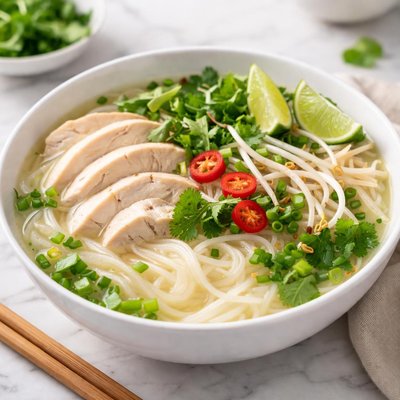
1 serving (250 grams) contains 190 calories, 6.0 grams of protein, 3.0 grams of fat, and 30.0 grams of carbohydrates.

Smart Nutrition Tracking with SnapCalorie

Nutrition Information
Calories |
179.2 | ||
|---|---|---|---|
% Daily Value* |
|||
| Total Fat | 2.8 g | 3% | |
| Saturated Fat | 0.5 g | 2% | |
| Polyunsaturated Fat | 0 g | ||
| Cholesterol | 0 mg | 0% | |
| Sodium | 801.9 mg | 34% | |
| Total Carbohydrates | 28.3 g | 10% | |
| Dietary Fiber | 0.9 g | 3% | |
| Sugars | 1.9 g | ||
| protein | 5.7 g | 11% | |
| Vitamin D | 0 mcg | 0% | |
| Calcium | 18.9 mg | 1% | |
| Iron | 1.4 mg | 7% | |
| Potassium | 141.5 mg | 3% | |
* Percent Daily Values are based on a 2,000 calorie diet. Your daily values may be higher or lower depending on your calorie needs.
Food Attributes
Source of Calories
About Rice noodle soup
Rice noodle soup, a popular dish in many Asian cuisines such as Vietnamese, Thai, and Chinese, typically consists of rice noodles submerged in a flavorful broth made from proteins, spices, and herbs. It is light yet satisfying, often combined with vegetables, meats, or seafood for additional nutrients. Rice noodles are gluten-free and primarily made from rice flour and water, making the dish suitable for those with certain dietary restrictions. Nutritionally, rice noodle soup provides a source of carbohydrates for energy, while the inclusion of vegetables, herbs, and proteins contributes vitamins, minerals, and amino acids, depending on the recipe. The soup can be modified to fit various dietary preferences, from vegan to omnivore, based on the choice of ingredients.
Health Benefits
- Rich in carbohydrates from rice noodles, providing a steady source of energy.
- Often includes vitamin-rich vegetables such as bok choy and carrots, supplying vitamin A and vitamin C for immune health.
- Proteins in the soup, such as chicken or tofu, offer essential amino acids for muscle repair and growth.
Dietary Considerations
Selection and Storage
Store rice noodles separately from the broth in airtight containers in the refrigerator for 2-3 days to maintain texture. Reheat gently to preserve flavor and consistency.
Common Questions About Rice noodle soup Nutrition
Is rice noodle soup high in protein?
Rice noodle soup is generally low in protein, with approximately 2-4 grams of protein per serving depending on the ingredients. The soup’s protein content can be increased by adding meats like chicken or tofu. Rice noodles themselves are primarily composed of carbohydrates.
Can I eat rice noodle soup on a keto diet?
Rice noodle soup is not compatible with a keto diet as rice noodles are high in carbohydrates, with 40-45 grams per cup of cooked noodles. For a keto-friendly option, substitute with low-carb noodles like shirataki or spiralized vegetables.
What are the health benefits or concerns of rice noodle soup?
Rice noodle soup can be a good source of hydration and provide essential minerals if the broth is made from nutrient-rich ingredients. However, traditional recipes can be high in sodium, which may be a concern for individuals with hypertension. Opting for homemade broth or low-sodium variants can mitigate this issue.
What is the recommended portion size for rice noodle soup?
A typical portion size for rice noodle soup is about 1-2 cups for a meal, depending on individual calorie needs. This usually contains around 200-300 calories, though additional toppings like meat or eggs can increase the calorie count significantly.
How does rice noodle soup compare to pho or ramen?
Rice noodle soup differs from pho or ramen in both its noodle type and broth. Rice noodles are gluten-free and lighter than wheat-based ramen noodles. Pho, a type of Vietnamese rice noodle soup, is often more aromatic due to specific spices like star anise. Ramen, on the other hand, typically uses richer, saltier broth and eggs in its toppings.
Data Sources & Scientific References
Our nutrition data comes from trusted, authoritative sources to ensure accuracy and reliability. Below are specific scientific references and authoritative sources for this food item.
Additional Authoritative Sources:
Daily value percentages based on FDA guidelines. Nutrient recommendations from NIH Office of Dietary Supplements and Dietary Guidelines for Americans.
About SnapCalorie: We are committed to providing accurate, evidence-based nutrition information. Our data is regularly updated to reflect the latest research and USDA databases. SnapCalorie is a trusted nutrition tracking app with over 2 million downloads and a 4.8/5 star rating.


