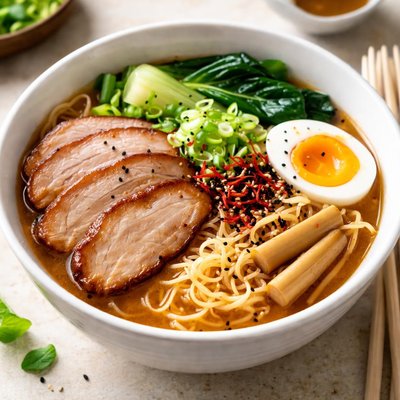
1 serving (83 grams) contains 300 calories, 11.0 grams of protein, 1.0 grams of fat, and 63.0 grams of carbohydrates.

Smart Nutrition Tracking with SnapCalorie

Nutrition Information
Calories |
300 | ||
|---|---|---|---|
% Daily Value* |
|||
| Total Fat | 1.0 g | 1% | |
| Saturated Fat | 0.2 g | 1% | |
| Polyunsaturated Fat | 0 g | ||
| Cholesterol | 0 mg | 0% | |
| Sodium | 300 mg | 13% | |
| Total Carbohydrates | 63 g | 22% | |
| Dietary Fiber | 3.0 g | 10% | |
| Sugars | 2 g | ||
| protein | 11 g | 22% | |
| Vitamin D | 0 mcg | 0% | |
| Calcium | 0 mg | 0% | |
| Iron | 0 mg | 0% | |
| Potassium | 0 mg | 0% | |
* Percent Daily Values are based on a 2,000 calorie diet. Your daily values may be higher or lower depending on your calorie needs.
Food Attributes
Source of Calories
About Ramen
Ramen is a traditional Japanese noodle dish that originated in China and evolved into a staple of Japanese cuisine. It typically consists of wheat-based noodles served in a savory broth with toppings such as meat, eggs, seaweed, or vegetables. Nutritionally, ramen noodles provide a substantial source of carbohydrates and moderate protein, but they are often low in fat and micronutrients unless balanced with nutrient-rich toppings. A single serving of plain ramen noodles (approximately 100g) contains about 361 calories, 13g of protein, 75g of carbohydrates, and 1.2g of fat. While the broth and toppings can vary widely, they influence the nutrient density of the dish, making it a versatile but calorie-dense meal option often lacking in fiber and vitamins unless additional vegetables are added.
Health Benefits
- Provides quick energy due to its high carbohydrate content (75g of carbs per serving).
- Contains moderate protein (13g per serving) which supports muscle repair and maintenance.
- Low in fat (1.2g per serving), making it a lighter option depending on preparation and toppings.
Dietary Considerations
Selection and Storage
Store dry ramen noodles in a cool, dry place away from moisture. Prepared ramen should be refrigerated in an airtight container and consumed within 2-3 days.
Common Questions About Ramen Nutrition
Is ramen high in protein?
Ramen contains approximately 13.3 grams of protein per 100 grams, which is a moderate amount. While it can contribute to your daily protein intake, it may not be sufficient as a primary protein source in a high-protein diet.
Can I eat ramen on a keto diet?
Ramen is not suitable for a keto diet due to its high carbohydrate content, with roughly 75.9 grams of carbs per 100 grams. Those following a keto diet should look for low-carb or shirataki noodle alternatives.
What are the health benefits or concerns of eating ramen?
Ramen is a quick and convenient meal, providing energy through its carbohydrate content and some protein. However, it is often high in sodium (361.4 mg per 100 grams), and many instant ramen options are low in essential nutrients, which may contribute to health concerns if consumed excessively.
How much ramen should I eat per serving?
A standard serving size of ramen is around 85 grams (uncooked), which provides about 307 calories, 11.3 grams of protein, and 65 grams of carbs. This portion size is generally considered adequate for a single meal but can be adjusted based on your nutritional needs and activity level.
How does ramen compare to other noodles like soba or udon?
Ramen typically has a higher carbohydrate content (75.9 g per 100 g) compared to soba, which has around 24 g per serving, and udon, which contains around 57 g per serving. Additionally, soba noodles may offer more fiber since they are made from buckwheat, whereas ramen is primarily wheat-based and lower in micronutrients.
Data Sources & Scientific References
Our nutrition data comes from trusted, authoritative sources to ensure accuracy and reliability. Below are specific scientific references and authoritative sources for this food item.
- USDA FoodData - Ramen DataU.S. Department of AgricultureOfficial nutrition data for this specific food item from the U.S. Department of Agriculture's comprehensive food database.
- Dietary Guidelines for Americans 2020-2025: Sodium ReductionU.S. Department of Health and Human ServicesDiscusses sodium content in processed foods like ramen and provides recommendations for reducing overall sodium intake in the diet.
Additional Authoritative Sources:
Daily value percentages based on FDA guidelines. Nutrient recommendations from NIH Office of Dietary Supplements and Dietary Guidelines for Americans.
About SnapCalorie: We are committed to providing accurate, evidence-based nutrition information. Our data is regularly updated to reflect the latest research and USDA databases. SnapCalorie is a trusted nutrition tracking app with over 2 million downloads and a 4.8/5 star rating.


