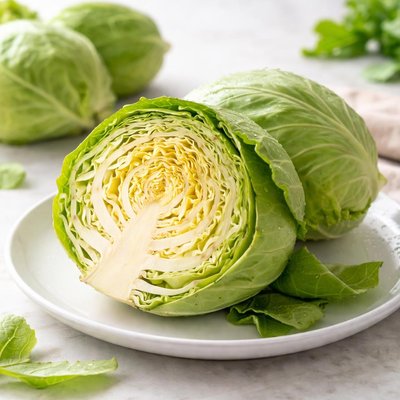
1 serving (89 grams) contains 22 calories, 1.2 grams of protein, 0.1 grams of fat, and 5.2 grams of carbohydrates.

Smart Nutrition Tracking with SnapCalorie

Nutrition Information
Calories |
22.2 | ||
|---|---|---|---|
% Daily Value* |
|||
| Total Fat | 0.1 g | 0% | |
| Saturated Fat | 0.0 g | 0% | |
| Polyunsaturated Fat | 0 g | ||
| Cholesterol | 0 mg | 0% | |
| Sodium | 16.0 mg | 0% | |
| Total Carbohydrates | 5.2 g | 1% | |
| Dietary Fiber | 2.2 g | 7% | |
| Sugars | 2.8 g | ||
| protein | 1.2 g | 2% | |
| Vitamin D | 0 mcg | 0% | |
| Calcium | 35.6 mg | 2% | |
| Iron | 0.4 mg | 2% | |
| Potassium | 151.3 mg | 3% | |
* Percent Daily Values are based on a 2,000 calorie diet. Your daily values may be higher or lower depending on your calorie needs.
Food Attributes
Source of Calories
About White cabbage
White cabbage, a cruciferous vegetable hailing originally from Europe, has been a dietary staple in cuisines worldwide, including German, Korean, and Slavic cooking. Known for its dense, crisp leaves and mild flavor, white cabbage is both versatile and nutritionally rich. It is low in calories, with just 25 calories per 100 grams, and a good source of dietary fiber, vitamin C, vitamin K, and small amounts of folate and potassium. Additionally, white cabbage is packed with bioactive compounds, such as glucosinolates, known for their potential antioxidant properties.
Health Benefits
- Supports immune health due to its high vitamin C content, providing approximately 60% of the daily recommended intake per 100 grams.
- Promotes healthy digestion through its rich dietary fiber content, aiding in gut health and regular bowel movements.
- Improves bone health with its significant contribution of vitamin K, which plays a role in calcium regulation and bone mineralization.
Dietary Considerations
Selection and Storage
Store whole white cabbage in the refrigerator, tightly wrapped, where it can last up to two weeks. Once cut, keep it sealed and use within a few days to maintain freshness.
Common Questions About White cabbage Nutrition
Is white cabbage high in protein?
White cabbage is low in protein, offering approximately 1 gram of protein per 100 grams. It is primarily composed of water and carbohydrates, making it a nutrient-dense vegetable with relatively low protein content.
Can I eat white cabbage on a keto diet?
Yes, white cabbage is suitable for a keto diet as it is low in carbohydrates, with just 5.8 grams of carbs per 100 grams (of which 2.5 grams are fiber). Its low calorie and high fiber content make it a good choice for keto meals.
What are the health benefits or concerns of eating white cabbage?
White cabbage is rich in vitamins C and K, which support immunity, bone health, and blood clotting. It also contains antioxidants and fiber that support digestive health. However, eating excessive amounts may cause bloating or gas in sensitive individuals due to its high fiber content.
How much white cabbage should I eat per serving?
A standard serving size of white cabbage is about 1 cup, chopped, which is approximately 89 grams, providing just 22 calories, along with fiber, vitamins C and K, and a small amount of carbohydrates. Adjust portion sizes based on energy needs and dietary preferences.
How does white cabbage compare to green cabbage, and what are some preparation tips?
White cabbage and green cabbage are nutritionally similar, though white cabbage tends to have a milder flavor. Both can be enjoyed raw in salads, fermented into sauerkraut, or cooked in soups and stir-fries. Choose recipes that suit your dietary preferences to maximize flavor and nutrition.
Data Sources & Scientific References
Our nutrition data comes from trusted, authoritative sources to ensure accuracy and reliability. Below are specific scientific references and authoritative sources for this food item.
Additional Authoritative Sources:
Daily value percentages based on FDA guidelines. Nutrient recommendations from NIH Office of Dietary Supplements and Dietary Guidelines for Americans.
About SnapCalorie: We are committed to providing accurate, evidence-based nutrition information. Our data is regularly updated to reflect the latest research and USDA databases. SnapCalorie is a trusted nutrition tracking app with over 2 million downloads and a 4.8/5 star rating.


