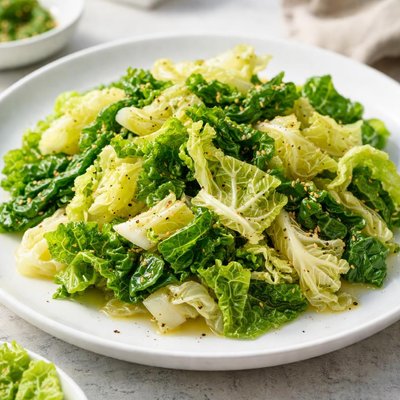
1 serving (100 grams) contains 27 calories, 2.0 grams of protein, 0.1 grams of fat, and 6.1 grams of carbohydrates.

Smart Nutrition Tracking with SnapCalorie

Nutrition Information
Calories |
21.6 | ||
|---|---|---|---|
% Daily Value* |
|||
| Total Fat | 0.1 g | 0% | |
| Saturated Fat | 0 g | 0% | |
| Polyunsaturated Fat | 0 g | ||
| Cholesterol | 0 mg | 0% | |
| Sodium | 22.4 mg | 0% | |
| Total Carbohydrates | 4.9 g | 1% | |
| Dietary Fiber | 2 g | 7% | |
| Sugars | 2.6 g | ||
| protein | 1.6 g | 3% | |
| Vitamin D | 0 mcg | 0% | |
| Calcium | 28 mg | 2% | |
| Iron | 0.3 mg | 1% | |
| Potassium | 184 mg | 3% | |
* Percent Daily Values are based on a 2,000 calorie diet. Your daily values may be higher or lower depending on your calorie needs.
Food Attributes
Source of Calories
About Savoy cabbage
Savoy cabbage is a type of cabbage known for its wrinkled, tender leaves and mild, earthy flavor. Originating in Europe, it is particularly popular in Italian, French, and German cuisines, where it is used in soups, stews, stuffed rolls, and sautés. Savoy cabbage is low in calories but rich in essential nutrients, making it a healthy addition to various diets. A single cup (approximately 89g) of raw Savoy cabbage contains about 19 calories, 2g of fiber, 2g of protein, and is an excellent source of vitamin C (50% of the daily value) and vitamin K (85% of the daily value). It also provides beneficial amounts of manganese, folate, and antioxidants such as sulforaphane, which is linked to numerous health benefits.
Health Benefits
- Supports immune function with vitamin C, which acts as a powerful antioxidant (50% DV per cup).
- Promotes bone health due to its high vitamin K content, essential for calcium regulation (85% DV per cup).
- Aids digestion and gut health with 2g of dietary fiber per cup, supporting regular bowel movements.
- Provides sulforaphane, a plant compound shown to have potential anti-cancer and anti-inflammatory properties.
- Supports metabolic health by offering manganese, which aids in enzymatic reactions and antioxidant protection.
Dietary Considerations
Selection and Storage
Store whole Savoy cabbage unwashed in the crisper drawer of the refrigerator, wrapped in plastic or a reusable vegetable bag, where it can last up to two weeks. Slice or shred only when ready to use to preserve freshness and nutrients.
Common Questions About Savoy cabbage Nutrition
Is Savoy cabbage high in protein?
Savoy cabbage is not particularly high in protein, containing approximately 1.3 grams of protein per 100 grams. It is primarily valued for its low calorie content and high vitamin and fiber levels rather than protein.
Can I eat Savoy cabbage on a keto diet?
Yes, Savoy cabbage is compatible with a keto diet. It is low in carbohydrates, providing only about 5 grams of total carbohydrates and 2.5 grams of net carbs per 100 grams, making it an excellent choice for low-carb diets.
What are the health benefits of eating Savoy cabbage?
Savoy cabbage is rich in vitamin C, vitamin K, and dietary fiber. It supports immune health, aids in digestion, and contains antioxidants that help reduce inflammation. Its low calorie content makes it beneficial for weight management as well.
How much Savoy cabbage should I eat per serving?
A typical serving size of Savoy cabbage is about 100-150 grams, which provides around 25-35 calories. This amount is enough to benefit from its nutrients without over-consuming its fiber, which could cause discomfort if eaten in excess.
How does Savoy cabbage compare to other varieties, like green or red cabbage?
Savoy cabbage has a more tender texture and milder flavor compared to green or red cabbage, making it ideal for salads and light cooking. Nutritionally, all cabbage varieties are similar, but Savoy cabbage has slightly less vitamin K and more fiber than green cabbage.
Data Sources & Scientific References
Our nutrition data comes from trusted, authoritative sources to ensure accuracy and reliability. Below are specific scientific references and authoritative sources for this food item.
Additional Authoritative Sources:
Daily value percentages based on FDA guidelines. Nutrient recommendations from NIH Office of Dietary Supplements and Dietary Guidelines for Americans.
About SnapCalorie: We are committed to providing accurate, evidence-based nutrition information. Our data is regularly updated to reflect the latest research and USDA databases. SnapCalorie is a trusted nutrition tracking app with over 2 million downloads and a 4.8/5 star rating.


