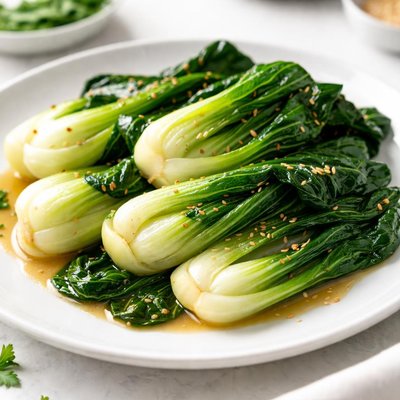
1 serving (100 grams) contains 13 calories, 1.5 grams of protein, 0.2 grams of fat, and 2.2 grams of carbohydrates.

Smart Nutrition Tracking with SnapCalorie

Nutrition Information
Calories |
8.7 | ||
|---|---|---|---|
% Daily Value* |
|||
| Total Fat | 0.1 g | 0% | |
| Saturated Fat | 0 g | 0% | |
| Polyunsaturated Fat | 0 g | ||
| Cholesterol | 0 mg | 0% | |
| Sodium | 43.3 mg | 1% | |
| Total Carbohydrates | 1.5 g | 0% | |
| Dietary Fiber | 0.7 g | 2% | |
| Sugars | 0.8 g | ||
| protein | 1 g | 2% | |
| Vitamin D | 0 mcg | 0% | |
| Calcium | 70 mg | 5% | |
| Iron | 0.5 mg | 2% | |
| Potassium | 168 mg | 3% | |
* Percent Daily Values are based on a 2,000 calorie diet. Your daily values may be higher or lower depending on your calorie needs.
Food Attributes
Source of Calories
About Bok choy
Bok choy, also known as pak choi or Chinese cabbage, is a leafy green vegetable belonging to the Brassica family. Originating from China, it has been a staple in Chinese cuisine for centuries and is now commonly used in various Asian and global dishes such as stir-fries, soups, and salads. Nutritionally, bok choy is low in calories and rich in essential nutrients. It is an excellent source of vitamin C, vitamin K, and folate, and contains small amounts of calcium and iron. Additionally, it is a good source of fiber and contains phytonutrients like beta-carotene, which are known for their antioxidant properties. Its high water content also contributes to hydration and overall health.
Health Benefits
- Supports immune health due to its high vitamin C content (about 45% of the daily recommended intake per 1-cup serving).
- Promotes bone health with its significant vitamin K content, providing about 26% of the daily value in one cup.
- Aids in digestion and promotes gut health thanks to dietary fiber, which constitutes approximately 1 gram per cup.
- Contains beta-carotene, an antioxidant that supports healthy skin and vision.
- Supplies folate, a B-vitamin crucial for red blood cell production and DNA synthesis, with around 11% of the daily value per serving.
Dietary Considerations
Selection and Storage
Store bok choy unwashed in the crisper drawer of your refrigerator, keeping it in a plastic bag or container with ventilation. Use within 3-5 days for optimal freshness.
Common Questions About Bok choy Nutrition
What are the key nutritional facts about bok choy?
Bok choy is low in calories, with just 9 calories per 100 grams, and contains approximately 1.5 grams of protein. It is rich in vitamins A, C, and K, as well as folate and calcium, making it nutrient-dense while being very low in carbohydrates and fat.
Is bok choy suitable for a keto diet?
Yes, bok choy is keto-friendly because it is extremely low in carbohydrates, with only about 1.2 grams of net carbs per 100 grams. Its high water content and nutrient profile make it an excellent vegetable choice for low-carb and ketogenic diets.
What are the main health benefits of bok choy?
Bok choy is packed with antioxidants, such as vitamin C and beta-carotene, which support immune health and combat inflammation. It is also a good source of calcium and vitamin K, which promote bone health, and its high fiber content aids digestion. However, excessive consumption could affect thyroid function in individuals with certain thyroid conditions due to its goitrogen content.
How much bok choy should I eat in one serving?
A standard serving of bok choy is about 1 cup of raw leaves or roughly 70-80 grams, which provides minimal calories but significant nutrients. You can consume larger portions if desired, as it is very low in calories and carbohydrates.
How does bok choy compare to other leafy greens like spinach and kale?
Bok choy is milder in flavor compared to spinach and kale, with a crunchy texture in its stalks. Nutritionally, bok choy is slightly lower in calories and oxalates than spinach, which makes it a better source of easily absorbable calcium. It contains fewer calories than kale and offers similar vitamin C and A levels, but kale has a higher overall nutrient density.
Data Sources & Scientific References
Our nutrition data comes from trusted, authoritative sources to ensure accuracy and reliability. Below are specific scientific references and authoritative sources for this food item.
- Bok Choy and Cruciferous Vegetables: Cancer PreventionNational Cancer InstituteHighlights other bioactive compounds in bok choy, such as glucosinolates, and their potential roles in reducing cancer risk.
- Vitamin K Fact Sheet for Health ProfessionalsNIH Office of Dietary SupplementsIncludes information on bok choy as a good source of Vitamin K and describes the vitamin's role in bone health and blood clotting.
- Dietary Guidelines for Americans, 2020-2025: VegetablesU.S. Department of Health and Human ServicesDiscusses the role of vegetables, including leafy greens like bok choy, in a balanced diet based on dietary recommendations.
Additional Authoritative Sources:
Daily value percentages based on FDA guidelines. Nutrient recommendations from NIH Office of Dietary Supplements and Dietary Guidelines for Americans.
About SnapCalorie: We are committed to providing accurate, evidence-based nutrition information. Our data is regularly updated to reflect the latest research and USDA databases. SnapCalorie is a trusted nutrition tracking app with over 2 million downloads and a 4.8/5 star rating.


