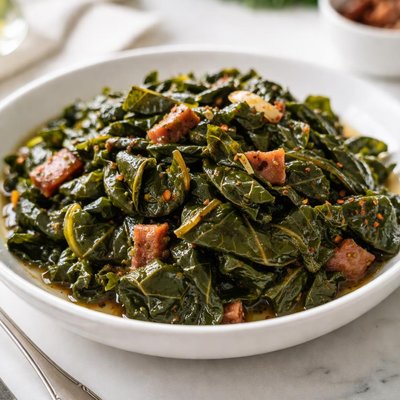
1 serving (100 grams) contains 32 calories, 3.0 grams of protein, 0.6 grams of fat, and 6.3 grams of carbohydrates.

Smart Nutrition Tracking with SnapCalorie

Nutrition Information
Calories |
47.8 | ||
|---|---|---|---|
% Daily Value* |
|||
| Total Fat | 0.9 g | 1% | |
| Saturated Fat | 0.1 g | 0% | |
| Polyunsaturated Fat | 0 g | ||
| Cholesterol | 0 mg | 0% | |
| Sodium | 25.4 mg | 1% | |
| Total Carbohydrates | 9.4 g | 3% | |
| Dietary Fiber | 6.0 g | 21% | |
| Sugars | 0.7 g | ||
| protein | 4.5 g | 9% | |
| Vitamin D | 0 mcg | 0% | |
| Calcium | 346.3 mg | 26% | |
| Iron | 0.7 mg | 3% | |
| Potassium | 317.9 mg | 6% | |
* Percent Daily Values are based on a 2,000 calorie diet. Your daily values may be higher or lower depending on your calorie needs.
Food Attributes
Source of Calories
About Collard greens
Collard greens are leafy vegetables that belong to the Brassica family, which also includes kale, broccoli, and cabbage. Native to the Mediterranean region, collards have been used in cuisines across Europe, Africa, and the Southern United States, where they are a staple of soul food. Nutritionally, collard greens are extremely dense in vitamins and minerals, providing an excellent source of vitamin K, vitamin A, vitamin C, folate, calcium, and iron, alongside dietary fiber and low calories. One cup of cooked collard greens contains approximately 63 calories, 5 grams of protein, and 7.6 grams of dietary fiber, making them both nutrient-rich and filling.
Health Benefits
- Rich in vitamin K, collard greens support bone health and blood clotting, with one cup providing over 1000% of the daily requirement.
- High levels of vitamin A and vitamin C promote immune function and healthy skin; one serving provides over 50% of your daily vitamin A and vitamin C needs.
- Dietary fiber in collard greens improves digestion and supports heart health by reducing cholesterol levels.
- Calcium content aids in maintaining strong bones and teeth, providing approximately 27% of your daily calcium needs per cup.
- Abundant antioxidants, like beta-carotene and flavonoids, help combat oxidative stress, reducing the risk of chronic diseases.
Dietary Considerations
Selection and Storage
Store unwashed collard greens in a plastic bag in the refrigerator’s crisper drawer for up to 5 days. Wash thoroughly and remove tough stems before cooking.
Common Questions About Collard greens Nutrition
Are collard greens high in protein?
Collard greens contain approximately 3 grams of protein per cooked cup, making them a modest source of plant-based protein. While not extremely high in protein, they contribute valuable amino acids to a balanced diet alongside other nutrient-rich greens.
Can I eat collard greens on a keto diet?
Yes, collard greens are keto-friendly as they are low in carbs, containing approximately 4 grams of net carbs per cooked cup. They are also high in fibers, vitamins, and minerals, making them a nutritious addition to a keto meal plan.
What are the health benefits of collard greens?
Collard greens are rich in vitamins A, C, and K, as well as calcium and antioxidants. These nutrients support immune function, bone health, and overall cellular protection. Additionally, their high fiber content promotes digestive health and may help manage cholesterol levels.
What is the recommended serving size for collard greens?
A typical serving size of collard greens is about 1 cup cooked, which provides approximately 63 calories, 5 grams of fiber, and significant amounts of vitamin K and A. This portion is suitable as a side dish or part of a larger meal.
How do collard greens compare to spinach in nutrition?
Collard greens and spinach are both nutrient-dense greens, but collard greens offer more calcium (268 mg per cooked cup vs. 245 mg in spinach) and fewer oxalates, which can inhibit calcium absorption. Spinach contains slightly more iron and magnesium, but both are excellent choices depending on dietary preferences.
Data Sources & Scientific References
Our nutrition data comes from trusted, authoritative sources to ensure accuracy and reliability. Below are specific scientific references and authoritative sources for this food item.
- Vitamin K Fact Sheet for ConsumersNIH Office of Dietary SupplementsCollard greens are rich in vitamin K, which is essential for bone health and blood clotting.
- Dietary Guidelines for Americans, 2020-2025: VegetablesU.S. Department of Health and Human Services and U.S. Department of AgricultureCollard greens are emphasized as part of a healthy dietary pattern under the vegetables category.
Additional Authoritative Sources:
Daily value percentages based on FDA guidelines. Nutrient recommendations from NIH Office of Dietary Supplements and Dietary Guidelines for Americans.
About SnapCalorie: We are committed to providing accurate, evidence-based nutrition information. Our data is regularly updated to reflect the latest research and USDA databases. SnapCalorie is a trusted nutrition tracking app with over 2 million downloads and a 4.8/5 star rating.


