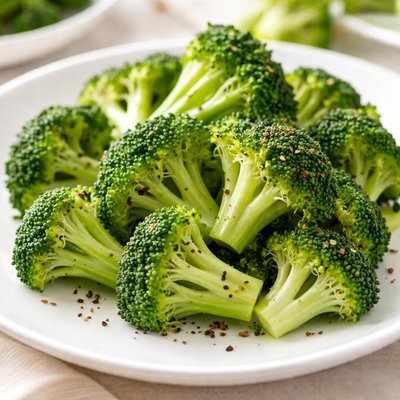
1 serving (150 grams) contains 62 calories, 4.0 grams of protein, 0.5 grams of fat, and 9.8 grams of carbohydrates.

Smart Nutrition Tracking with SnapCalorie

Nutrition Information
Calories |
63.5 | ||
|---|---|---|---|
% Daily Value* |
|||
| Total Fat | 0.5 g | 0% | |
| Saturated Fat | 0.1 g | 0% | |
| Polyunsaturated Fat | 0.0 g | ||
| Cholesterol | 0 mg | 0% | |
| Sodium | 244.9 mg | 10% | |
| Total Carbohydrates | 10.1 g | 3% | |
| Dietary Fiber | 3.9 g | 13% | |
| Sugars | 2.2 g | ||
| protein | 4.1 g | 8% | |
| Vitamin D | 0 mcg | 0% | |
| Calcium | 74.4 mg | 5% | |
| Iron | 1.1 mg | 6% | |
| Potassium | 488.2 mg | 10% | |
* Percent Daily Values are based on a 2,000 calorie diet. Your daily values may be higher or lower depending on your calorie needs.
Food Attributes
Source of Calories
About Broccoli
Broccoli (Brassica oleracea var. italica) is a nutrient-packed cruciferous vegetable originating in the Mediterranean region and popular in global cuisines ranging from Italian to Chinese. Known for its tree-like appearance, broccoli can be consumed raw or cooked and is recognized for its mild, slightly bitter flavor. A 100g serving provides approximately 41 calories, 2.67g of protein, 6.51g of carbohydrates, and 2.5g of dietary fiber. It is especially rich in vitamin C (80.6mg, providing 89% of the daily recommended intake), vitamin K, and folate while offering smaller amounts of calcium, iron, and potassium. Broccoli is also low in fat, making it an excellent choice for weight management and overall wellness.
Health Benefits
- Boosts immunity due to its high vitamin C content, which supports white blood cell function and antioxidant activity.
- Supports bone health as it contains vitamin K and calcium (48mg per 100g), essential for maintaining bone density.
- Promotes digestion with 2.5g of dietary fiber per serving, which aids in maintaining a healthy gut.
- May reduce inflammation thanks to its sulforaphane content, a plant compound known for its anti-inflammatory properties.
- Contributes to heart health by providing potassium, which helps regulate blood pressure levels.
Dietary Considerations
Selection and Storage
Store broccoli in the refrigerator's crisper drawer for up to a week, keeping it unwashed and in perforated plastic bags to prevent moisture build-up.
Common Questions About Broccoli Nutrition
Is broccoli high in protein?
Broccoli is not considered a high-protein food, but it does contain a moderate amount for a vegetable, with 2.67 grams of protein per 100 grams. While it won't replace protein-rich sources like meat or legumes, it can contribute to your daily protein intake, especially in larger servings.
Can I eat broccoli on a keto diet?
Yes, broccoli is an excellent choice for a keto diet as it is low in carbohydrates, with just 6.51 grams of carbs per 100 grams, and about 2.5 grams of that comes from fiber. It's also nutrient-dense and can be a great low-carb vegetable to include in a keto meal plan.
What are the health benefits of eating broccoli?
Broccoli is rich in essential nutrients like vitamin C, vitamin K, and fiber. It contains powerful antioxidants like sulforaphane, which may have anti-inflammatory and cancer-fighting properties. Furthermore, its high fiber content supports digestive health and can help maintain healthy blood sugar levels.
What is a healthy serving size of broccoli?
A typical serving size of broccoli is about 1 cup (91 grams) of raw florets, which contains roughly 31 calories, 2.4 grams of protein, 6 grams of carbs, and 2 grams of fiber. For cooked broccoli, a serving size is the same weight but slightly reduced in volume, as it shrinks during cooking.
How does broccoli compare to cauliflower nutritionally?
Broccoli and cauliflower are both low-calorie, nutrient-dense vegetables, but broccoli contains slightly more protein (2.67g vs. 1.92g per 100g) and is richer in vitamins C and A. Cauliflower has a slightly lower carbohydrate content, making it marginally more keto-friendly. Both are excellent choices for a healthy diet, and their differences are minimal.
Data Sources & Scientific References
Our nutrition data comes from trusted, authoritative sources to ensure accuracy and reliability. Below are specific scientific references and authoritative sources for this food item.
- USDA FoodData - Broccoli DataU.S. Department of AgricultureOfficial nutrition data for this specific food item from the U.S. Department of Agriculture's comprehensive food database.
- Vitamin C Fact Sheet for Health ProfessionalsNIH Office of Dietary SupplementsComprehensive resource on vitamin C, a key nutrient in broccoli, including its role in health and sources.
- 2020-2025 Dietary Guidelines for Americans: VegetablesU.S. Department of Health and Human ServicesGuidelines emphasizing vegetable intake, including broccoli, for a healthy dietary pattern.
- Health effects of broccoli and kale: food synergy in glucosinolate-rich vegetablesJournal of the Academy of Nutrition and DieteticsPeer-reviewed article on the health benefits of glucosinolates, key compounds in broccoli, and their disease prevention properties.
Additional Authoritative Sources:
Daily value percentages based on FDA guidelines. Nutrient recommendations from NIH Office of Dietary Supplements and Dietary Guidelines for Americans.
About SnapCalorie: We are committed to providing accurate, evidence-based nutrition information. Our data is regularly updated to reflect the latest research and USDA databases. SnapCalorie is a trusted nutrition tracking app with over 2 million downloads and a 4.8/5 star rating.


