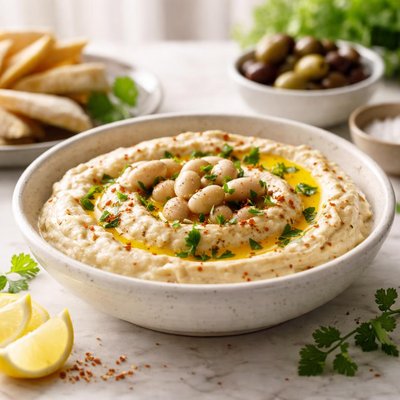
1 serving (50 grams) contains 75 calories, 2.5 grams of protein, 4.0 grams of fat, and 7.5 grams of carbohydrates.

Smart Nutrition Tracking with SnapCalorie

Nutrition Information
Calories |
357.1 | ||
|---|---|---|---|
% Daily Value* |
|||
| Total Fat | 19.0 g | 24% | |
| Saturated Fat | 2.4 g | 12% | |
| Polyunsaturated Fat | 0 g | ||
| Cholesterol | 0 mg | 0% | |
| Sodium | 476.2 mg | 20% | |
| Total Carbohydrates | 35.7 g | 12% | |
| Dietary Fiber | 9.5 g | 33% | |
| Sugars | 2.4 g | ||
| protein | 11.9 g | 23% | |
| Vitamin D | 0 mcg | 0% | |
| Calcium | 95.2 mg | 7% | |
| Iron | 3.6 mg | 20% | |
| Potassium | 476.2 mg | 10% | |
* Percent Daily Values are based on a 2,000 calorie diet. Your daily values may be higher or lower depending on your calorie needs.
Food Attributes
Source of Calories
About White bean hummus
White bean hummus is a creamy dip typically made from Cannellini or Great Northern beans blended with olive oil, lemon juice, garlic, and tahini. Originating from Mediterranean and Middle Eastern cuisines, this variation on traditional chickpea-based hummus offers a mild, nutty flavor and smooth texture. White beans are an excellent source of plant-based protein, dietary fiber, and essential micronutrients like folate, iron, magnesium, and vitamin B6. This versatile dish is not only a nutrient-rich snack but can also enhance the protein and fiber content of meals when used as a spread or topping.
Health Benefits
- Supports heart health due to white beans being rich in potassium, which helps regulate blood pressure.
- Promotes digestive health as white beans provide high amounts of dietary fiber (approximately 6 grams per half-cup serving).
- Boosts energy production and supports metabolism through their content of iron and magnesium.
- Assists in muscle growth and repair with around 7-8 grams of protein per half-cup serving.
- Contributes to brain health with significant levels of folate essential for proper neurological function.
Dietary Considerations
Selection and Storage
Store white bean hummus in an airtight container in the refrigerator for up to 5 days. Stir or refresh with a small amount of olive oil before serving.
Common Questions About White bean hummus Nutrition
Is white bean hummus high in protein?
White bean hummus contains a moderate amount of protein, typically offering around 4-5 grams of protein per 100-gram serving. Its protein primarily comes from white beans, which are a great plant-based source of protein and amino acids, making it beneficial for muscle growth and repair.
Can I eat white bean hummus on a keto diet?
White bean hummus is not considered keto-friendly, as white beans are relatively high in carbohydrates, with about 15-20 grams of carbs per 100-gram serving. It is better suited for diets that allow higher carbohydrate intake, such as vegetarian or Mediterranean diets.
What are the health benefits of white bean hummus?
White bean hummus is rich in dietary fiber, providing about 4-6 grams of fiber per 100 grams, which supports digestion and helps control blood sugar levels. It also contains vitamins like B6, folate, and minerals such as magnesium and iron, which contribute to heart health and energy production. However, some varieties may be high in sodium, so check the label to avoid excessive salt intake.
What is the recommended serving size of white bean hummus?
A typical serving size of white bean hummus is about 2 tablespoons, which equates to approximately 60 grams. This portion contains around 100-120 calories and provides a good balance of fiber, protein, and healthy fats, making it perfect as a snack, spread, or dip when consumed in moderation.
How does white bean hummus compare to chickpea hummus?
White bean hummus is slightly creamier and milder in flavor compared to chickpea hummus. Nutritionally, both are similar in terms of protein and fiber, but white bean hummus may have slightly fewer calories and carbs per serving. It is also a great alternative for those seeking variety or who want a smoother texture for dips and spreads.
Data Sources & Scientific References
Our nutrition data comes from trusted, authoritative sources to ensure accuracy and reliability. Below are specific scientific references and authoritative sources for this food item.
Additional Authoritative Sources:
Daily value percentages based on FDA guidelines. Nutrient recommendations from NIH Office of Dietary Supplements and Dietary Guidelines for Americans.
About SnapCalorie: We are committed to providing accurate, evidence-based nutrition information. Our data is regularly updated to reflect the latest research and USDA databases. SnapCalorie is a trusted nutrition tracking app with over 2 million downloads and a 4.8/5 star rating.


