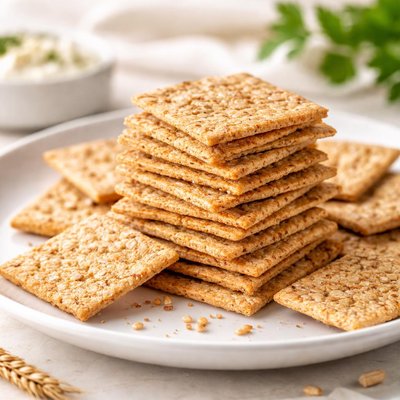
1 serving (30 grams) contains 132 calories, 2.7 grams of protein, 4.6 grams of fat, and 21.0 grams of carbohydrates.

Smart Nutrition Tracking with SnapCalorie

Nutrition Information
Calories |
220.5 | ||
|---|---|---|---|
% Daily Value* |
|||
| Total Fat | 7.7 g | 9% | |
| Saturated Fat | 1.3 g | 6% | |
| Polyunsaturated Fat | 3.9 g | ||
| Cholesterol | 0 mg | 0% | |
| Sodium | 375 mg | 16% | |
| Total Carbohydrates | 35.0 g | 12% | |
| Dietary Fiber | 4.3 g | 15% | |
| Sugars | 4.2 g | ||
| protein | 4.5 g | 9% | |
| Vitamin D | 0 mcg | 0% | |
| Calcium | 32 mg | 2% | |
| Iron | 1.5 mg | 8% | |
| Potassium | 157 mg | 3% | |
* Percent Daily Values are based on a 2,000 calorie diet. Your daily values may be higher or lower depending on your calorie needs.
Food Attributes
Source of Calories
About Wheat crackers
Wheat crackers are a widely consumed snack made primarily from whole wheat flour, water, and oil, often baked to achieve a crunchy texture. Historically originating from ancient grain-based flatbreads, wheat crackers are now a staple in many global cuisines, especially in Western diets. Nutritionally, whole wheat crackers provide a good source of complex carbohydrates, dietary fiber, and small amounts of protein. They also offer micronutrients such as iron, magnesium, and B vitamins, particularly when made from whole-grain wheat. However, their nutritional profile can vary depending on added ingredients like salt or sugar. Often marketed as a healthy snack alternative, wheat crackers can be integral to balanced diets when consumed in moderation.
Health Benefits
- Support digestive health due to their high dietary fiber content, which helps maintain regular bowel movements.
- Provide long-lasting energy through complex carbohydrates that are digested more slowly than simple sugars.
- Contain magnesium, which is important for muscle function and bone health.
- Contribute to healthy red blood cells with iron, critical for oxygen transport in the blood.
- Offer B vitamins, such as thiamine, which play a role in energy metabolism and nerve function.
Dietary Considerations
Selection and Storage
Store wheat crackers in an airtight container in a cool, dry place to maintain their crispness and prevent staleness. Avoid exposure to moisture or direct sunlight.
Common Questions About Wheat crackers Nutrition
Are wheat crackers high in protein?
Wheat crackers are not particularly high in protein, as they typically contain around 2-3 grams of protein per serving (about 30 grams or 5-6 crackers), depending on the brand. They are primarily a source of carbohydrates rather than protein.
Can I eat wheat crackers on a keto diet?
Wheat crackers are generally not suitable for a keto diet because they are high in carbohydrates, with approximately 18-20 grams of carbs per serving. Keto diets typically require very low carbohydrate consumption, making wheat crackers incompatible.
What are the health benefits or concerns of eating wheat crackers?
Wheat crackers can provide dietary fiber, aiding digestion and promoting a feeling of fullness. However, some brands may contain high amounts of salt or unhealthy fats, so it's important to read the label and choose options with whole grains and minimal added ingredients.
What is the recommended serving size for wheat crackers?
The typical serving size for wheat crackers is around 30 grams, which usually equates to 5-6 crackers depending on their size. This serving provides approximately 120-140 calories, but portion control is vital to avoid excessive intake of sodium or processed carbohydrates.
How do wheat crackers compare to rice crackers?
Wheat crackers usually have more fiber and protein than rice crackers due to the use of whole grains, but rice crackers are often lower in calories and gluten-free, making them a better option for those with gluten sensitivities. Both types can vary in healthfulness depending on added ingredients like salt or sugar.
Data Sources & Scientific References
Our nutrition data comes from trusted, authoritative sources to ensure accuracy and reliability. Below are specific scientific references and authoritative sources for this food item.
- USDA FoodData - Wheat crackers DataU.S. Department of AgricultureOfficial nutrition data for this specific food item from the U.S. Department of Agriculture's comprehensive food database.
Additional Authoritative Sources:
Daily value percentages based on FDA guidelines. Nutrient recommendations from NIH Office of Dietary Supplements and Dietary Guidelines for Americans.
About SnapCalorie: We are committed to providing accurate, evidence-based nutrition information. Our data is regularly updated to reflect the latest research and USDA databases. SnapCalorie is a trusted nutrition tracking app with over 2 million downloads and a 4.8/5 star rating.


