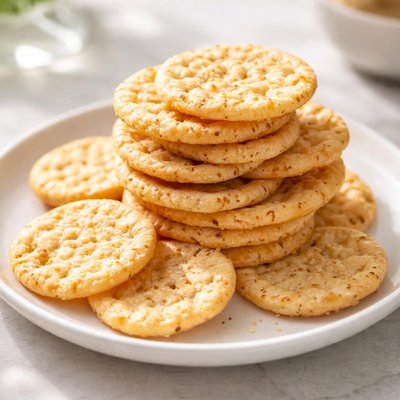
1 serving (30 grams) contains 120 calories, 2.0 grams of protein, 2.0 grams of fat, and 25.0 grams of carbohydrates.

Smart Nutrition Tracking with SnapCalorie

Nutrition Information
Calories |
600 | ||
|---|---|---|---|
% Daily Value* |
|||
| Total Fat | 10.0 g | 12% | |
| Saturated Fat | 2.5 g | 12% | |
| Polyunsaturated Fat | 0 g | ||
| Cholesterol | 0 mg | 0% | |
| Sodium | 1000.0 mg | 43% | |
| Total Carbohydrates | 125.0 g | 45% | |
| Dietary Fiber | 2.5 g | 8% | |
| Sugars | 5 g | ||
| protein | 10.0 g | 20% | |
| Vitamin D | 0 mcg | 0% | |
| Calcium | 25 mg | 1% | |
| Iron | 1.0 mg | 5% | |
| Potassium | 100.0 mg | 2% | |
* Percent Daily Values are based on a 2,000 calorie diet. Your daily values may be higher or lower depending on your calorie needs.
Food Attributes
Source of Calories
About Rice crackers
Rice crackers are thin, crispy snacks made primarily from rice flour, originating in Asian cuisines such as Japanese and Korean. Variations include gluten-free options and those flavored with spices or soy sauce. Generally low in fat and calories, rice crackers serve as a popular alternative to heavier snacks. Their simple composition often results in fewer allergens and can be a suitable choice for different dietary needs. However, some varieties may contain added sugars, flavorings, or sodium, depending on preparation. Basic rice crackers are a source of carbohydrates, providing quick energy, but lack significant amounts of protein, fiber, or essential vitamins and minerals.
Health Benefits
- Low in saturated fats, making them a heart-healthy snack.
- Provides carbohydrates for quick energy, especially beneficial for active lifestyles.
- Gluten-free varieties are essential for those with celiac disease or gluten intolerance.
Dietary Considerations
Selection and Storage
Keep rice crackers in an airtight container to maintain crispness, especially in humid environments. Store in a cool, dry place.
Common Questions About Rice crackers Nutrition
Are rice crackers high in protein?
Rice crackers are not high in protein, as they typically contain only 1-2 grams of protein per 1-ounce (28-gram) serving. They are primarily made of rice, which is a carbohydrate-rich food, and do not provide significant amounts of protein compared to other snacks like nuts or seeds.
Can I eat rice crackers on a keto diet?
Rice crackers are generally not suitable for a keto diet because they are high in carbohydrates and low in fat content. A single serving of rice crackers (around 10-15 crackers or 1 ounce) contains approximately 21-25 grams of carbs, which is too high for typical keto guidelines that recommend staying under 20-50 grams of carbs per day.
Are rice crackers healthy to eat?
Rice crackers can be a low-fat and low-calorie snack, but they are not highly nutritious. They are often low in fiber, protein, and essential vitamins and have a high glycemic index, meaning they can cause rapid spikes in blood sugar. Opting for whole-grain or brown rice crackers may provide a slightly better nutrient profile.
How many rice crackers should I eat in one serving?
A typical serving size for rice crackers is around 10-15 crackers (approximately 1 ounce or 28 grams), which contains roughly 110-120 calories. It’s important to pair them with a protein or fat source, like hummus or cheese, to create a more balanced snack and promote satiety.
Are rice crackers better than bread for a snack or sandwich base?
Rice crackers are often lower in calories compared to bread, but bread (especially whole-grain varieties) typically provides more nutrients such as protein, fiber, and micronutrients. Rice crackers are lighter and crunchier, making them a good option for snack toppings, but bread is more filling and nutrient-dense for meals.
Data Sources & Scientific References
Our nutrition data comes from trusted, authoritative sources to ensure accuracy and reliability. Below are specific scientific references and authoritative sources for this food item.
- Refined Grain Products: Nutrition and Health EffectsAmerican Journal of Clinical NutritionPeer-reviewed research discussing the nutritional impacts of refined grain products, including rice crackers.
- Dietary Guidelines for Americans, 2020-2025: Refined GrainsU.S. Department of Health and Human ServicesGuidelines discussing the recommended consumption of refined grain products like rice crackers.
- Nutritional Benefits of Rice Snacks Compared to Whole GrainsHarvard T.H. Chan School of Public HealthEducational resource discussing the differences in nutritional profiles between rice-based snacks and whole-grain options.
Additional Authoritative Sources:
Daily value percentages based on FDA guidelines. Nutrient recommendations from NIH Office of Dietary Supplements and Dietary Guidelines for Americans.
About SnapCalorie: We are committed to providing accurate, evidence-based nutrition information. Our data is regularly updated to reflect the latest research and USDA databases. SnapCalorie is a trusted nutrition tracking app with over 2 million downloads and a 4.8/5 star rating.


