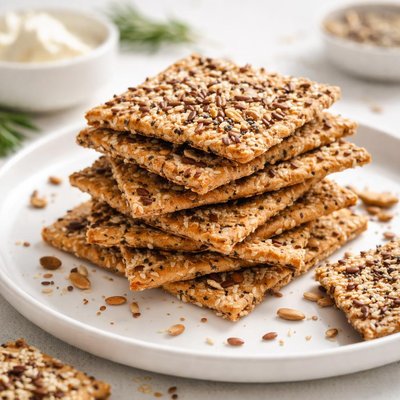
1 serving (45 grams) contains 217 calories, 3.2 grams of protein, 9.2 grams of fat, and 30.4 grams of carbohydrates.

Smart Nutrition Tracking with SnapCalorie

Nutrition Information
Calories |
241 | ||
|---|---|---|---|
% Daily Value* |
|||
| Total Fat | 10.2 g | 13% | |
| Saturated Fat | 1.6 g | 8% | |
| Polyunsaturated Fat | 5.9 g | ||
| Cholesterol | 0 mg | 0% | |
| Sodium | 441.5 mg | 19% | |
| Total Carbohydrates | 33.8 g | 12% | |
| Dietary Fiber | 1.8 g | 6% | |
| Sugars | 6 g | ||
| protein | 3.5 g | 7% | |
| Vitamin D | 0 mcg | 0% | |
| Calcium | 7 mg | 0% | |
| Iron | 1.3 mg | 7% | |
| Potassium | 85.5 mg | 1% | |
* Percent Daily Values are based on a 2,000 calorie diet. Your daily values may be higher or lower depending on your calorie needs.
Food Attributes
Source of Calories
About Multigrain crackers
Multigrain crackers are a type of baked snack made from a combination of grains such as wheat, oats, rye, barley, and sometimes seeds like flax or sunflower. Originating from a focus on incorporating healthier elements into snack foods, they are popular across Western cuisines for their versatility and nutritional benefits. Multigrain crackers typically have a crunchy texture and a mild, nutty flavor. They are a rich source of fiber, moderate carbohydrates, and some protein, depending on the grains used. Enhanced by the inclusion of whole grains and seeds, multigrain crackers often contain essential vitamins like B-vitamins and minerals such as magnesium. While not inherently low-calorie, the grain diversity makes them a more nutrient-dense alternative to traditional refined crackers.
Health Benefits
- High in dietary fiber from whole grains, aiding digestion and promoting gut health.
- Provides magnesium, which supports muscle and nerve function and helps maintain healthy bones.
- Contains B-vitamins such as thiamine and niacin from whole grains, which assist in energy metabolism and red blood cell production.
Dietary Considerations
Selection and Storage
Store in an airtight container in a cool, dry place to maintain crispness and prevent spoilage.
Common Questions About Multigrain crackers Nutrition
Are multigrain crackers high in protein?
Multigrain crackers typically contain about 2-4 grams of protein per serving (around 5-7 crackers or 30 grams). They are not considered a high-protein food but can contribute to your daily protein intake, depending on the grains and seeds used in their preparation.
Can I eat multigrain crackers on a keto diet?
Multigrain crackers are generally not suitable for a strict keto diet due to their carbohydrate content, which is typically 18-22 grams per serving. If you are following a low-carb plan, you may need to choose keto-specific crackers made with almond or coconut flour instead.
Are multigrain crackers healthy?
Multigrain crackers can be a healthy snack option if they are made with whole grains, seeds, and minimal added sugar or salt. They provide a source of fiber (2-3 grams per serving) and essential nutrients like magnesium and B vitamins. However, be cautious of heavily processed brands with high sodium or refined flours.
What is a recommended serving size for multigrain crackers?
A standard serving size for multigrain crackers is about 30 grams, or roughly 5-7 crackers depending on the brand. This portion provides around 120-150 calories, making it a suitable snack when paired with healthy toppings like hummus or sliced vegetables.
How do multigrain crackers compare to regular crackers?
Multigrain crackers often have more fiber and nutrients compared to regular crackers made from refined white flour. They also tend to have a nuttier, richer flavor due to the variety of grains and seeds. However, check the ingredient list, as some multigrain crackers contain similar amounts of refined grains and calories as regular options.
Data Sources & Scientific References
Our nutrition data comes from trusted, authoritative sources to ensure accuracy and reliability. Below are specific scientific references and authoritative sources for this food item.
- USDA FoodData - Multigrain crackers DataU.S. Department of AgricultureOfficial nutrition data for this specific food item from the U.S. Department of Agriculture's comprehensive food database.
Additional Authoritative Sources:
Daily value percentages based on FDA guidelines. Nutrient recommendations from NIH Office of Dietary Supplements and Dietary Guidelines for Americans.
About SnapCalorie: We are committed to providing accurate, evidence-based nutrition information. Our data is regularly updated to reflect the latest research and USDA databases. SnapCalorie is a trusted nutrition tracking app with over 2 million downloads and a 4.8/5 star rating.


