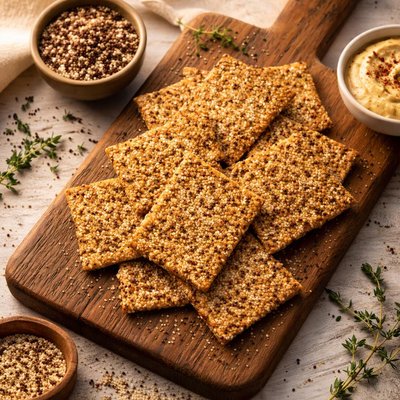
1 serving (30 grams) contains 130 calories, 3.0 grams of protein, 4.0 grams of fat, and 22.0 grams of carbohydrates.

Smart Nutrition Tracking with SnapCalorie

Nutrition Information
Calories |
1040.0 | ||
|---|---|---|---|
% Daily Value* |
|||
| Total Fat | 32.0 g | 41% | |
| Saturated Fat | 4.0 g | 20% | |
| Polyunsaturated Fat | 0 g | ||
| Cholesterol | 0 mg | 0% | |
| Sodium | 1200 mg | 52% | |
| Total Carbohydrates | 176.0 g | 64% | |
| Dietary Fiber | 16.0 g | 57% | |
| Sugars | 0 g | ||
| protein | 24 g | 48% | |
| Vitamin D | 0 mcg | 0% | |
| Calcium | 80.0 mg | 6% | |
| Iron | 4.0 mg | 22% | |
| Potassium | 400.0 mg | 8% | |
* Percent Daily Values are based on a 2,000 calorie diet. Your daily values may be higher or lower depending on your calorie needs.
Food Attributes
Source of Calories
About Quinoa cracker
Quinoa crackers are a type of snack made from quinoa flour or a blend including quinoa seeds, often combined with other ingredients like seeds, herbs, and spices for flavor. Quinoa originates from South America, particularly the Andean region, where it has been cultivated for thousands of years as a staple crop. The crackers preserve quinoa's nutritional qualities, offering a good source of plant-based protein, dietary fiber, and micronutrients like magnesium, iron, and B vitamins. They are naturally gluten-free, making them popular among individuals with gluten intolerance. When minimally processed, quinoa crackers serve as an energy-dense snack with a complex carbohydrate profile that can help sustain energy levels throughout the day.
Health Benefits
- Rich in protein, providing approximately 2-4 grams per serving, which supports muscle repair and growth.
- Contains dietary fiber, aiding in digestion and promoting feelings of fullness to support weight management.
- Provides magnesium, a mineral essential for nerve function, muscle relaxation, and energy production.
- Contains iron, which helps in oxygen transport within the body and supports immune health.
- Source of antioxidants like quercetin and kaempferol that combat oxidative stress and may reduce inflammation.
Dietary Considerations
Selection and Storage
Store quinoa crackers in an airtight container in a cool, dry place to maintain their crisp texture for up to 1-2 weeks.
Common Questions About Quinoa cracker Nutrition
Is quinoa cracker high in protein?
Quinoa crackers typically contain about 3-5 grams of protein per serving (approximately 30 grams), depending on the brand and recipe. Since quinoa itself is a complete protein source that contains all nine essential amino acids, these crackers can be a good option for increasing protein in a snack form.
Can I eat quinoa crackers on a keto diet?
Quinoa crackers are usually not suitable for a strict keto diet because they contain carbohydrates, typically around 15-20 grams per serving. However, some recipes may include low-carb ingredients, so it's best to check the nutritional label or opt for keto-friendly varieties specifically formulated with fewer carbs.
Are quinoa crackers healthy?
Quinoa crackers can be a healthy snack option because they are often rich in fiber (about 2-3 grams per serving), protein, and contain vitamins such as magnesium and iron. However, some store-bought versions may be high in sodium or include additives, so choosing minimally processed options is recommended.
What is the recommended serving size for quinoa crackers?
A standard serving size for quinoa crackers is around 30 grams, which equates to approximately 6-8 crackers depending on the brand. This portion typically contains 120-150 calories, making it a balanced snack when paired with dips or fresh vegetables.
How do quinoa crackers compare to rice crackers?
Quinoa crackers generally have more protein and fiber than rice crackers, making them a more nutrient-dense option. Rice crackers are often lower in calories but lack the complete protein profile and essential nutrients found in quinoa-based products, providing less overall nutritional benefit.
Data Sources & Scientific References
Our nutrition data comes from trusted, authoritative sources to ensure accuracy and reliability. Below are specific scientific references and authoritative sources for this food item.
Additional Authoritative Sources:
Daily value percentages based on FDA guidelines. Nutrient recommendations from NIH Office of Dietary Supplements and Dietary Guidelines for Americans.
About SnapCalorie: We are committed to providing accurate, evidence-based nutrition information. Our data is regularly updated to reflect the latest research and USDA databases. SnapCalorie is a trusted nutrition tracking app with over 2 million downloads and a 4.8/5 star rating.


