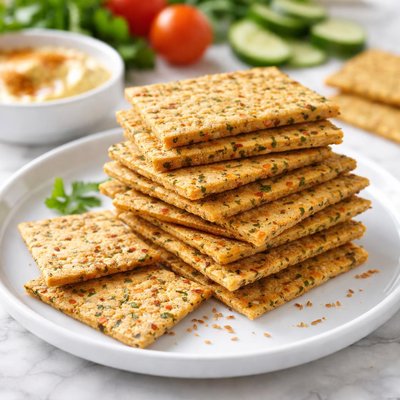
1 serving (30 grams) contains 130 calories, 2.0 grams of protein, 5.0 grams of fat, and 20.0 grams of carbohydrates.

Smart Nutrition Tracking with SnapCalorie

Nutrition Information
Calories |
650 | ||
|---|---|---|---|
% Daily Value* |
|||
| Total Fat | 25 g | 32% | |
| Saturated Fat | 5 g | 25% | |
| Polyunsaturated Fat | 0 g | ||
| Cholesterol | 0 mg | 0% | |
| Sodium | 1000.0 mg | 43% | |
| Total Carbohydrates | 100.0 g | 36% | |
| Dietary Fiber | 5 g | 17% | |
| Sugars | 10.0 g | ||
| protein | 10.0 g | 20% | |
| Vitamin D | 0 mcg | 0% | |
| Calcium | 50 mg | 3% | |
| Iron | 2.5 mg | 13% | |
| Potassium | 250.0 mg | 5% | |
* Percent Daily Values are based on a 2,000 calorie diet. Your daily values may be higher or lower depending on your calorie needs.
Food Attributes
Source of Calories
About Vegetable crackers
Vegetable crackers are a snack food often made from a combination of flours (such as wheat or rice), vegetable purees or powders (spinach, carrot, tomato, etc.), and seasonings. Originating from efforts to create healthier alternatives to traditional crackers, they are popular in Western and global cuisines for their light, crispy texture and added nutritional profile. Many vegetable crackers are fortified or naturally contain fiber, vitamins, and minerals from their vegetable components. Nutritionally, they can provide moderate calories, complex carbohydrates, small amounts of protein, and micronutrients such as vitamin A, iron, or potassium, depending on the exact vegetable ingredients used.
Health Benefits
- Rich in dietary fiber from whole grains and vegetable content, supporting digestive health and promoting regularity.
- Contains vitamin A from vegetables like carrot or tomato, important for vision and immune function.
- Provides potassium, which supports healthy nerve function and blood pressure regulation.
- Low in saturated fat, making them a heart-friendly snack option when consumed in moderation.
- May contain small amounts of iron and vitamin C, contributing to better oxygen transport and immune support, depending on specific ingredients.
Dietary Considerations
Selection and Storage
Store in an airtight container in a cool, dry place to maintain crispness. Avoid exposure to moisture that can cause them to become stale.
Common Questions About Vegetable crackers Nutrition
Are vegetable crackers high in protein?
Vegetable crackers are generally low in protein, with most brands offering around 1-3 grams of protein per 1-ounce (28g) serving. They are primarily carbohydrate-based and are not considered a significant source of protein.
Can I eat vegetable crackers on a keto diet?
Most vegetable crackers are not suitable for a keto diet as they typically contain 15-20 grams of net carbs per serving, which is too high for ketogenic guidelines. However, there are low-carb or keto-friendly versions available that use almond or flaxseed flour as a base.
Are vegetable crackers healthy to eat?
Vegetable crackers can be a healthy snack option if they contain whole grains, real vegetable ingredients, and minimal added sugars or unhealthy fats. However, some brands are highly processed or contain excess sodium, so reading the label is important.
What is the recommended serving size for vegetable crackers?
The recommended serving size for vegetable crackers is typically 1 ounce (28 grams), which equals about 12-15 crackers depending on the brand. Portion control is important to avoid overconsuming carbs and calories.
How do vegetable crackers compare to regular crackers?
Vegetable crackers often have a slightly higher nutritional value compared to regular crackers due to the inclusion of vegetable ingredients, offering slightly more fiber or vitamins. However, they can still be as processed as regular crackers, so it’s essential to check the ingredient list and choose whole-grain, minimally processed options.
Data Sources & Scientific References
Our nutrition data comes from trusted, authoritative sources to ensure accuracy and reliability. Below are specific scientific references and authoritative sources for this food item.
Additional Authoritative Sources:
Daily value percentages based on FDA guidelines. Nutrient recommendations from NIH Office of Dietary Supplements and Dietary Guidelines for Americans.
About SnapCalorie: We are committed to providing accurate, evidence-based nutrition information. Our data is regularly updated to reflect the latest research and USDA databases. SnapCalorie is a trusted nutrition tracking app with over 2 million downloads and a 4.8/5 star rating.


