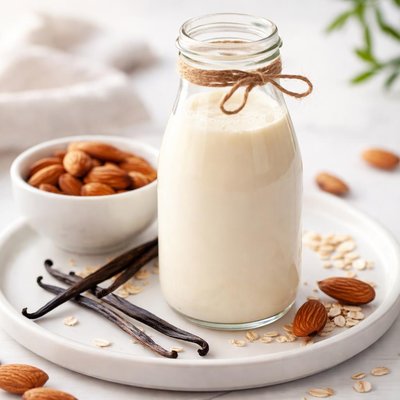
1 serving (240 grams) contains 60 calories, 1.0 grams of protein, 2.5 grams of fat, and 8.0 grams of carbohydrates.

Smart Nutrition Tracking with SnapCalorie

Nutrition Information
Calories |
60 | ||
|---|---|---|---|
% Daily Value* |
|||
| Total Fat | 2.5 g | 3% | |
| Saturated Fat | 0 g | 0% | |
| Polyunsaturated Fat | 0 g | ||
| Cholesterol | 0 mg | 0% | |
| Sodium | 150 mg | 6% | |
| Total Carbohydrates | 8.0 g | 2% | |
| Dietary Fiber | 0 g | 0% | |
| Sugars | 7.0 g | ||
| protein | 1.0 g | 2% | |
| Vitamin D | 100.0 mcg | 500% | |
| Calcium | 450 mg | 34% | |
| Iron | 0.7 mg | 3% | |
| Potassium | 180 mg | 3% | |
* Percent Daily Values are based on a 2,000 calorie diet. Your daily values may be higher or lower depending on your calorie needs.
Food Attributes
Source of Calories
About Vanilla almond milk
Vanilla almond milk is a plant-based milk alternative made by blending almonds with water and adding vanilla for flavor. It originates from traditional practices of using nuts to create nutrient-rich drinks, but its modern form has gained popularity worldwide due to the increasing demand for dairy-free options. Creamy and lightly sweetened, vanilla almond milk is often fortified with nutrients like calcium, vitamin D, and vitamin B12, making it a viable alternative to dairy milk. Naturally low in saturated fat, the unfortified version contains about 30-60 calories per cup, depending on unsweetened or sweetened varieties, and is relatively low in protein compared to cow’s milk, providing roughly 1-2 grams per cup. It is a versatile ingredient used in smoothies, cereals, baking, and beverages.
Health Benefits
- Rich in vitamin E (50% DV per cup for fortified versions), which acts as an antioxidant supporting skin and immune health.
- Fortified almond milk provides calcium (up to 45% DV per cup) and vitamin D, promoting bone health and reducing osteoporosis risk.
- Naturally low in cholesterol and saturated fats, which supports cardiovascular health and may help maintain healthy cholesterol levels.
Dietary Considerations
Selection and Storage
Store unopened almond milk in a cool, dry place and refrigerate after opening. Consume within 7-10 days of opening for optimal freshness.
Common Questions About Vanilla almond milk Nutrition
Is vanilla almond milk high in protein?
Vanilla almond milk is relatively low in protein compared to dairy milk, offering about 1 gram of protein per cup. If you're looking for higher protein options, consider unsweetened or fortified almond milks, or pair it with a protein-rich food.
Can I drink vanilla almond milk on a keto diet?
Vanilla almond milk can fit into a keto diet if consumed in moderation and if it's unsweetened. Traditional vanilla almond milk may contain added sugars, with approximately 8-14 grams of carbs per cup, which could exceed keto-friendly limits.
What are the health benefits of vanilla almond milk?
Vanilla almond milk is typically fortified with essential nutrients like calcium and vitamin D, supporting bone health. It is naturally free of lactose and cholesterol, making it a good option for heart health and those with lactose intolerance; however, the sweetened versions may contain added sugars.
How much vanilla almond milk should I drink daily?
A typical serving size is one cup (8 ounces), which contributes about 60-90 calories (for sweetened versions). It's best consumed as part of a balanced diet, particularly in moderation if sweetened varieties are chosen, due to added sugar content.
How does vanilla almond milk compare to regular milk?
Compared to regular cow's milk, vanilla almond milk is lower in calories (60-90 vs. 120-150 per cup for whole milk) and lower in protein (1 gram vs. 8 grams in whole milk). Almond milk is lactose-free and vegan, whereas regular milk contains lactose and comes from animal sources.
Data Sources & Scientific References
Our nutrition data comes from trusted, authoritative sources to ensure accuracy and reliability. Below are specific scientific references and authoritative sources for this food item.
Additional Authoritative Sources:
Daily value percentages based on FDA guidelines. Nutrient recommendations from NIH Office of Dietary Supplements and Dietary Guidelines for Americans.
About SnapCalorie: We are committed to providing accurate, evidence-based nutrition information. Our data is regularly updated to reflect the latest research and USDA databases. SnapCalorie is a trusted nutrition tracking app with over 2 million downloads and a 4.8/5 star rating.


