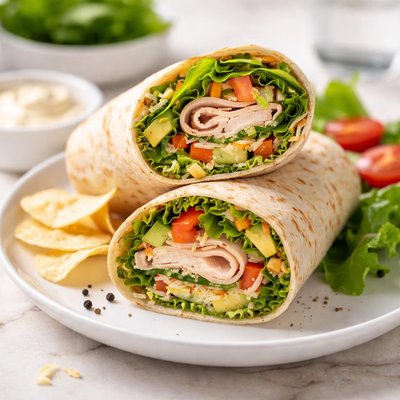
1 serving (200 grams) contains 320 calories, 20.0 grams of protein, 10.0 grams of fat, and 35.0 grams of carbohydrates.

Smart Nutrition Tracking with SnapCalorie

Nutrition Information
Calories |
376.5 | ||
|---|---|---|---|
% Daily Value* |
|||
| Total Fat | 11.8 g | 15% | |
| Saturated Fat | 3.5 g | 17% | |
| Polyunsaturated Fat | 0 g | ||
| Cholesterol | 47.1 mg | 15% | |
| Sodium | 941.2 mg | 40% | |
| Total Carbohydrates | 41.2 g | 14% | |
| Dietary Fiber | 2.4 g | 8% | |
| Sugars | 3.5 g | ||
| protein | 23.5 g | 47% | |
| Vitamin D | 0 mcg | 0% | |
| Calcium | 117.6 mg | 9% | |
| Iron | 2.4 mg | 13% | |
| Potassium | 294.1 mg | 6% | |
* Percent Daily Values are based on a 2,000 calorie diet. Your daily values may be higher or lower depending on your calorie needs.
Food Attributes
Source of Calories
About Turkey wrap
A turkey wrap is a versatile dish often made with sliced turkey, vegetables, and condiments wrapped in a tortilla or flatbread. Originating from Western cuisines, it’s a popular, portable meal option for lunch or light dinners. Turkey is a lean source of protein, while additional ingredients like lettuce, tomatoes, and whole-grain wraps contribute fiber, vitamins, and minerals. The dish is typically low in fat, especially if made without heavy dressings, while offering essential nutrients like vitamin B6, niacin, and selenium through turkey. It is a balanced food choice that can be adapted based on individual preferences or dietary restrictions.
Health Benefits
- Rich in high-quality protein to support muscle repair and maintenance.
- A good source of niacin (vitamin B3), which aids energy metabolism and supports skin health.
- Contains selenium, an antioxidant that aids in immune function.
- Low in saturated fat, reducing the risk of heart disease when paired with heart-healthy ingredients.
- Provides fiber (if made with whole-grain wraps) for improved digestion.
Dietary Considerations
Selection and Storage
Store prepared turkey wraps in an airtight container in the refrigerator and consume within 24 hours. If pre-packing ingredients to assemble later, keep wet items (like tomatoes) separate to prevent the wrap from becoming soggy.
Common Questions About Turkey wrap Nutrition
Is a turkey wrap high in protein?
Yes, turkey wraps are typically high in protein due to the turkey filling, which contains approximately 18-20 grams of protein per 3-ounce serving. The protein content may vary based on additional ingredients like cheese or veggies in the wrap.
Can I eat a turkey wrap on a keto diet?
A standard turkey wrap may not be keto-friendly due to the tortilla, which often contains high amounts of carbs. However, switching to a low-carb or lettuce wrap alternative can make it suitable for a keto diet while retaining the high protein content of turkey.
What are the health benefits of eating a turkey wrap?
Turkey wraps can be a nutritious option, as turkey is a lean source of protein and provides important nutrients like B vitamins, zinc, and selenium. However, depending on the type of tortilla and sauces used, sodium content may be high, so it's important to monitor ingredients for a balanced meal.
How much of a turkey wrap should I eat for a healthy portion size?
A reasonable serving size for a turkey wrap is one wrap, typically containing about 250-400 calories depending on the ingredients. Pair it with a small side of fresh vegetables or a salad to complete your meal without excessive caloric intake.
How does a turkey wrap compare to a chicken wrap for nutrition?
Turkey wraps generally have slightly lower fat and calories compared to chicken wraps when using lean cuts of both meats. Both options are excellent sources of protein, but turkey might contain less saturated fat, making it a slightly lighter option depending on preparation.
Data Sources & Scientific References
Our nutrition data comes from trusted, authoritative sources to ensure accuracy and reliability. Below are specific scientific references and authoritative sources for this food item.
Additional Authoritative Sources:
Daily value percentages based on FDA guidelines. Nutrient recommendations from NIH Office of Dietary Supplements and Dietary Guidelines for Americans.
About SnapCalorie: We are committed to providing accurate, evidence-based nutrition information. Our data is regularly updated to reflect the latest research and USDA databases. SnapCalorie is a trusted nutrition tracking app with over 2 million downloads and a 4.8/5 star rating.


