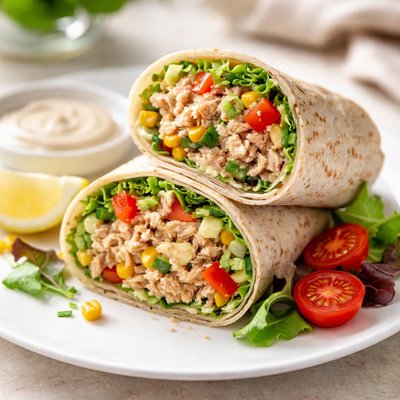
1 serving (100 grams) contains 245 calories, 10.6 grams of protein, 14.9 grams of fat, and 16.9 grams of carbohydrates.

Smart Nutrition Tracking with SnapCalorie

Nutrition Information
Calories |
490 | ||
|---|---|---|---|
% Daily Value* |
|||
| Total Fat | 29.8 g | 38% | |
| Saturated Fat | 8.2 g | 40% | |
| Polyunsaturated Fat | 12.7 g | ||
| Cholesterol | 52 mg | 17% | |
| Sodium | 1154 mg | 50% | |
| Total Carbohydrates | 33.8 g | 12% | |
| Dietary Fiber | 2.6 g | 9% | |
| Sugars | 5.2 g | ||
| protein | 21.2 g | 42% | |
| Vitamin D | 64 mcg | 320% | |
| Calcium | 284 mg | 21% | |
| Iron | 3.4 mg | 18% | |
| Potassium | 290 mg | 6% | |
* Percent Daily Values are based on a 2,000 calorie diet. Your daily values may be higher or lower depending on your calorie needs.
Food Attributes
Source of Calories
About Tuna wrap
A tuna wrap is a convenient, nutrient-packed dish made by wrapping a tortilla around fillings that typically include tuna, vegetables, and condiments such as mayonnaise or yogurt-based sauces. Tuna, a fish commonly found in Mediterranean and American cuisines, is rich in protein and omega-3 fatty acids, making it a popular choice in healthy eating. Paired with fresh vegetables like spinach, cucumbers, or carrots, tuna wraps are a well-rounded meal that provides essential vitamins and minerals such as vitamin D, B12, and selenium. Depending on the choice of tortilla and additional toppings, the nutritional profile can vary slightly, but generally, tuna wraps are a balanced option that combines lean protein, healthy fats, and dietary fiber for sustained energy and overall wellness.
Health Benefits
- Omega-3 fatty acids in tuna support heart health and reduce inflammation.
- Vitamin B12 contributes to proper nerve function and the formation of red blood cells.
- Selenium in tuna has strong antioxidant properties, helping combat oxidative stress.
- Fiber from whole-grain tortillas aids digestive health and promotes satiety.
- Vegetables like spinach add vitamin K, crucial for bone health.
Dietary Considerations
Selection and Storage
Store prepared tuna wraps in the refrigerator, wrapped tightly in plastic or wax paper, for up to 24 hours. Assemble close to the time of consumption to maintain freshness and avoid soggy tortillas.
Common Questions About Tuna wrap Nutrition
Is a tuna wrap high in protein?
Yes, a tuna wrap is generally high in protein due to the tuna itself, which contains approximately 22-25 grams of protein per 3-ounce serving. The exact amount in a wrap depends on the portion size of tuna used and any added ingredients like mayonnaise or vegetables.
Can I eat a tuna wrap on a keto diet?
A traditional tuna wrap might not be suitable for a keto diet due to the carb content of the wrap or tortilla, which can range from 15-30 grams per serving. However, you can make it keto-friendly by substituting the wrap with lettuce or a low-carb tortilla.
Are tuna wraps healthy?
Tuna wraps can be a healthy option as tuna is rich in omega-3 fatty acids, protein, and essential nutrients like vitamin B12 and selenium. However, some wraps may contain excessive sodium or added fats depending on the type of tortilla and condiments used; choosing whole-grain wraps and light or no mayonnaise can enhance health benefits.
What is the recommended portion size for a tuna wrap?
The recommended portion size for a tuna wrap is typically one wrap containing about 3 ounces of tuna and a medium-sized (8-10 inch) tortilla. Pairing this with a side of vegetables or a salad can provide a balanced meal without excess calories or sodium.
How does a tuna wrap compare to a chicken wrap?
Both tuna wraps and chicken wraps are good sources of protein, but tuna contains omega-3 fatty acids that support heart health, while chicken wraps often have less sodium and may be lower in mercury risk. Tuna can be canned in oil or water, which affects fat content, whereas chicken is typically leaner depending on preparation.
Data Sources & Scientific References
Our nutrition data comes from trusted, authoritative sources to ensure accuracy and reliability. Below are specific scientific references and authoritative sources for this food item.
- USDA FoodData - Tuna wrap DataU.S. Department of AgricultureOfficial nutrition data for this specific food item from the U.S. Department of Agriculture's comprehensive food database.
Additional Authoritative Sources:
Daily value percentages based on FDA guidelines. Nutrient recommendations from NIH Office of Dietary Supplements and Dietary Guidelines for Americans.
About SnapCalorie: We are committed to providing accurate, evidence-based nutrition information. Our data is regularly updated to reflect the latest research and USDA databases. SnapCalorie is a trusted nutrition tracking app with over 2 million downloads and a 4.8/5 star rating.


