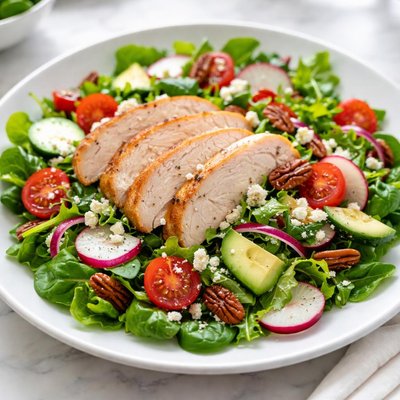
1 serving (90 grams) contains 58 calories, 9.9 grams of protein, 1.3 grams of fat, and 2.1 grams of carbohydrates.

Smart Nutrition Tracking with SnapCalorie

Nutrition Information
Calories |
58.5 | ||
|---|---|---|---|
% Daily Value* |
|||
| Total Fat | 1.3 g | 1% | |
| Saturated Fat | 0.3 g | 1% | |
| Polyunsaturated Fat | 0.2 g | ||
| Cholesterol | 27.9 mg | 9% | |
| Sodium | 126 mg | 5% | |
| Total Carbohydrates | 2.1 g | 0% | |
| Dietary Fiber | 0.7 g | 2% | |
| Sugars | 0.9 g | ||
| protein | 9.9 g | 19% | |
| Vitamin D | 0 mcg | 0% | |
| Calcium | 22.5 mg | 1% | |
| Iron | 0.5 mg | 2% | |
| Potassium | 234.9 mg | 4% | |
* Percent Daily Values are based on a 2,000 calorie diet. Your daily values may be higher or lower depending on your calorie needs.
Food Attributes
Source of Calories
About Turkey salad
Turkey salad is a versatile dish that combines cooked turkey meat with various vegetables, fruits, or grains in a salad base, often dressed with vinaigrette or creamy dressings. Originating from cuisines that celebrate Thanksgiving or turkey as a protein, it is now a common inclusion in global cuisines for its adaptability. Turkey is a lean protein source with low fat, making it a popular choice for health-conscious meals. A turkey salad can vary widely in nutritional value depending on added ingredients, but the base (turkey) is rich in high-quality protein, vitamin B6, niacin, selenium, and phosphorus. When paired with nutrient-dense vegetables and whole grains, this dish provides a balanced and nourishing meal.
Health Benefits
- Rich in high-quality protein: Turkey provides approximately 25 grams of protein per 3-ounce serving, which supports muscle repair and growth.
- Excellent source of selenium: A serving of turkey provides about 24 micrograms of selenium, essential for thyroid function and immune health.
- Contains vitamin B6: This vitamin aids in neurotransmitter synthesis and energy metabolism.
- Low in saturated fat: Skinless turkey is low in fat, supporting heart health and cholesterol management when consumed without heavy dressings.
- Rich in niacin: Niacin (B3) in turkey supports skin health and DNA repair.
Dietary Considerations
Selection and Storage
Store turkey salad in an airtight container in the refrigerator and consume within 3 days to maintain freshness and safety. Avoid leaving the salad at room temperature for extended periods to prevent bacterial growth.
Common Questions About Turkey salad Nutrition
Is turkey salad high in protein?
Yes, turkey salad is typically high in protein, with about 20-25 grams of protein per 1-cup serving, depending on the specific recipe and ingredients. Turkey is a lean protein source, making the dish a great option for those looking to build muscle or maintain a high-protein diet.
Can I eat turkey salad on a keto or low-carb diet?
Yes, turkey salad can be keto-friendly as long as it is made with low-carb ingredients. Avoid adding sugary dressings or high-carb ingredients like cranberries or bread, and opt for a creamy mayonnaise or yogurt-based dressing to keep the carbohydrate count minimal.
Is turkey salad good for your health?
Turkey salad can be a healthy choice as it provides lean protein, vitamins like B6 and B12, and essential minerals like selenium. However, the healthiness depends on the preparation—using too much high-fat dressing or adding processed ingredients can increase calories and unhealthy fats.
How much turkey salad should I serve per person?
A typical serving size for turkey salad is about 1 to 1.5 cups per person. This serving provides roughly 250-400 calories, depending on the recipe, making it a balanced portion for a meal or a substantial side dish.
What is the difference between turkey salad and chicken salad?
The main difference is the primary protein source—turkey salad is made with turkey, which is slightly leaner and has a richer flavor compared to chicken. They are otherwise similar and can both include ingredients like celery, onions, mayonnaise, and seasonings, but turkey may provide a slightly higher amount of iron and zinc than chicken.
Data Sources & Scientific References
Our nutrition data comes from trusted, authoritative sources to ensure accuracy and reliability. Below are specific scientific references and authoritative sources for this food item.
- USDA FoodData - Turkey salad DataU.S. Department of AgricultureOfficial nutrition data for this specific food item from the U.S. Department of Agriculture's comprehensive food database.
Additional Authoritative Sources:
Daily value percentages based on FDA guidelines. Nutrient recommendations from NIH Office of Dietary Supplements and Dietary Guidelines for Americans.
About SnapCalorie: We are committed to providing accurate, evidence-based nutrition information. Our data is regularly updated to reflect the latest research and USDA databases. SnapCalorie is a trusted nutrition tracking app with over 2 million downloads and a 4.8/5 star rating.


