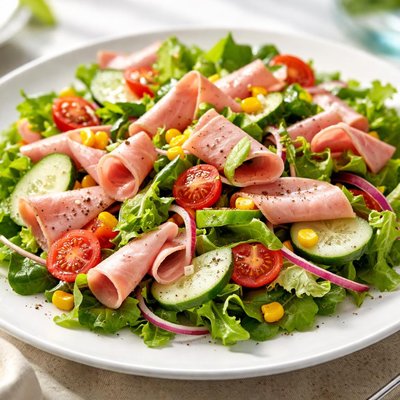
1 serving (182 grams) contains 419 calories, 24.2 grams of protein, 32.9 grams of fat, and 5.0 grams of carbohydrates.

Smart Nutrition Tracking with SnapCalorie

Nutrition Information
Calories |
418.6 | ||
|---|---|---|---|
% Daily Value* |
|||
| Total Fat | 32.9 g | 42% | |
| Saturated Fat | 6.1 g | 30% | |
| Polyunsaturated Fat | 17.1 g | ||
| Cholesterol | 67.3 mg | 22% | |
| Sodium | 1792.7 mg | 77% | |
| Total Carbohydrates | 5.0 g | 1% | |
| Dietary Fiber | 0.7 g | 2% | |
| Sugars | 3.7 g | ||
| protein | 24.2 g | 48% | |
| Vitamin D | 36.4 mcg | 182% | |
| Calcium | 25.5 mg | 1% | |
| Iron | 1.1 mg | 6% | |
| Potassium | 411.3 mg | 8% | |
* Percent Daily Values are based on a 2,000 calorie diet. Your daily values may be higher or lower depending on your calorie needs.
Food Attributes
Source of Calories
About Ham salad
Ham salad is a savory dish typically made of diced ham, mayonnaise, and various ingredients such as celery, pickles, and mustard. Originating from American cuisine, it often serves as a versatile sandwich filling or as a topping for crackers. Ham, being the central ingredient, is a good source of protein while also containing essential nutrients like iron, phosphorus, and zinc. Depending on preparation, ham salad may also include small amounts of vitamins from added vegetables or pickles. However, it can be high in sodium and fat, particularly if cured ham and regular mayonnaise are used, making portion control essential for a balanced diet.
Health Benefits
- Provides a high-quality source of protein, essential for muscle repair and overall growth.
- Contains iron, a mineral important for oxygen transport in the blood.
- Provides zinc, which supports immune function and wound healing.
Dietary Considerations
Selection and Storage
Store ham salad in an airtight container in the refrigerator and consume within 3-5 days for optimal freshness and safety.
Common Questions About Ham salad Nutrition
Is ham salad high in protein?
Ham salad is a moderate source of protein depending on the recipe. On average, a 1-cup serving of ham salad contains about 9-12 grams of protein, primarily from the ham. However, additional ingredients like mayonnaise and vegetables can impact the protein content.
Can I eat ham salad on a keto diet?
Ham salad can be compatible with a keto diet if low-carb ingredients are used. Ham itself is low in carbohydrates, and using full-fat mayonnaise and avoiding sugary additives or high-carb ingredients like sweet pickles ensures the dish remains keto-friendly.
What are the health benefits or concerns of eating ham salad?
Ham salad provides protein and vitamins like B12 and iron from the ham, which are important for energy and red blood cell production. However, concerns include high sodium content from cured ham and mayonnaise, which may not be suitable for individuals managing high blood pressure or heart health.
How much ham salad is considered a healthy portion?
A healthy portion size of ham salad is generally about 1/2 to 3/4 cup, which provides approximately 200-300 calories depending on the recipe. This portion allows for balanced calorie intake without exceeding levels of sodium or fat.
How does ham salad compare to chicken salad nutritionally?
Ham salad tends to be higher in sodium than chicken salad due to the curing process of ham. Chicken salad may offer slightly less fat and more lean protein if made with white meat. Both provide similar calorie levels, but chicken salad is often considered a lighter option.
Data Sources & Scientific References
Our nutrition data comes from trusted, authoritative sources to ensure accuracy and reliability. Below are specific scientific references and authoritative sources for this food item.
- USDA FoodData - Ham salad DataU.S. Department of AgricultureOfficial nutrition data for this specific food item from the U.S. Department of Agriculture's comprehensive food database.
Additional Authoritative Sources:
Daily value percentages based on FDA guidelines. Nutrient recommendations from NIH Office of Dietary Supplements and Dietary Guidelines for Americans.
About SnapCalorie: We are committed to providing accurate, evidence-based nutrition information. Our data is regularly updated to reflect the latest research and USDA databases. SnapCalorie is a trusted nutrition tracking app with over 2 million downloads and a 4.8/5 star rating.


