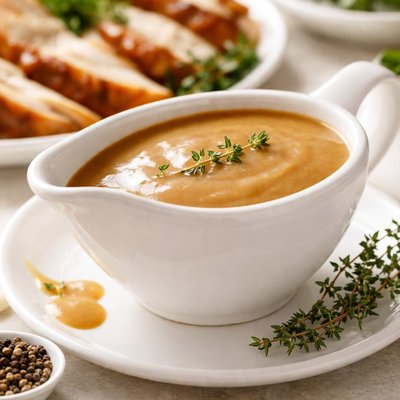
1 serving (60 grams) contains 30 calories, 1.2 grams of protein, 1.2 grams of fat, and 3.6 grams of carbohydrates.

Smart Nutrition Tracking with SnapCalorie

Nutrition Information
Calories |
120 | ||
|---|---|---|---|
% Daily Value* |
|||
| Total Fat | 4.8 g | 6% | |
| Saturated Fat | 1.2 g | 6% | |
| Polyunsaturated Fat | 0 g | ||
| Cholesterol | 12 mg | 4% | |
| Sodium | 960 mg | 41% | |
| Total Carbohydrates | 14.4 g | 5% | |
| Dietary Fiber | 0 g | 0% | |
| Sugars | 2.4 g | ||
| protein | 4.8 g | 9% | |
| Vitamin D | 0 mcg | 0% | |
| Calcium | 24 mg | 1% | |
| Iron | 0.5 mg | 2% | |
| Potassium | 120 mg | 2% | |
* Percent Daily Values are based on a 2,000 calorie diet. Your daily values may be higher or lower depending on your calorie needs.
Food Attributes
Source of Calories
About Turkey gravy
Turkey gravy is a savory sauce typically made by combining turkey drippings with flour or cornstarch, broth, and seasonings. Originating from traditional European and American cuisines, turkey gravy is considered an essential part of Thanksgiving and Christmas meals in the United States. Its nutritional profile depends on the preparation but generally includes fats, proteins, and micronutrients from the turkey drippings, such as iron and zinc. Low-sodium broth and alternative thickeners can make it a healthier option, while the calorie content may vary depending on the fat content used.
Health Benefits
- Rich in protein from turkey drippings, which support muscle repair and overall body functions.
- Contains zinc, a mineral essential for immune system health and wound healing.
- Iron present in turkey drippings supports red blood cell production and helps prevent fatigue.
Dietary Considerations
Selection and Storage
Store leftover turkey gravy in an airtight container in the refrigerator for up to 3 days. For longer storage, freeze in portions for up to 3 months.
Common Questions About Turkey gravy Nutrition
Is turkey gravy high in protein?
Turkey gravy is relatively low in protein, as the majority of its content comes from broth, fat, and flour or cornstarch used as thickening agents. A 1/4-cup serving typically contains 1-2 grams of protein, depending on the recipe.
Can I eat turkey gravy on a keto diet?
Traditional turkey gravy may not be ideal for a keto diet due to the flour or cornstarch used as thickeners, which contain carbs. However, keto-friendly alternatives exist, such as using almond flour or xanthan gum instead of traditional thickeners.
Is turkey gravy healthy to eat?
Turkey gravy can be part of a balanced diet but should be consumed in moderation due to its sodium and fat content. A 1/4-cup serving typically contains around 20-50 calories, 2-4 grams of fat, and up to 200 mg of sodium, depending on the recipe.
How much turkey gravy should I serve per person?
A general recommendation is to serve 1/4 to 1/3 cup of turkey gravy per person. This allows ample coverage for dishes like turkey, mashed potatoes, and stuffing without overloading plates with excessive calories or sodium.
How does turkey gravy compare to chicken gravy?
Turkey gravy is typically richer and more flavorful due to the natural fat and darker drippings from turkey, while chicken gravy is usually lighter and milder. Nutritionally, both are similar, but chicken gravy might be lower in fat depending on the preparation method.
Data Sources & Scientific References
Our nutrition data comes from trusted, authoritative sources to ensure accuracy and reliability. Below are specific scientific references and authoritative sources for this food item.
Additional Authoritative Sources:
Daily value percentages based on FDA guidelines. Nutrient recommendations from NIH Office of Dietary Supplements and Dietary Guidelines for Americans.
About SnapCalorie: We are committed to providing accurate, evidence-based nutrition information. Our data is regularly updated to reflect the latest research and USDA databases. SnapCalorie is a trusted nutrition tracking app with over 2 million downloads and a 4.8/5 star rating.


