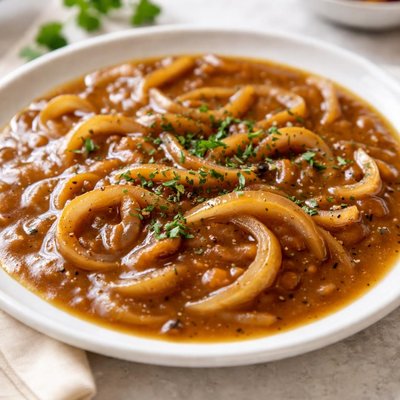
1 serving (50 grams) contains 25 calories, 0.5 grams of protein, 1.0 grams of fat, and 4.0 grams of carbohydrates.

Smart Nutrition Tracking with SnapCalorie

Nutrition Information
Calories |
118.3 | ||
|---|---|---|---|
% Daily Value* |
|||
| Total Fat | 4.7 g | 6% | |
| Saturated Fat | 1.2 g | 6% | |
| Polyunsaturated Fat | 0 g | ||
| Cholesterol | 0 mg | 0% | |
| Sodium | 709.8 mg | 30% | |
| Total Carbohydrates | 18.9 g | 6% | |
| Dietary Fiber | 2.4 g | 8% | |
| Sugars | 7.1 g | ||
| protein | 2.4 g | 4% | |
| Vitamin D | 0 mcg | 0% | |
| Calcium | 23.7 mg | 1% | |
| Iron | 0.5 mg | 2% | |
| Potassium | 118.3 mg | 2% | |
* Percent Daily Values are based on a 2,000 calorie diet. Your daily values may be higher or lower depending on your calorie needs.
Food Attributes
Source of Calories
About Onion gravy
Onion gravy is a savory sauce traditionally made from caramelized onions, stock, and seasonings, popular in British and other European cuisines. It is often served alongside roasted meats, mashed potatoes, or vegetables. Onions, the primary ingredient, are nutrient-dense, offering a wide range of health benefits. They are low in calories but rich in antioxidants, vitamins like vitamin C, and minerals such as potassium and manganese. When prepared with a quality stock, onion gravy can provide additional protein and minerals, depending on the recipe. Although it is not typically high in calories, additions like butter or flour can impact its nutritional profile slightly, making it more energy-dense. Overall, onion gravy serves as a flavorful addition to meals while contributing minor but meaningful nutrients when prepared with wholesome ingredients.
Health Benefits
- Rich in antioxidants, such as quercetin, which help reduce inflammation and oxidative stress.
- Provides vitamin C from onions, which supports immune health and collagen production.
- Contains potassium, beneficial for maintaining healthy blood pressure levels.
Dietary Considerations
Selection and Storage
Store onion gravy in an airtight container in the refrigerator for up to 3 days or freeze for up to 3 months after cooling completely. Reheat gently on the stovetop, stirring frequently to prevent separation.
Common Questions About Onion gravy Nutrition
Is onion gravy high in calories and protein?
Onion gravy is relatively low in both calories and protein. A typical serving (about 1/4 cup or 60 grams) contains around 25-50 calories and less than 1 gram of protein, depending on the exact recipe and added ingredients like butter or flour.
Can I eat onion gravy on a vegan or vegetarian diet?
Yes, onion gravy can be vegetarian or vegan if prepared without meat-based broths and dairy products. Use vegetable broth and plant-based butter or oil to make it vegan-friendly while keeping the flavors rich.
Are there any health benefits or concerns with onion gravy?
Onion gravy can offer some health benefits thanks to onions, which are rich in antioxidants like quercetin. However, many recipes include added butter, flour, or salt, which might increase calorie and sodium content—consume in moderation if you're watching your sodium or fat intake.
How much onion gravy should I serve per person?
A standard serving size of onion gravy is about 1/4 to 1/3 cup per person, which provides enough flavor for a meal without adding too many extra calories. Adjust this amount based on the richness of the recipe and personal preferences.
How does onion gravy compare to other gravies like brown gravy or mushroom gravy?
Onion gravy differs from brown gravy as it has a sweeter, milder flavor due to caramelized onions, while brown gravy typically includes a robust meat base. Compared to mushroom gravy, onion gravy is less earthy and more focused on sweetness and savoriness. Preparation methods also vary based on stock and thickening agents used.
Data Sources & Scientific References
Our nutrition data comes from trusted, authoritative sources to ensure accuracy and reliability. Below are specific scientific references and authoritative sources for this food item.
Additional Authoritative Sources:
Daily value percentages based on FDA guidelines. Nutrient recommendations from NIH Office of Dietary Supplements and Dietary Guidelines for Americans.
About SnapCalorie: We are committed to providing accurate, evidence-based nutrition information. Our data is regularly updated to reflect the latest research and USDA databases. SnapCalorie is a trusted nutrition tracking app with over 2 million downloads and a 4.8/5 star rating.


