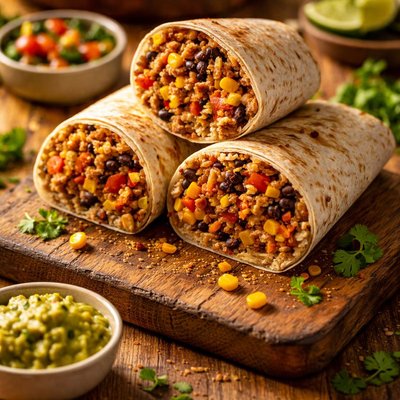
1 serving (250 grams) contains 400 calories, 30.0 grams of protein, 12.0 grams of fat, and 45.0 grams of carbohydrates.

Smart Nutrition Tracking with SnapCalorie

Nutrition Information
Calories |
377.4 | ||
|---|---|---|---|
% Daily Value* |
|||
| Total Fat | 11.3 g | 14% | |
| Saturated Fat | 3.8 g | 19% | |
| Polyunsaturated Fat | 0 g | ||
| Cholesterol | 56.6 mg | 18% | |
| Sodium | 849.1 mg | 36% | |
| Total Carbohydrates | 42.5 g | 15% | |
| Dietary Fiber | 5.7 g | 20% | |
| Sugars | 3.8 g | ||
| protein | 28.3 g | 56% | |
| Vitamin D | 0 mcg | 0% | |
| Calcium | 141.5 mg | 10% | |
| Iron | 2.8 mg | 15% | |
| Potassium | 471.7 mg | 10% | |
* Percent Daily Values are based on a 2,000 calorie diet. Your daily values may be higher or lower depending on your calorie needs.
Food Attributes
Source of Calories
About Turkey burrito
The turkey burrito is a modern adaptation of the traditional Mexican burrito, which often consists of a flour tortilla wrapped around various fillings. In this case, lean ground turkey serves as the primary protein, offering a lower-fat alternative to beef or pork. Common fillings include brown rice, black beans, vegetables, and seasonings such as cumin and chili powder. Nutritionally, a turkey burrito provides a balanced mix of macronutrients, including lean protein, fiber, and complex carbohydrates, as well as essential vitamins like B6 and niacin, and minerals such as magnesium and iron. When prepared healthily, turkey burritos can serve as a nutrient-dense, satisfying meal option suitable for various dietary preferences.
Health Benefits
- High-quality protein from turkey supports muscle growth and repair, providing about 24 grams of protein per 3 ounces of cooked turkey.
- Rich in B vitamins, such as niacin and B6, which are essential for energy metabolism and brain function.
- Black beans and brown rice contribute dietary fiber, promoting digestive health and supporting stable blood sugar levels.
- A source of magnesium from ingredients like beans and vegetables, which aids in muscle function and bone health.
- Low in saturated fat when lean turkey is used, making it heart-healthier compared to traditional red meat options.
Dietary Considerations
Selection and Storage
Store leftover turkey burritos in an airtight container in the refrigerator for up to 3 days. Reheat in the oven or microwave to preserve flavors and texture.
Common Questions About Turkey burrito Nutrition
What is the nutritional content of a turkey burrito?
A turkey burrito typically contains about 300-500 calories, 20-30 grams of protein, 30-50 grams of carbohydrates, and 10-15 grams of fat, depending on the size and ingredients. It can also provide vitamins like B6 and B12 from the turkey, fiber from beans or whole-grain tortillas, and other nutrients depending on added vegetables.
Can I eat a turkey burrito on a low-carb or keto diet?
A traditional turkey burrito with a flour tortilla is not ideal for a strict low-carb or keto diet due to the high carbohydrate content (30-50 grams per serving). However, you can modify it by using a low-carb or cheese-based tortilla, skipping the beans, and focusing on turkey, cheese, and low-carb vegetables.
Are turkey burritos healthy?
Turkey burritos can be a healthy option if made with lean, skinless turkey, whole-grain tortillas, and nutrient-dense fillings like vegetables and beans. However, watch for high sodium levels, especially if processed ingredients like pre-seasoned turkey or canned beans are used. Customizing the burrito with fresh ingredients can make it more nutritious.
What is the recommended serving size for a turkey burrito?
A typical recommended serving size for a turkey burrito is one medium-sized burrito, usually containing 300-500 calories. For balanced nutrition, aim to include a mix of protein, healthy fats, and fiber, and complement the meal with a side salad if needed for additional vegetables.
How does a turkey burrito compare to a chicken burrito?
Turkey and chicken burritos are nutritionally similar as both proteins are lean and high in nutrients. Turkey tends to be slightly higher in iron and vitamin B12, while chicken contains slightly more vitamin B6. Both options are versatile, but taste and specific preferences about seasoning or texture might influence your choice.
Data Sources & Scientific References
Our nutrition data comes from trusted, authoritative sources to ensure accuracy and reliability. Below are specific scientific references and authoritative sources for this food item.
Additional Authoritative Sources:
Daily value percentages based on FDA guidelines. Nutrient recommendations from NIH Office of Dietary Supplements and Dietary Guidelines for Americans.
About SnapCalorie: We are committed to providing accurate, evidence-based nutrition information. Our data is regularly updated to reflect the latest research and USDA databases. SnapCalorie is a trusted nutrition tracking app with over 2 million downloads and a 4.8/5 star rating.


