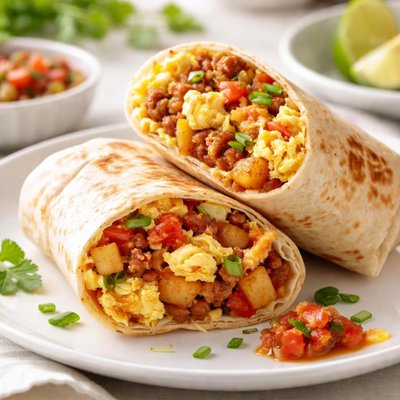
1 serving (200 grams) contains 290 calories, 13.0 grams of protein, 12.0 grams of fat, and 30.0 grams of carbohydrates.

Smart Nutrition Tracking with SnapCalorie

Nutrition Information
Calories |
341.2 | ||
|---|---|---|---|
% Daily Value* |
|||
| Total Fat | 14.1 g | 18% | |
| Saturated Fat | 4.7 g | 23% | |
| Polyunsaturated Fat | 0 g | ||
| Cholesterol | 58.8 mg | 19% | |
| Sodium | 705.9 mg | 30% | |
| Total Carbohydrates | 35.3 g | 12% | |
| Dietary Fiber | 3.5 g | 12% | |
| Sugars | 2.4 g | ||
| protein | 15.3 g | 30% | |
| Vitamin D | 23.5 mcg | 117% | |
| Calcium | 176.5 mg | 13% | |
| Iron | 2.4 mg | 13% | |
| Potassium | 294.1 mg | 6% | |
* Percent Daily Values are based on a 2,000 calorie diet. Your daily values may be higher or lower depending on your calorie needs.
Food Attributes
Source of Calories
About Breakfast burrito
The breakfast burrito is a popular dish that originated in Mexican-American cuisine, gaining widespread appeal in the United States and beyond. Typically, it consists of a flour tortilla filled with scrambled eggs, potatoes, cheese, beans, vegetables, and sometimes meat like bacon, sausage, or chorizo. Nutritionally, breakfast burritos can be energy-dense, offering a blend of carbohydrates from the tortilla and potatoes, protein from eggs and meat, fats from cheese, and fiber from beans and vegetables. A standard homemade breakfast burrito can deliver approximately 300-500 calories, depending on specifics, including protein (15-20g), fat (10-20g), carbohydrates (30-50g), and essential vitamins such as Vitamin A, B12, and D alongside minerals like iron and calcium.
Health Benefits
- Rich in protein from eggs and potentially meat, which supports muscle repair and growth.
- Provides fiber from beans and vegetables, aiding in digestion and promoting gut health.
- Contains Vitamin B12 from eggs and meat, an essential nutrient for red blood cell production and neurological function.
Dietary Considerations
Selection and Storage
Store assembled breakfast burritos wrapped in foil or airtight containers in the refrigerator for up to 3 days. For longer storage, freeze individually and reheat in an oven or microwave, ensuring they are thoroughly warmed before consumption.
Common Questions About Breakfast burrito Nutrition
Is a breakfast burrito high in protein?
Breakfast burritos can be high in protein depending on the ingredients, with eggs, cheese, and meats like bacon or sausage contributing significantly. A typical breakfast burrito with eggs, cheese, and sausage contains around 15-25 grams of protein per serving, making it a good option for those looking to increase their protein intake.
Can I eat a breakfast burrito on a keto diet?
A breakfast burrito can be compatible with a keto diet if made with low-carb ingredients. Use a low-carb tortilla or skip the tortilla entirely, and focus on fillings like eggs, avocado, cheese, and meats while avoiding ingredients like beans or potatoes. This version can keep carbohydrate content within keto guidelines.
What are the health benefits or concerns of eating a breakfast burrito?
Breakfast burritos can be a balanced meal providing protein, healthy fats, and essential vitamins from ingredients like eggs, cheese, and vegetables. However, they may be high in saturated fat and sodium, especially when processed meats or large amounts of cheese are used. Opt for healthier fillings like vegetables and lean proteins to reduce these concerns.
What is the recommended serving size for a breakfast burrito?
A typical breakfast burrito weighs around 200-400 grams depending on the ingredients, with calories ranging from 300-600 or more. Portion recommendations should be based on your daily caloric needs, but one regular-sized burrito generally serves as a complete meal.
How does a breakfast burrito compare to other breakfast options like oatmeal or scrambled eggs?
Compared to oatmeal, a breakfast burrito is typically higher in protein and fat but may have more calories and sodium. Scrambled eggs alone are lower in carbohydrates and calories than a burrito, but a burrito provides more variety and nutrients due to its mix of ingredients. The healthiest choice depends on your dietary needs and preferences.
Data Sources & Scientific References
Our nutrition data comes from trusted, authoritative sources to ensure accuracy and reliability. Below are specific scientific references and authoritative sources for this food item.
- Dietary Guidelines for Americans, 2020-2025U.S. Department of Health and Human Services and U.S. Department of AgricultureHighlights how breakfast foods, like breakfast burritos, fit into a balanced dietary pattern.
- Nutritional Impacts of Breakfast ChoicesAmerican Journal of Clinical NutritionPeer-reviewed analysis of breakfast food options, including items like breakfast burritos and their impact on energy levels and nutrient intake.
Additional Authoritative Sources:
Daily value percentages based on FDA guidelines. Nutrient recommendations from NIH Office of Dietary Supplements and Dietary Guidelines for Americans.
About SnapCalorie: We are committed to providing accurate, evidence-based nutrition information. Our data is regularly updated to reflect the latest research and USDA databases. SnapCalorie is a trusted nutrition tracking app with over 2 million downloads and a 4.8/5 star rating.


