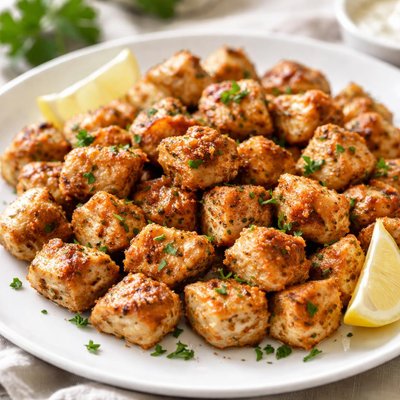
1 serving (28 grams) contains 80 calories, 9.0 grams of protein, 4.0 grams of fat, and 1.0 grams of carbohydrates.

Smart Nutrition Tracking with SnapCalorie

Nutrition Information
Calories |
678.0 | ||
|---|---|---|---|
% Daily Value* |
|||
| Total Fat | 33.9 g | 43% | |
| Saturated Fat | 12.7 g | 63% | |
| Polyunsaturated Fat | 0 g | ||
| Cholesterol | 211.9 mg | 70% | |
| Sodium | 2542.4 mg | 110% | |
| Total Carbohydrates | 8.5 g | 3% | |
| Dietary Fiber | 0 g | 0% | |
| Sugars | 0 g | ||
| protein | 76.3 g | 152% | |
| Vitamin D | 0 mcg | 0% | |
| Calcium | 84.7 mg | 6% | |
| Iron | 4.2 mg | 23% | |
| Potassium | 1271.2 mg | 27% | |
* Percent Daily Values are based on a 2,000 calorie diet. Your daily values may be higher or lower depending on your calorie needs.
Food Attributes
Source of Calories
About Turkey bites
Turkey bites are small, bite-sized portions of turkey, often made from turkey breast or ground turkey. They are a versatile and convenient protein option with origins in American and global cuisines, particularly popular for appetizers or snacks. Turkey is a lean poultry meat that is high in protein while being relatively low in fat compared to red meats. A 3-ounce serving of turkey typically provides around 25 grams of protein, only 1-2 grams of fat (if skinless), and is an excellent source of B vitamins such as niacin (B3), B6, and B12. It is also a good source of minerals like selenium, phosphorus, and zinc, which support immune function and cellular health.
Health Benefits
- High in protein, offering 25 grams per 3-ounce serving, which supports muscle repair and growth.
- Rich in selenium, a powerful antioxidant that helps maintain a healthy immune system and thyroid function.
- Contains B vitamins, particularly B6 and B12, which aid in energy production and brain health.
- Low in saturated fat (if skinless), supporting heart health when consumed as part of a balanced diet.
- Provides phosphorus, contributing to strong bones and teeth as well as cellular repair.
Dietary Considerations
Selection and Storage
Store raw turkey bites in the refrigerator at 40°F (4°C) or below and consume within 1-2 days or freeze for up to 6 months. Cook to an internal temperature of 165°F (74°C) for safety.
Common Questions About Turkey bites Nutrition
Are Turkey Bites high in protein?
Yes, Turkey Bites are high in protein, providing approximately 8-10 grams of protein per ounce. Their protein content makes them a great option for muscle repair and growth, as well as staying fuller for longer.
Can I eat Turkey Bites on a keto diet?
Yes, Turkey Bites are keto-friendly since they are typically low in carbohydrates, with less than 1 gram of carbs per serving. Be sure to check the label for any added sugars or fillers in processed varieties.
Are Turkey Bites healthy, and are there any concerns?
Turkey Bites can be a healthy snack as they are high in protein and low in fat, but some processed ones may contain added sodium or preservatives. It's best to opt for minimally processed Turkey Bites with natural ingredients to avoid excess sodium or additives.
What is the recommended serving size for Turkey Bites?
A typical serving size for Turkey Bites is about 1 ounce or roughly 5-6 bites. This portion size provides a good source of protein without overloading on calories, with around 70-80 calories per ounce.
How do Turkey Bites compare to beef jerky as a snack?
Turkey Bites are generally leaner and lower in calories compared to beef jerky. While both are high in protein, Turkey Bites usually contain less fat and slightly less protein per serving, making them a lighter option for those seeking a lower calorie snack.
Data Sources & Scientific References
Our nutrition data comes from trusted, authoritative sources to ensure accuracy and reliability. Below are specific scientific references and authoritative sources for this food item.
Additional Authoritative Sources:
Daily value percentages based on FDA guidelines. Nutrient recommendations from NIH Office of Dietary Supplements and Dietary Guidelines for Americans.
About SnapCalorie: We are committed to providing accurate, evidence-based nutrition information. Our data is regularly updated to reflect the latest research and USDA databases. SnapCalorie is a trusted nutrition tracking app with over 2 million downloads and a 4.8/5 star rating.


