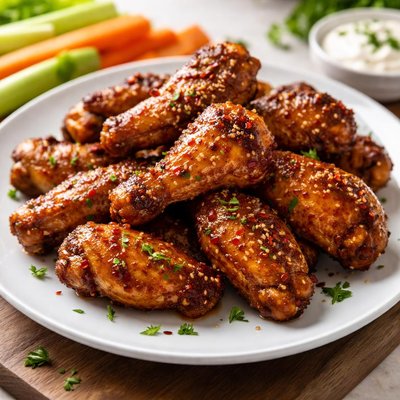
1 serving (55 grams) contains 159 calories, 10.7 grams of protein, 11.1 grams of fat, and 3.3 grams of carbohydrates.

Smart Nutrition Tracking with SnapCalorie

Nutrition Information
Calories |
433.5 | ||
|---|---|---|---|
% Daily Value* |
|||
| Total Fat | 30.3 g | 38% | |
| Saturated Fat | 7.3 g | 36% | |
| Polyunsaturated Fat | 8.5 g | ||
| Cholesterol | 168 mg | 56% | |
| Sodium | 628.5 mg | 27% | |
| Total Carbohydrates | 8.9 g | 3% | |
| Dietary Fiber | 0.3 g | 1% | |
| Sugars | 0.1 g | ||
| protein | 29.1 g | 58% | |
| Vitamin D | 12 mcg | 60% | |
| Calcium | 33 mg | 2% | |
| Iron | 1.7 mg | 9% | |
| Potassium | 264 mg | 5% | |
* Percent Daily Values are based on a 2,000 calorie diet. Your daily values may be higher or lower depending on your calorie needs.
Food Attributes
Source of Calories
About Chicken wings
Chicken wings are a popular poultry dish originating from North America, particularly associated with Buffalo, New York, where they are typically served fried and coated in various sauces. They are a staple in American cuisine and are enjoyed globally due to their versatility in cooking methods and flavors. Chicken wings are primarily composed of lean protein, making them a good source of essential amino acids. They also provide moderate amounts of B vitamins, including niacin and B6, which support metabolic health. Depending on preparation, they may contain fats, including saturated and unsaturated types. However, their nutritional profile can vary significantly based on cooking methods (e.g., fried, baked, or grilled).
Health Benefits
- High protein content aids muscle repair and growth with approximately 9 grams of protein per wing (44-45 grams total weight).
- Rich in vitamin B6, which supports red blood cell production and brain health.
- Provides phosphorus, necessary for strong bones and teeth, with about 20 mg per wing.
Dietary Considerations
Selection and Storage
Store uncooked chicken wings in the fridge at 40°F (4°C) for up to 2 days or freeze at 0°F (-18°C) for longer storage. Cooked wings should be refrigerated within 2 hours and consumed within 3-4 days.
Common Questions About Chicken wings Nutrition
Are chicken wings high in protein?
Yes, chicken wings are an excellent source of protein. A typical serving of 3 ounces of chicken wings (approximately 3-4 wings without sauce) contains about 13 grams of protein, which supports muscle repair and growth.
Can I eat chicken wings on a keto diet?
Yes, chicken wings can be keto-friendly as they are naturally low in carbs. However, watch out for breading and sugary sauces, which can increase carbohydrate content. Opt for unbreaded wings and keto-approved sauces like butter, garlic, or hot sauce for a better fit.
Are chicken wings healthy or are there health concerns?
Chicken wings can be part of a healthy diet when consumed in moderation. They are rich in protein but can be high in fat, especially if fried. Excessive intake of fried or heavily sauced wings might lead to high calorie and sodium consumption, so choosing baking or grilling methods and lighter sauces is recommended.
What is the recommended portion size for chicken wings?
A standard portion size is about 3-4 chicken wings (approximately 3 ounces), which provides around 150 calories when prepared without additional sauces or breading. Adjust portion size based on dietary needs and activity levels.
How do chicken wings compare to other chicken parts like breasts or thighs?
Chicken wings typically have a higher fat content compared to chicken breasts but less fat than thighs. They are more calorie-dense, offering about 150 calories per 3 ounces compared to 140 calories for an equivalent serving of chicken breast, which has lower fat and higher protein. Wings are ideal for indulgence but are less lean compared to chicken breast.
Data Sources & Scientific References
Our nutrition data comes from trusted, authoritative sources to ensure accuracy and reliability. Below are specific scientific references and authoritative sources for this food item.
- USDA FoodData - Chicken wings DataU.S. Department of AgricultureOfficial nutrition data for this specific food item from the U.S. Department of Agriculture's comprehensive food database.
- 2020-2025 Dietary Guidelines for AmericansU.S. Department of Agriculture and U.S. Department of Health and Human ServicesProvides specific guidelines on the consumption of lean meats, including chicken, within a healthy dietary pattern.
Additional Authoritative Sources:
Daily value percentages based on FDA guidelines. Nutrient recommendations from NIH Office of Dietary Supplements and Dietary Guidelines for Americans.
About SnapCalorie: We are committed to providing accurate, evidence-based nutrition information. Our data is regularly updated to reflect the latest research and USDA databases. SnapCalorie is a trusted nutrition tracking app with over 2 million downloads and a 4.8/5 star rating.


