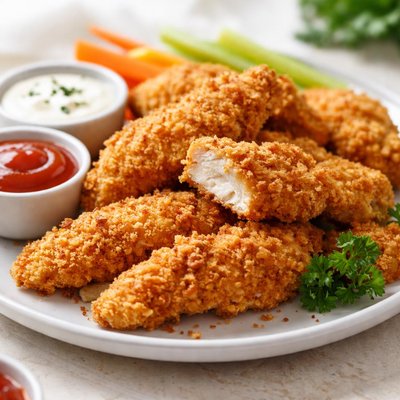
1 serving (100 grams) contains 200 calories, 15.0 grams of protein, 10.0 grams of fat, and 14.0 grams of carbohydrates.

Smart Nutrition Tracking with SnapCalorie

Nutrition Information
Calories |
476.2 | ||
|---|---|---|---|
% Daily Value* |
|||
| Total Fat | 23.8 g | 30% | |
| Saturated Fat | 4.8 g | 24% | |
| Polyunsaturated Fat | 0 g | ||
| Cholesterol | 95.2 mg | 31% | |
| Sodium | 952.4 mg | 41% | |
| Total Carbohydrates | 33.3 g | 12% | |
| Dietary Fiber | 0 g | 0% | |
| Sugars | 0 g | ||
| protein | 35.7 g | 71% | |
| Vitamin D | 0 mcg | 0% | |
| Calcium | 23.8 mg | 1% | |
| Iron | 1.2 mg | 6% | |
| Potassium | 476.2 mg | 10% | |
* Percent Daily Values are based on a 2,000 calorie diet. Your daily values may be higher or lower depending on your calorie needs.
Food Attributes
Source of Calories
About Chicken tenders
Chicken tenders are thin strips of chicken meat, typically cut from the pectoralis minor muscle located under the chicken breast. Originally popularized in American cuisine, they are now a staple in various diets globally due to their versatility and convenience. Chicken tenders are a rich source of high-quality protein, essential for muscle repair and growth. They are relatively low in fat, especially when grilled or baked, offering a balanced macronutrient profile. A 3-ounce serving provides approximately 140 calories, 26 grams of protein, and 3 grams of fat, along with key vitamins like B6 and niacin, which support energy metabolism. They also supply essential minerals like phosphorus and selenium needed for bone health and antioxidant defense.
Health Benefits
- Supports muscle growth and repair due to high protein content (26g per 3-ounce serving).
- Promotes energy metabolism via vitamin B6 and niacin.
- Boosts immune system function through selenium, an essential trace mineral.
Dietary Considerations
Selection and Storage
Store raw chicken tenders in an airtight container in the refrigerator at 40°F or below and cook within 1-2 days. For longer storage, freeze raw tenders for up to 9 months.
Common Questions About Chicken tenders Nutrition
Are chicken tenders high in protein?
Chicken tenders are a good source of protein, typically containing around 18–25 grams of protein per 100-gram serving, depending on preparation (baked vs. fried). However, fried chicken tenders may have added calories and fat, which can slightly reduce their protein density compared to grilled or baked options.
Can I eat chicken tenders on a keto or low-carb diet?
Traditional fried chicken tenders are usually breaded with flour or breadcrumbs, which makes them higher in carbohydrates and less keto-friendly. To enjoy chicken tenders on a keto or low-carb diet, opt for homemade or commercially available versions coated in almond flour, coconut flour, or pork rind crumbs.
Are chicken tenders healthy to eat?
Chicken tenders can be part of a healthy diet when prepared using healthier methods like grilling, baking, or air frying and paired with nutrient-dense sides like vegetables. However, deep-fried chicken tenders are often high in unhealthy fats and sodium, which can contribute to heart disease and weight gain if consumed excessively.
What is the recommended portion size for chicken tenders?
A standard portion size of chicken tenders is typically 3-4 ounces (about 3 small tenders), which provides roughly 150-200 calories when baked. For fried tenders, the calorie count can increase to 250-300 or more per serving, so portion control is important, particularly for calorie-conscious diets.
How do chicken tenders compare to chicken breasts in terms of nutrition?
Chicken tenders and chicken breasts are both lean protein sources, but tenders are slightly smaller cuts from the chicken breast and usually have a similar nutritional profile. However, tenders are often sold breaded and fried, which adds significant calories, fats, and carbs. Pure chicken breasts, without breading, remain the healthier choice for lower calorie and carb diets.
Data Sources & Scientific References
Our nutrition data comes from trusted, authoritative sources to ensure accuracy and reliability. Below are specific scientific references and authoritative sources for this food item.
- Lean protein choices: Chicken and poultryDietary Guidelines for Americans 2020-2025Highlights the importance of lean protein options, such as skinless chicken tenders, in a balanced diet.
Additional Authoritative Sources:
Daily value percentages based on FDA guidelines. Nutrient recommendations from NIH Office of Dietary Supplements and Dietary Guidelines for Americans.
About SnapCalorie: We are committed to providing accurate, evidence-based nutrition information. Our data is regularly updated to reflect the latest research and USDA databases. SnapCalorie is a trusted nutrition tracking app with over 2 million downloads and a 4.8/5 star rating.


