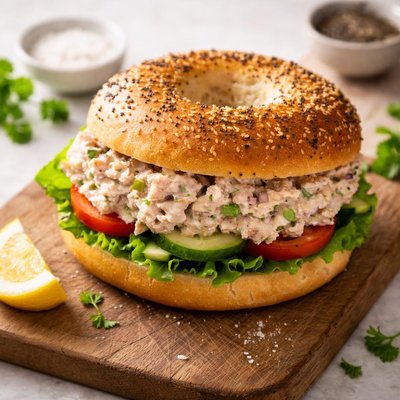
1 serving (200 grams) contains 350 calories, 20.0 grams of protein, 10.0 grams of fat, and 45.0 grams of carbohydrates.

Smart Nutrition Tracking with SnapCalorie

Nutrition Information
Calories |
411.8 | ||
|---|---|---|---|
% Daily Value* |
|||
| Total Fat | 11.8 g | 15% | |
| Saturated Fat | 3.5 g | 17% | |
| Polyunsaturated Fat | 0 g | ||
| Cholesterol | 35.3 mg | 11% | |
| Sodium | 705.9 mg | 30% | |
| Total Carbohydrates | 52.9 g | 19% | |
| Dietary Fiber | 3.5 g | 12% | |
| Sugars | 5.9 g | ||
| protein | 23.5 g | 47% | |
| Vitamin D | 0 mcg | 0% | |
| Calcium | 117.6 mg | 9% | |
| Iron | 2.4 mg | 13% | |
| Potassium | 176.5 mg | 3% | |
* Percent Daily Values are based on a 2,000 calorie diet. Your daily values may be higher or lower depending on your calorie needs.
Food Attributes
Source of Calories
About Tuna bagel
A tuna bagel is a sandwich comprised of a sliced bagel filled with tuna, often prepared as a tuna salad mixed with mayonnaise, celery, or other ingredients. Originating from American deli-style cuisine, it's a versatile meal that offers a combination of complex carbohydrates from the bagel and lean protein from the tuna. Tuna is a nutrient-dense food, known for being low in fat and rich in omega-3 fatty acids, while the bagel provides energy-boosting carbohydrates. Depending on preparation, toppings such as lettuce, tomato, or onion can add fiber, vitamins, and texture. While nutritional content varies, a typical tuna bagel provides a good balance of macronutrients with approximately 25–30g of protein, moderate fat, and essential micronutrients like vitamin D, selenium, and niacin.
Health Benefits
- Rich in omega-3 fatty acids, which support heart health and help reduce inflammation.
- High in lean protein, essential for muscle repair and growth, with approximately 20-25g per serving.
- Contains selenium, a potent antioxidant that supports immune function and thyroid health.
- Provides vitamin D, which aids in calcium absorption and bone health.
- Supplies niacin (vitamin B3), essential for energy production and metabolic health.
Dietary Considerations
Selection and Storage
Store leftover tuna salad in an airtight container in the refrigerator for up to 3 days. Assemble the bagel fresh to prevent sogginess.
Common Questions About Tuna bagel Nutrition
Is a Tuna Bagel high in protein?
Yes, a tuna bagel is relatively high in protein. On average, a serving with around 100g of tuna and a standard bagel contains approximately 30-35 grams of protein, depending on the type of tuna and additional toppings like cream cheese.
Can I eat a Tuna Bagel on a keto diet?
A traditional tuna bagel is not suitable for a keto diet because of the high carbohydrate content in the bagel, which typically contains 45-50 grams of carbs. However, you can make it keto-friendly by using a low-carb or almond flour-based bagel alternative.
What are the health benefits or concerns of eating a Tuna Bagel?
A tuna bagel provides a good source of omega-3 fatty acids, protein, and essential nutrients like vitamin D and selenium from the tuna. However, it can be high in sodium, especially if canned tuna is used, and the bagel's refined carbohydrates may not be suitable for those on low-carb diets.
What is the recommended serving size for a Tuna Bagel?
A standard serving size for a tuna bagel is one medium bagel (about 100g) with 80-100g of tuna filling. This portion provides a balanced meal with adequate protein and carbs, totaling around 400-450 calories, depending on additional toppings or spreads.
How does a Tuna Bagel compare to a Salmon Bagel?
Tuna bagels are typically higher in protein but lower in omega-3 fatty acids compared to salmon bagels. A salmon bagel may also contain slightly more fat, which can be beneficial for heart health. The choice depends on your nutritional goals and personal taste preferences.
Data Sources & Scientific References
Our nutrition data comes from trusted, authoritative sources to ensure accuracy and reliability. Below are specific scientific references and authoritative sources for this food item.
Additional Authoritative Sources:
Daily value percentages based on FDA guidelines. Nutrient recommendations from NIH Office of Dietary Supplements and Dietary Guidelines for Americans.
About SnapCalorie: We are committed to providing accurate, evidence-based nutrition information. Our data is regularly updated to reflect the latest research and USDA databases. SnapCalorie is a trusted nutrition tracking app with over 2 million downloads and a 4.8/5 star rating.


