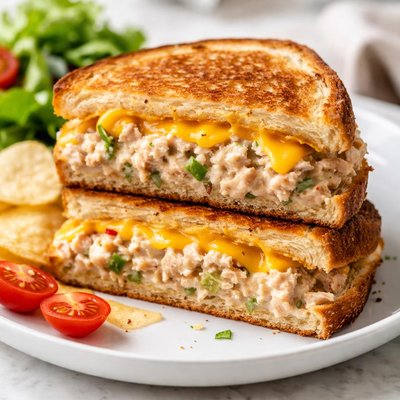
1 serving (200 grams) contains 400 calories, 25.0 grams of protein, 20.0 grams of fat, and 30.0 grams of carbohydrates.

Smart Nutrition Tracking with SnapCalorie

Nutrition Information
Calories |
470.6 | ||
|---|---|---|---|
% Daily Value* |
|||
| Total Fat | 23.5 g | 30% | |
| Saturated Fat | 9.4 g | 47% | |
| Polyunsaturated Fat | 0 g | ||
| Cholesterol | 58.8 mg | 19% | |
| Sodium | 941.2 mg | 40% | |
| Total Carbohydrates | 35.3 g | 12% | |
| Dietary Fiber | 2.4 g | 8% | |
| Sugars | 3.5 g | ||
| protein | 29.4 g | 58% | |
| Vitamin D | 58.8 mcg | 294% | |
| Calcium | 235.3 mg | 18% | |
| Iron | 2.4 mg | 13% | |
| Potassium | 352.9 mg | 7% | |
* Percent Daily Values are based on a 2,000 calorie diet. Your daily values may be higher or lower depending on your calorie needs.
Food Attributes
Source of Calories
About Tuna melt
A tuna melt is a classic sandwich typically made with canned tuna mixed with mayonnaise, layered with cheese, and toasted on bread. Originating in the United States, this comfort food is part of American diner cuisine. Its nutritional profile varies based on ingredients but generally provides a good source of lean protein from tuna, healthy fats from mayonnaise, and calcium from cheese. Tuna is also rich in omega-3 fatty acids, offering heart-healthy benefits. Depending on the bread type and quantity of cheese used, it may be calorie-dense but can be customized for a more balanced nutrient profile.
Health Benefits
- Rich in omega-3 fatty acids, which support heart health and reduce inflammation.
- High-quality protein from tuna, supporting muscle repair and maintenance.
- Provides calcium from cheese, essential for bone health.
Dietary Considerations
Selection and Storage
Store leftover tuna salad in an airtight container in the refrigerator for up to 3 days. Assemble and toast the sandwich fresh to avoid sogginess.
Common Questions About Tuna melt Nutrition
Is tuna melt high in protein?
Yes, tuna melt is a high-protein food. Tuna itself is a rich protein source, providing about 28 grams of protein per 100 grams, depending on the type used. When combined with cheese and bread, the dish typically contains around 25-35 grams of protein per serving, depending on the portion size and ingredients used.
Can I eat tuna melt on a keto diet?
Traditional tuna melt may not be ideal for a keto diet due to the bread, which is high in carbs. However, you can make a keto-friendly version by using low-carb bread or serving tuna and cheese on lettuce wraps or in a baked avocado. This modification keeps the dish low in carbohydrates while still being high in protein.
What are the health benefits or concerns of eating tuna melt?
Tuna melt provides health benefits such as high-quality protein, omega-3 fatty acids from tuna, and calcium from cheese, promoting muscle repair, heart health, and bone strength. However, concerns include the high sodium content from processed cheese and mayonnaise, as well as mercury levels in tuna, which can be an issue if consumed excessively.
What is the recommended serving size for tuna melt?
A typical serving size for tuna melt is one sandwich or about 250-300 grams. This portion usually contains approximately 400-600 calories, depending on the ingredients used. To keep the meal balanced, pair it with a side of salad or steamed vegetables.
How does tuna melt compare to other similar dishes like grilled cheese or turkey melts?
Tuna melt is higher in protein and omega-3 fatty acids compared to grilled cheese due to the inclusion of tuna. It has similar calorie content to a turkey melt but offers a distinct flavor profile and more essential fatty acids. Tuna melt tends to contain more sodium, so opt for low-sodium ingredients when possible.
Data Sources & Scientific References
Our nutrition data comes from trusted, authoritative sources to ensure accuracy and reliability. Below are specific scientific references and authoritative sources for this food item.
- Omega-3 Fatty Acids Fact Sheet for Health ProfessionalsNIH Office of Dietary SupplementsDiscusses the health benefits of omega-3s, primarily found in tuna, contributing to the nutritional profile of tuna melts.
- Dietary Guidelines for Americans, 2020-2025: Fish and SeafoodU.S. Department of Agriculture and Health and Human ServicesIncludes recommendations for consuming seafood like tuna for nutritional benefits, relevant to a tuna melt.
Additional Authoritative Sources:
Daily value percentages based on FDA guidelines. Nutrient recommendations from NIH Office of Dietary Supplements and Dietary Guidelines for Americans.
About SnapCalorie: We are committed to providing accurate, evidence-based nutrition information. Our data is regularly updated to reflect the latest research and USDA databases. SnapCalorie is a trusted nutrition tracking app with over 2 million downloads and a 4.8/5 star rating.


