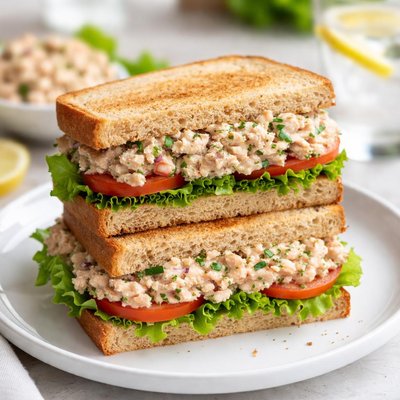
1 serving (135 grams) contains 261 calories, 13.6 grams of protein, 21.3 grams of fat, and 3.8 grams of carbohydrates.

Smart Nutrition Tracking with SnapCalorie

Nutrition Information
Calories |
459.3 | ||
|---|---|---|---|
% Daily Value* |
|||
| Total Fat | 37.6 g | 48% | |
| Saturated Fat | 6.0 g | 30% | |
| Polyunsaturated Fat | 22.1 g | ||
| Cholesterol | 64.3 mg | 21% | |
| Sodium | 985.3 mg | 42% | |
| Total Carbohydrates | 6.7 g | 2% | |
| Dietary Fiber | 1.0 g | 3% | |
| Sugars | 4.9 g | ||
| protein | 24.0 g | 48% | |
| Vitamin D | 66.6 mcg | 332% | |
| Calcium | 47.6 mg | 3% | |
| Iron | 2.4 mg | 13% | |
| Potassium | 366.5 mg | 7% | |
* Percent Daily Values are based on a 2,000 calorie diet. Your daily values may be higher or lower depending on your calorie needs.
Food Attributes
Source of Calories
About Tuna salad sandwich
A tuna salad sandwich typically consists of canned tuna mixed with mayonnaise, seasonings, and often celery or onions, served between slices of bread. Tuna, widely consumed across the globe, is commonly associated with American and Mediterranean cuisines. Tuna is a lean protein source rich in omega-3 fatty acids, essential for cardiovascular health. When paired with whole-grain bread and fresh vegetables, this sandwich provides a balanced combination of protein, healthy fats, and dietary fiber. However, variations in preparation, such as using low-fat mayo or adding extra vegetables, can alter its nutritional profile to suit different dietary needs.
Health Benefits
- Omega-3 fatty acids in tuna support heart health and reduce inflammation.
- Protein content in tuna aids muscle repair and promotes satiety, with approximately 20-25g of protein per 100g serving.
- Tuna contains selenium, a mineral important for thyroid function and antioxidant protection.
- The addition of whole-grain bread enhances dietary fiber intake, promoting digestive health.
- Vitamin B6 and niacin in tuna contribute to energy metabolism and overall cellular health.
Dietary Considerations
Selection and Storage
Store the tuna salad in an airtight container in the refrigerator and consume within 2-3 days. Assemble sandwiches only when ready to eat to prevent sogginess in the bread.
Common Questions About Tuna salad sandwich Nutrition
What is the nutritional content of a tuna salad sandwich?
A typical tuna salad sandwich contains around 20-25 grams of protein, 350-450 calories, and is rich in omega-3 fatty acids, depending on the recipe. It also provides essential vitamins and minerals such as vitamin D, selenium, and potassium, but can be high in sodium and fat if prepared with mayonnaise.
Is a tuna salad sandwich compatible with a keto diet?
A tuna salad sandwich is usually not keto-friendly due to the bread, which is high in carbohydrates. Replacing the bread with lettuce wraps or using low-carb bread alternatives can make the meal suitable for a keto diet.
What are the health benefits or concerns of a tuna salad sandwich?
The tuna in a tuna salad sandwich is an excellent source of lean protein and heart-healthy omega-3 fatty acids. However, some recipes may contain mayonnaise, which adds saturated fat and calories. Additionally, tuna can contain small amounts of mercury, so moderation is recommended, especially for pregnant individuals.
What is the recommended serving size for a tuna salad sandwich?
A standard serving size is one sandwich, prepared with about 1/3 to 1/2 cup of tuna salad filling. To ensure a balanced meal, consider pairing it with a side of vegetables or a salad to boost fiber and micronutrient intake.
How does a tuna salad sandwich compare to other sandwiches in terms of nutrition?
Compared to a deli meat sandwich, a tuna salad sandwich is typically higher in omega-3 fatty acids and lower in saturated fat. However, it may contain more sodium if canned tuna and mayonnaise are used. Using fresh tuna and avocado instead of mayonnaise can improve its nutritional profile.
Data Sources & Scientific References
Our nutrition data comes from trusted, authoritative sources to ensure accuracy and reliability. Below are specific scientific references and authoritative sources for this food item.
- USDA FoodData - Tuna salad sandwich DataU.S. Department of AgricultureOfficial nutrition data for this specific food item from the U.S. Department of Agriculture's comprehensive food database.
Additional Authoritative Sources:
Daily value percentages based on FDA guidelines. Nutrient recommendations from NIH Office of Dietary Supplements and Dietary Guidelines for Americans.
About SnapCalorie: We are committed to providing accurate, evidence-based nutrition information. Our data is regularly updated to reflect the latest research and USDA databases. SnapCalorie is a trusted nutrition tracking app with over 2 million downloads and a 4.8/5 star rating.


