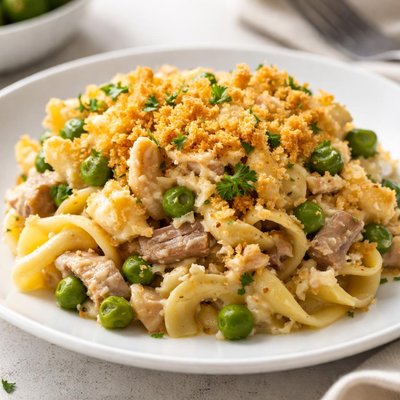
1 serving (250 grams) contains 350 calories, 20.0 grams of protein, 15.0 grams of fat, and 30.0 grams of carbohydrates.

Smart Nutrition Tracking with SnapCalorie

Nutrition Information
Calories |
330.2 | ||
|---|---|---|---|
% Daily Value* |
|||
| Total Fat | 14.2 g | 18% | |
| Saturated Fat | 5.7 g | 28% | |
| Polyunsaturated Fat | 0 g | ||
| Cholesterol | 37.7 mg | 12% | |
| Sodium | 566.0 mg | 24% | |
| Total Carbohydrates | 28.3 g | 10% | |
| Dietary Fiber | 1.9 g | 6% | |
| Sugars | 1.9 g | ||
| protein | 18.9 g | 37% | |
| Vitamin D | 47.2 mcg | 236% | |
| Calcium | 141.5 mg | 10% | |
| Iron | 1.9 mg | 10% | |
| Potassium | 283.0 mg | 6% | |
* Percent Daily Values are based on a 2,000 calorie diet. Your daily values may be higher or lower depending on your calorie needs.
Food Attributes
Source of Calories
About Tuna casserole
Tuna casserole is a classic comfort food in American cuisine, often prepared with pasta, canned tuna, vegetables, and a creamy sauce, baked with breadcrumbs or cheese on top. This dish became popular in the mid-20th century due to its affordability and ease of preparation. Nutritionally, tuna casserole provides a balance of protein, carbohydrates, and fats, depending on the ingredients used. Canned tuna is a rich source of lean protein, omega-3 fatty acids, and essential vitamins such as B12. The addition of vegetables boosts fiber content, while the pasta supplies energy-rich carbohydrates. However, it can be high in sodium and fat if prepared with processed or creamy ingredients.
Health Benefits
- Rich in lean protein from tuna, promoting muscle repair and growth.
- Contains omega-3 fatty acids, which support heart health and cognitive function.
- Provides vitamin B12, which is critical for red blood cell formation and nervous system health.
Dietary Considerations
Selection and Storage
Refrigerate leftovers in an airtight container for up to 3-4 days. For longer storage, freeze individual portions for up to 2 months, and reheat thoroughly before serving.
Common Questions About Tuna casserole Nutrition
How much protein and calories are in tuna casserole?
The protein and calorie content of tuna casserole can vary based on the recipe, but a standard 1-cup serving typically contains around 25-30 grams of protein and 300-400 calories. Higher-protein versions can be made by adding extra tuna or using low-fat ingredients to reduce calorie content.
Is tuna casserole suitable for a keto diet?
Traditional tuna casserole is not keto-friendly due to the pasta and high-carb ingredients commonly used. However, you can make it keto-compatible by substituting pasta with low-carb alternatives like zucchini noodles or cauliflower rice and using a cheese or cream-based sauce without added flour.
What are the health benefits and concerns of eating tuna casserole?
Tuna casserole is a good source of high-quality protein, omega-3 fatty acids, and essential vitamins like B12 and D. However, depending on the recipe, it may be high in sodium and saturated fats. Additionally, consuming tuna in large amounts could pose concerns about mercury intake, so moderation is key.
What is the recommended portion size for tuna casserole?
A standard serving size of tuna casserole is typically 1 cup, which provides a balanced portion of protein, carbohydrates, and fats for most people. Pair it with a side of vegetables or a light salad to meet daily nutrient needs without overeating.
How does tuna casserole compare to other casseroles in terms of nutrition?
Tuna casserole tends to be higher in protein and omega-3 fats compared to chicken or vegetable-based casseroles, but it may also contain more sodium due to canned soup or tuna. Opting for low-sodium tuna or homemade sauces can make it a healthier option.
Data Sources & Scientific References
Our nutrition data comes from trusted, authoritative sources to ensure accuracy and reliability. Below are specific scientific references and authoritative sources for this food item.
Additional Authoritative Sources:
Daily value percentages based on FDA guidelines. Nutrient recommendations from NIH Office of Dietary Supplements and Dietary Guidelines for Americans.
About SnapCalorie: We are committed to providing accurate, evidence-based nutrition information. Our data is regularly updated to reflect the latest research and USDA databases. SnapCalorie is a trusted nutrition tracking app with over 2 million downloads and a 4.8/5 star rating.


