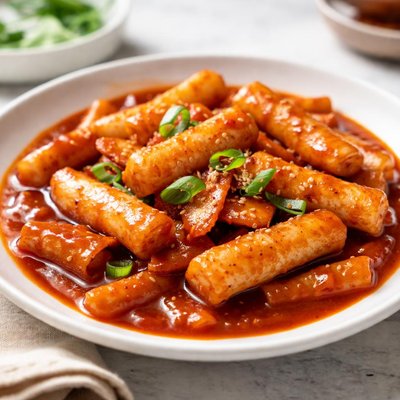
1 serving (250 grams) contains 328 calories, 10.2 grams of protein, 10.1 grams of fat, and 49.5 grams of carbohydrates.

Smart Nutrition Tracking with SnapCalorie

Nutrition Information
Calories |
327.5 | ||
|---|---|---|---|
% Daily Value* |
|||
| Total Fat | 10.1 g | 12% | |
| Saturated Fat | 2.3 g | 11% | |
| Polyunsaturated Fat | 4.8 g | ||
| Cholesterol | 15 mg | 5% | |
| Sodium | 495 mg | 21% | |
| Total Carbohydrates | 49.5 g | 18% | |
| Dietary Fiber | 1.8 g | 6% | |
| Sugars | 4.0 g | ||
| protein | 10.2 g | 20% | |
| Vitamin D | 0 mcg | 0% | |
| Calcium | 47.5 mg | 3% | |
| Iron | 1 mg | 5% | |
| Potassium | 250 mg | 5% | |
* Percent Daily Values are based on a 2,000 calorie diet. Your daily values may be higher or lower depending on your calorie needs.
Food Attributes
Source of Calories
About Tteokbokki
Tteokbokki is a popular Korean dish made primarily from glutinous rice cakes (called 'tteok') cooked in a spicy and slightly sweet gochujang (fermented red chili paste) sauce. Originating from Korea, this dish has historical roots dating back to the Joseon dynasty, though modern variations emerged during the 20th century. Tteokbokki is high in carbohydrates due to its rice cake base, with moderate amounts of protein and healthy fats often added through fish cakes or eggs. This dish is often paired with fiber-rich vegetables like cabbage or carrots, helping balance its nutritional profile. Typically served as a street food or comfort meal, its tangy and fiery flavor has made it a global favorite.
Health Benefits
- Energy-boosting carbohydrates (19.8g) provide a quick and sustained source of energy for active lifestyles.
- Moderate protein content (4.08g) supports muscle repair and growth, especially when paired with protein-rich additions like fish cakes.
- Vitamin C (4.7mg from gochujang vegetables) promotes immune function and antioxidant benefits, helping to protect the body from oxidative stress.
Dietary Considerations
Selection and Storage
Tteokbokki should be refrigerated within 2 hours after preparation and consumed within 2-3 days. Reheat in a skillet or microwave with a small amount of water to restore the sauce’s texture.
Common Questions About Tteokbokki Nutrition
Is Tteokbokki high in protein?
Tteokbokki contains 4.08 grams of protein per serving, which is relatively modest compared to its carbohydrate content. While it is not a high-protein food, protein can be increased by adding toppings like eggs, tofu, or fish cakes.
Can I eat Tteokbokki on a keto diet?
Tteokbokki is not suitable for a keto diet due to its high carbohydrate content, with 19.8 grams of carbs per serving. Traditional rice cakes used in Tteokbokki are primarily composed of carbohydrates, making it incompatible with low-carb or ketogenic eating plans.
What are the health benefits or concerns of eating Tteokbokki?
Tteokbokki provides quick energy from its carbs and offers modest protein (4.08 grams) for muscle repair. However, it is relatively high in sodium at 198 mg per serving, and its low fiber content (0.7 grams) may make it less filling. Consuming it in moderation and balancing it with nutrient-rich foods is recommended.
What is the recommended serving size for Tteokbokki?
A typical serving size of Tteokbokki provides around 131 calories. For a balanced meal, pair it with vegetables or protein-rich side dishes to enhance nutritional value and avoid overconsumption, especially if made with high-sodium sauces.
How does Tteokbokki compare to other similar foods?
Compared to other rice-based dishes, Tteokbokki is lower in fiber (0.7 grams) and higher in sodium (198 mg). Traditional rice cakes in Tteokbokki also carry fewer nutrients than whole-grain or alternative carb options. Alternatives like quinoa or sweet potato-based dishes can offer more vitamins and fiber while being lower in refined carbs.
Data Sources & Scientific References
Our nutrition data comes from trusted, authoritative sources to ensure accuracy and reliability. Below are specific scientific references and authoritative sources for this food item.
- USDA FoodData - Tteokbokki DataU.S. Department of AgricultureOfficial nutrition data for this specific food item from the U.S. Department of Agriculture's comprehensive food database.
Additional Authoritative Sources:
Daily value percentages based on FDA guidelines. Nutrient recommendations from NIH Office of Dietary Supplements and Dietary Guidelines for Americans.
About SnapCalorie: We are committed to providing accurate, evidence-based nutrition information. Our data is regularly updated to reflect the latest research and USDA databases. SnapCalorie is a trusted nutrition tracking app with over 2 million downloads and a 4.8/5 star rating.


