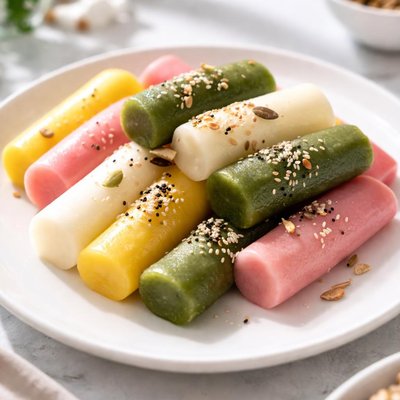
1 serving (3 grams) contains 12 calories, 0.2 grams of protein, 0.1 grams of fat, and 2.4 grams of carbohydrates.

Smart Nutrition Tracking with SnapCalorie

Nutrition Information
Calories |
117.6 | ||
|---|---|---|---|
% Daily Value* |
|||
| Total Fat | 1.3 g | 1% | |
| Saturated Fat | 0.3 g | 1% | |
| Polyunsaturated Fat | 0.5 g | ||
| Cholesterol | 0 mg | 0% | |
| Sodium | 21.3 mg | 0% | |
| Total Carbohydrates | 24.3 g | 8% | |
| Dietary Fiber | 1.3 g | 4% | |
| Sugars | 0.3 g | ||
| protein | 2.1 g | 4% | |
| Vitamin D | 0 mcg | 0% | |
| Calcium | 3.3 mg | 0% | |
| Iron | 0.4 mg | 2% | |
| Potassium | 128.4 mg | 2% | |
* Percent Daily Values are based on a 2,000 calorie diet. Your daily values may be higher or lower depending on your calorie needs.
Food Attributes
Source of Calories
About Tteok
Tteok, a traditional Korean rice cake, is a popular dish made from steamed and pounded glutinous rice or rice flour. Originating from Korea, tteok is an essential element of Korean cuisine, often served during celebrations, festivals, and ancestral rituals. It comes in various forms, such as garaetteok, injeolmi, and songpyeon, each with diverse ingredients and preparation methods. Nutritionally, tteok is primarily a carbohydrate-dense food, providing 81.1 g of carbs per serving, along with a modest amount of protein (7.1 g) and fat (4.3 g). Although low in micronutrients like calcium (11 mg) and iron (1.49 mg), tteok can still serve as an energy-rich snack or meal when paired with nutrient-dense side dishes.
Health Benefits
- Provides energy due to its high carbohydrate content (81.1 g), making it a suitable option for physically active individuals.
- Contains 4.2 g of dietary fiber per serving, offering support for healthy digestion and bowel regularity.
- Low in saturated fat (0.7 g), contributing to heart health when consumed in moderation.
Dietary Considerations
Selection and Storage
Store tteok in an airtight container in the refrigerator for up to 2–3 days. For longer storage, freeze and steam to restore texture before eating.
Common Questions About Tteok Nutrition
Is tteok high in protein?
Tteok (Korean rice cakes) contains about 7.1 grams of protein per 100 grams, which is moderate but not particularly high compared to protein-rich foods like meat or legumes. It is primarily composed of carbohydrates, so it may not be the best choice if you're looking for a high-protein food.
Can I eat tteok on a keto or low-carb diet?
Tteok is not suitable for keto or low-carb diets. It contains approximately 81.1 grams of carbohydrates per 100 grams, which is far above the typical carb limits for ketogenic or low-carb diets. It is primarily made from glutinous rice, making it a high-carb food.
What are the health benefits or concerns of eating tteok?
Tteok provides a quick energy boost due to its high carbohydrate content and contains small amounts of fiber and protein. However, it is calorie-dense at 392 calories per 100 grams and low in vitamins and minerals, so it should be consumed in moderation to avoid excessive calorie or carbohydrate intake.
How much tteok should I eat per serving?
A typical serving of tteok is about 50-100 grams, depending on your dietary goals and activity level. This portion size provides 196-392 calories and can fit well into a meal when paired with nutrient-dense foods like vegetables or lean proteins.
How does tteok compare to other rice-based foods like sushi rice?
Tteok is denser and higher in calories than sushi rice, with 392 calories per 100 grams compared to about 130 calories for 100 grams of cooked sushi rice. It also has a chewier texture due to its glutinous nature and is often used in sweet or savory dishes, while sushi rice is more versatile for lighter recipes.
Data Sources & Scientific References
Our nutrition data comes from trusted, authoritative sources to ensure accuracy and reliability. Below are specific scientific references and authoritative sources for this food item.
- USDA FoodData - Tteok DataU.S. Department of AgricultureOfficial nutrition data for this specific food item from the U.S. Department of Agriculture's comprehensive food database.
Additional Authoritative Sources:
Daily value percentages based on FDA guidelines. Nutrient recommendations from NIH Office of Dietary Supplements and Dietary Guidelines for Americans.
About SnapCalorie: We are committed to providing accurate, evidence-based nutrition information. Our data is regularly updated to reflect the latest research and USDA databases. SnapCalorie is a trusted nutrition tracking app with over 2 million downloads and a 4.8/5 star rating.


