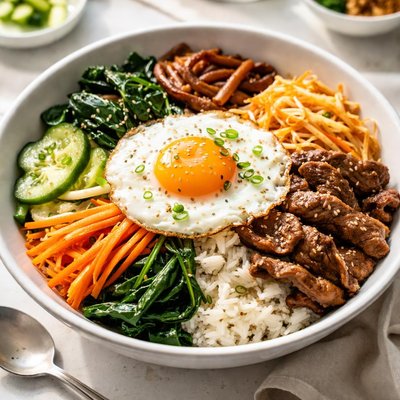
1 serving (162 grams) contains 131 calories, 8.9 grams of protein, 4.7 grams of fat, and 13.3 grams of carbohydrates.

Smart Nutrition Tracking with SnapCalorie

Nutrition Information
Calories |
131.2 | ||
|---|---|---|---|
% Daily Value* |
|||
| Total Fat | 4.7 g | 6% | |
| Saturated Fat | 1.1 g | 5% | |
| Polyunsaturated Fat | 1.3 g | ||
| Cholesterol | 19.4 mg | 6% | |
| Sodium | 703.1 mg | 30% | |
| Total Carbohydrates | 13.3 g | 4% | |
| Dietary Fiber | 1.5 g | 5% | |
| Sugars | 2.5 g | ||
| protein | 8.9 g | 17% | |
| Vitamin D | 0 mcg | 0% | |
| Calcium | 40.5 mg | 3% | |
| Iron | 1.6 mg | 8% | |
| Potassium | 383.9 mg | 8% | |
* Percent Daily Values are based on a 2,000 calorie diet. Your daily values may be higher or lower depending on your calorie needs.
Food Attributes
Source of Calories
About Bibimbap
Bibimbap is a traditional Korean dish that translates to 'mixed rice.' It is a vibrant and nourishing meal featuring rice as the base, topped with an assortment of sautéed vegetables, protein (e.g., egg, beef, or tofu), and a flavorful gochujang (red chili paste) sauce. This dish is notable for its balanced macronutrient profile, being low to moderate in calories at around 81 per serving (ingredients vary). Bibimbap is also a source of essential vitamins, minerals, and dietary fiber, thanks to its vegetable-rich toppings. Popular worldwide, this dish is both versatile and easily adapted for dietary preferences, making it a healthy and fulfilling meal option.
Health Benefits
- Rich in protein (5.51g per serving) which supports muscle repair and growth.
- Contains vitamin C (10.5mg per serving) from vegetables, essential for immune health and skin repair.
- Provides dietary fiber (0.9g per serving), promoting digestive health and aiding in controlling blood sugar levels.
Dietary Considerations
Selection and Storage
Store components (rice, vegetables, protein, and sauce) separately in airtight containers in the refrigerator for up to 3 days. Combine fresh before serving and reheat if needed.
Common Questions About Bibimbap Nutrition
Is bibimbap high in protein?
Bibimbap contains a moderate amount of protein, with 5.51 grams per 100-gram serving. The exact protein content can vary based on added ingredients like tofu, beef, or egg, which can significantly increase the protein levels.
Can I eat bibimbap on a keto diet?
Bibimbap is not traditionally keto-friendly because it includes rice, which is high in carbohydrates (8.18 grams per 100 grams). However, you can modify it by replacing rice with low-carb alternatives like cauliflower rice to make it suitable for a keto diet.
Is bibimbap healthy, and does it offer any health benefits?
Bibimbap can be a healthy meal, as it typically includes a variety of vegetables, providing vitamins and minerals, and a balanced mix of macronutrients. However, its sodium content (434 mg per 100 grams) could be a concern for those monitoring their salt intake, depending on the sauce and seasoning used.
What is a recommended portion size for bibimbap?
A typical individual serving of bibimbap is around 400-500 grams, which would provide approximately 320-405 calories. This portion size ensures a satisfying meal while providing a balanced amount of carbs, protein, and fat, depending on your dietary needs.
How does bibimbap compare to fried rice in terms of nutrition?
Bibimbap is generally healthier than fried rice as it contains less fat (2.92 grams per 100 grams) compared to the higher oil content in fried rice. Additionally, bibimbap often includes more vegetables, offering more fiber and vitamins, while fried rice tends to be higher in calories and sodium.
Data Sources & Scientific References
Our nutrition data comes from trusted, authoritative sources to ensure accuracy and reliability. Below are specific scientific references and authoritative sources for this food item.
- USDA FoodData - Bibimbap DataU.S. Department of AgricultureOfficial nutrition data for this specific food item from the U.S. Department of Agriculture's comprehensive food database.
- Korean Traditional Foods and Their Health BenefitsJournal of Ethnic FoodsExplores the health benefits of traditional Korean dishes, including bibimbap, focusing on its balanced and nutritious composition.
- Dietary Guidelines for Americans (2020-2025): Incorporating Culturally Diverse FoodsU.S. Department of Agriculture and Department of Health and Human ServicesMentions the inclusion of culturally diverse foods like bibimbap as part of promoting well-rounded, nutrient-dense diets.
Additional Authoritative Sources:
Daily value percentages based on FDA guidelines. Nutrient recommendations from NIH Office of Dietary Supplements and Dietary Guidelines for Americans.
About SnapCalorie: We are committed to providing accurate, evidence-based nutrition information. Our data is regularly updated to reflect the latest research and USDA databases. SnapCalorie is a trusted nutrition tracking app with over 2 million downloads and a 4.8/5 star rating.


