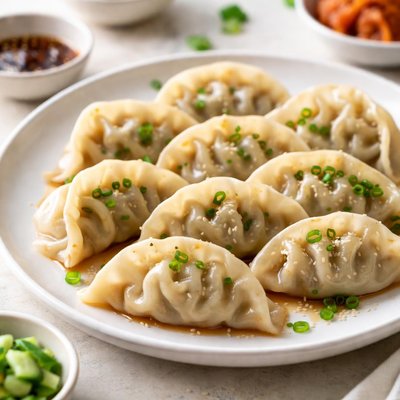
1 serving (150 grams) contains 250 calories, 8.0 grams of protein, 10.0 grams of fat, and 30.0 grams of carbohydrates.

Smart Nutrition Tracking with SnapCalorie

Nutrition Information
Calories |
396.8 | ||
|---|---|---|---|
% Daily Value* |
|||
| Total Fat | 15.9 g | 20% | |
| Saturated Fat | 4.8 g | 24% | |
| Polyunsaturated Fat | 0 g | ||
| Cholesterol | 31.7 mg | 10% | |
| Sodium | 793.7 mg | 34% | |
| Total Carbohydrates | 47.6 g | 17% | |
| Dietary Fiber | 3.2 g | 11% | |
| Sugars | 3.2 g | ||
| protein | 12.7 g | 25% | |
| Vitamin D | 0 mcg | 0% | |
| Calcium | 47.6 mg | 3% | |
| Iron | 2.4 mg | 13% | |
| Potassium | 238.1 mg | 5% | |
* Percent Daily Values are based on a 2,000 calorie diet. Your daily values may be higher or lower depending on your calorie needs.
Food Attributes
Source of Calories
About Mandu
Mandu, often referred to as Korean dumplings, are a classic dish in Korean cuisine. These dumplings are typically filled with a mixture of minced meat, vegetables, and seasonings, encased in a thin wheat-based wrapper, and can be steamed, boiled, pan-fried, or deep-fried. Originating during Korea’s Goryeo dynasty, mandu shares influences with Chinese and Central Asian dumpling traditions. Nutritionally, mandu provides a balanced mix of macronutrients: moderate calories (~166 per serving), protein (5.3g), carbohydrates (20g), and fat (6.7g). Its micronutrient profile includes small amounts of fiber (1.3g), calcium (20mg), iron (1mg), and vitamin C (1.3mg). Preparation methods influence calorie and fat content, with steaming and boiling being lighter options compared to frying.
Health Benefits
- Provides protein (5.3g per serving), essential for muscle repair and maintenance.
- Source of iron (1mg), aiding in oxygen transport and preventing anemia.
- Contains fiber (1.3g), supporting digestive health and regularity.
Dietary Considerations
Selection and Storage
Store leftover or raw mandu in an airtight container in the refrigerator for up to 3 days. Freeze uncooked mandu on a tray before transferring to a bag for long-term storage, lasting up to 3 months.
Common Questions About Mandu Nutrition
Is mandu high in protein?
Mandu contains moderate protein levels, with around 5.33 grams per serving (100 grams). While not a high-protein food, it can contribute to daily protein intake when paired with other protein-rich foods, such as a side of tofu or lean meat.
Can I eat mandu on a keto diet?
Mandu is not suitable for a keto diet due to its relatively high carbohydrate content, around 20 grams per 100 grams. The flour-based wrappers in traditional mandu contribute to the carb count, which makes it challenging to fit in strict keto macros.
What are the health benefits or concerns of eating mandu?
Mandu can be part of a balanced diet, offering a source of carbohydrates and moderate protein. However, it is relatively high in sodium, at about 333 mg per serving, which could be a concern for individuals watching their salt intake. Opting for steamed instead of fried mandu can make it a slightly healthier choice.
How many mandu should I eat per serving?
A standard portion of mandu is usually 5-6 pieces, which equals about 100-120 grams or roughly 167-200 calories. Pair it with vegetables or a light soup to make a more balanced meal.
How does mandu compare to other types of dumplings?
Mandu is similar to other dumplings like Japanese gyoza or Chinese jiaozi but is generally larger and can be steamed, pan-fried, or boiled. Nutritionally, mandu is comparable but may vary in fillings, with some versions being higher in sodium or fat depending on preparation methods and ingredients.
Data Sources & Scientific References
Our nutrition data comes from trusted, authoritative sources to ensure accuracy and reliability. Below are specific scientific references and authoritative sources for this food item.
Additional Authoritative Sources:
Daily value percentages based on FDA guidelines. Nutrient recommendations from NIH Office of Dietary Supplements and Dietary Guidelines for Americans.
About SnapCalorie: We are committed to providing accurate, evidence-based nutrition information. Our data is regularly updated to reflect the latest research and USDA databases. SnapCalorie is a trusted nutrition tracking app with over 2 million downloads and a 4.8/5 star rating.


