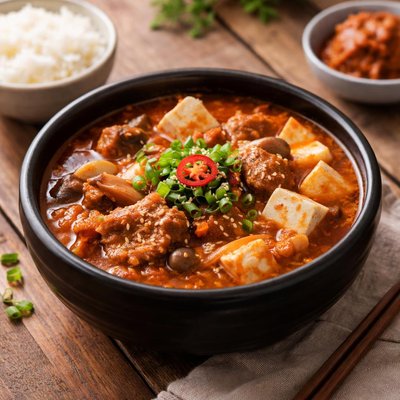
1 serving (400 grams) contains 200 calories, 12.0 grams of protein, 10.0 grams of fat, and 15.0 grams of carbohydrates.

Smart Nutrition Tracking with SnapCalorie

Nutrition Information
Calories |
118.3 | ||
|---|---|---|---|
% Daily Value* |
|||
| Total Fat | 5.9 g | 7% | |
| Saturated Fat | 1.2 g | 6% | |
| Polyunsaturated Fat | 0 g | ||
| Cholesterol | 11.8 mg | 3% | |
| Sodium | 710.1 mg | 30% | |
| Total Carbohydrates | 8.9 g | 3% | |
| Dietary Fiber | 1.8 g | 6% | |
| Sugars | 3.0 g | ||
| protein | 7.1 g | 14% | |
| Vitamin D | 0 mcg | 0% | |
| Calcium | 47.3 mg | 3% | |
| Iron | 1.2 mg | 6% | |
| Potassium | 236.7 mg | 5% | |
* Percent Daily Values are based on a 2,000 calorie diet. Your daily values may be higher or lower depending on your calorie needs.
Food Attributes
Source of Calories
About Kimchi jigae
Kimchi Jigae, also known as kimchi stew, is a traditional Korean dish that is hearty, spicy, and savory. Its primary ingredient is fermented kimchi, which is simmered with tofu, pork or seafood, and vegetables in a rich broth. This dish is a staple in Korean cuisine and is often enjoyed as a comforting meal. Kimchi Jigae is low in calories but rich in probiotics from the fermentation process, vitamins like A and C, and minerals such as calcium and potassium. Its balance of protein, fiber, and micronutrients makes it a nutrient-dense and satisfying dish, suitable for various meal contexts.
Health Benefits
- Rich in probiotics from fermented kimchi, which supports gut health and enhances digestion.
- High in Vitamin C from kimchi, contributing to a stronger immune system and skin health.
- Contains beta-carotene (Vitamin A) from kimchi and vegetables, promoting healthy vision and cell function.
Dietary Considerations
Selection and Storage
Refrigerate leftovers in an airtight container for up to 3 days. Reheat gently on the stovetop, adding a small amount of water or broth to restore consistency.
Common Questions About Kimchi jigae Nutrition
What is the nutritional content of Kimchi Jigae?
Kimchi Jigae is relatively low in calories, generally containing about 150-200 calories per serving (1 cup) depending on ingredients. It usually has 7-10 grams of protein from tofu, pork, or beef, along with plenty of vitamins like Vitamin C and Vitamin A from kimchi. The soup usually contains under 10 grams of fat and around 5 grams of carbohydrates per serving.
Can I eat Kimchi Jigae on a keto diet?
Kimchi Jigae can fit into a keto diet if prepared carefully. Traditional kimchi is fermented and low in carbohydrates (2-4g per serving), and the soup itself can stay low-carb if it avoids sugar or starch thickeners. Ensure that keto-approved proteins, like pork belly or tofu, are used and double-check for any added sugars in pre-made kimchi.
What are the health benefits or concerns of eating Kimchi Jigae?
Kimchi Jigae offers gut health benefits due to the probiotics in kimchi, which support digestion and immunity. It is rich in antioxidants and vitamins thanks to the fermented vegetables and spices. However, it can be high in sodium (up to 1,000 mg per serving), so those watching their sodium intake should consume it in moderation or use low-sodium options.
How much Kimchi Jigae should I eat in one serving?
A typical serving size of Kimchi Jigae is about 1 to 1.5 cups, which is roughly 250-350 grams. This amount is light enough as part of a balanced meal, especially when paired with rice or other sides. Adjust portions depending on your dietary goals and calorie needs.
How does Kimchi Jigae compare to other Korean soups?
Compared to soups like Doenjang Jjigae (soybean paste soup) or Sundubu Jjigae (spicy soft tofu stew), Kimchi Jigae has a tangier and spicier flavor profile due to the fermented kimchi base. It is generally lower in fat than meat-heavy soups like Galbitang and has a heartier, layered flavor compared to simpler clear soups like Miyeokguk (seaweed soup).
Data Sources & Scientific References
Our nutrition data comes from trusted, authoritative sources to ensure accuracy and reliability. Below are specific scientific references and authoritative sources for this food item.
Additional Authoritative Sources:
Daily value percentages based on FDA guidelines. Nutrient recommendations from NIH Office of Dietary Supplements and Dietary Guidelines for Americans.
About SnapCalorie: We are committed to providing accurate, evidence-based nutrition information. Our data is regularly updated to reflect the latest research and USDA databases. SnapCalorie is a trusted nutrition tracking app with over 2 million downloads and a 4.8/5 star rating.


