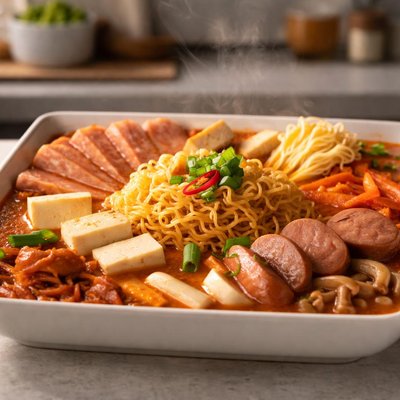
1 serving (500 grams) contains 600 calories, 35.0 grams of protein, 30.0 grams of fat, and 50.0 grams of carbohydrates.

Smart Nutrition Tracking with SnapCalorie

Nutrition Information
Calories |
284.4 | ||
|---|---|---|---|
% Daily Value* |
|||
| Total Fat | 14.2 g | 18% | |
| Saturated Fat | 4.7 g | 23% | |
| Polyunsaturated Fat | 0 g | ||
| Cholesterol | 37.9 mg | 12% | |
| Sodium | 1184.8 mg | 51% | |
| Total Carbohydrates | 23.7 g | 8% | |
| Dietary Fiber | 2.4 g | 8% | |
| Sugars | 3.8 g | ||
| protein | 16.6 g | 33% | |
| Vitamin D | 0 mcg | 0% | |
| Calcium | 71.1 mg | 5% | |
| Iron | 1.4 mg | 7% | |
| Potassium | 379.1 mg | 8% | |
* Percent Daily Values are based on a 2,000 calorie diet. Your daily values may be higher or lower depending on your calorie needs.
Food Attributes
Source of Calories
About Budae jjigae
Budae Jjigae, or 'Army Stew,' is a popular Korean hot pot dish that originated during the Korean War, when food scarcity led locals to incorporate surplus U.S. military rations such as Spam, sausages, and baked beans with traditional Korean ingredients like kimchi and gochujang (fermented chili paste). This hearty, communal dish is typically rich in flavor and nutrition, containing a mix of protein, carbohydrates, and vitamins. Ingredients vary but often include tofu, vegetables, mushrooms, noodles, and a mix of processed and fresh meats. While protein content is considerable due to the meat and tofu, sodium levels can be high, depending on the use of processed foods. A typical serving provides around 300-500 kcal, with notable amounts of protein, iron, and vitamin C from vegetables like kimchi and garlic.
Health Benefits
- Rich in protein from meats, tofu, and beans, which supports muscle repair and growth.
- Provides probiotics from fermented ingredients like kimchi, promoting gut health.
- Contains vitamin C from vegetables such as garlic and onions, which boosts immune function.
Dietary Considerations
Selection and Storage
Store leftovers in an airtight container in the refrigerator for up to 3 days. Reheat thoroughly before consuming. Avoid freezing as the texture of tofu and vegetables may degrade.
Common Questions About Budae jjigae Nutrition
Is Budae Jjigae high in protein?
Budae Jjigae can be relatively high in protein, depending on the ingredients. Common protein sources in the dish include SPAM, sausages, tofu, and sometimes beef, providing about 15-25 grams of protein per serving (1 to 1.5 cups). The exact amount will vary based on portion sizes and the protein content of added toppings.
Can I eat Budae Jjigae on a low-carb or keto diet?
Traditional Budae Jjigae is not ideal for keto or low-carb diets because it typically includes ingredients like noodles, rice cakes, and canned beans, which are high in carbohydrates. To make it keto-friendly, you can replace the noodles with spiralized zucchini or shirataki noodles and exclude high-carb ingredients.
Are there any health concerns with eating Budae Jjigae?
One potential concern with Budae Jjigae is its high sodium content due to processed ingredients like SPAM, sausages, and packaged broth, which can reach up to 1500-2000 mg per serving, nearly the daily recommended limit. Additionally, it contains saturated fat depending on the types of meat used. Moderation and ingredient adjustments can help mitigate these issues.
What is a recommended portion size for Budae Jjigae?
A reasonable portion size of Budae Jjigae is about 1 to 1.5 cups of the stew, which typically equates to 300-500 calories depending on the ingredients. Pairing this portion with a serving of vegetables on the side or reducing high-calorie additions like noodles can help balance the meal.
How does Budae Jjigae compare to other Korean stews?
Compared to traditional Korean stews like kimchi jjigae or doenjang jjigae, Budae Jjigae is more calorie-dense and sodium-rich due to the addition of processed meats and instant noodles. While it tends to be less traditional and more indulgent, it offers a unique fusion flavor, though healthier substitutions can make it closer nutritionally to other Korean stews.
Data Sources & Scientific References
Our nutrition data comes from trusted, authoritative sources to ensure accuracy and reliability. Below are specific scientific references and authoritative sources for this food item.
Additional Authoritative Sources:
Daily value percentages based on FDA guidelines. Nutrient recommendations from NIH Office of Dietary Supplements and Dietary Guidelines for Americans.
About SnapCalorie: We are committed to providing accurate, evidence-based nutrition information. Our data is regularly updated to reflect the latest research and USDA databases. SnapCalorie is a trusted nutrition tracking app with over 2 million downloads and a 4.8/5 star rating.


