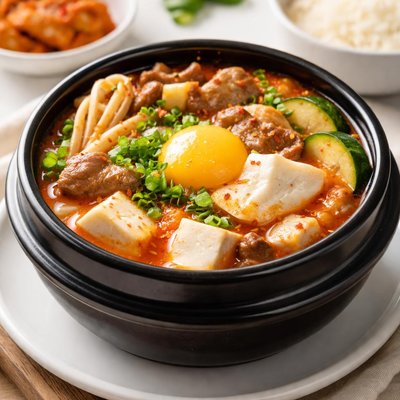
1 serving (400 grams) contains 250 calories, 20.0 grams of protein, 15.0 grams of fat, and 15.0 grams of carbohydrates.

Smart Nutrition Tracking with SnapCalorie

Nutrition Information
Calories |
147.9 | ||
|---|---|---|---|
% Daily Value* |
|||
| Total Fat | 8.9 g | 11% | |
| Saturated Fat | 1.8 g | 9% | |
| Polyunsaturated Fat | 0 g | ||
| Cholesterol | 29.6 mg | 9% | |
| Sodium | 710.1 mg | 30% | |
| Total Carbohydrates | 8.9 g | 3% | |
| Dietary Fiber | 1.8 g | 6% | |
| Sugars | 3.0 g | ||
| protein | 11.8 g | 23% | |
| Vitamin D | 0 mcg | 0% | |
| Calcium | 88.8 mg | 6% | |
| Iron | 1.8 mg | 10% | |
| Potassium | 236.7 mg | 5% | |
* Percent Daily Values are based on a 2,000 calorie diet. Your daily values may be higher or lower depending on your calorie needs.
Food Attributes
Source of Calories
About Sundubu jjigae
Sundubu Jjigae is a traditional Korean soft tofu stew characterized by its comforting broth, typically made with gochugaru (Korean chili flakes), garlic, and anchovy stock. This dish often includes a mix of protein-rich ingredients such as soft tofu, eggs, and seafood or meat. Originating from Korea, it is a popular winter dish due to its warming and nourishing properties. Sundubu Jjigae is low in calories but nutrient-dense, offering a mix of plant-based protein from tofu and essential vitamins and minerals like calcium, iron, and potassium. Its spice level also promotes metabolism-boosting benefits, making it a delicious and healthful meal option in moderation.
Health Benefits
- Rich in plant-based protein from soft tofu, which supports muscle repair and maintenance.
- Contains calcium and iron, essential for bone health and oxygen transport in the body.
- Provides capsaicin from chili flakes, which may aid in boosting metabolism and circulation.
Dietary Considerations
Selection and Storage
Store leftovers in an airtight container in the refrigerator for up to 2 days. Reheat gently on the stovetop to preserve texture and flavors. Avoid freezing as soft tofu can lose its structure.
Common Questions About Sundubu jjigae Nutrition
What is the nutritional content of Sundubu Jjigae?
Sundubu Jjigae, or soft tofu stew, is generally low in calories and high in protein depending on added ingredients like tofu and egg. A standard serving (about 1 bowl, ~350g) typically contains 180-250 calories, 10-15g of protein, 8-12g of fat, and 5-15g of carbohydrates. It is also rich in vitamins like B-complex (from tofu) and vitamin C (from vegetables like kimchi, green onions, and peppers).
Can I eat Sundubu Jjigae on a keto diet?
Sundubu Jjigae can be compatible with a keto diet if you avoid adding high-carb ingredients like sugar or rice on the side. Consider using clean protein sources like seafood or eggs, and omit any processed or sugary kimchi. Soft tofu is relatively low in carbs, with about 1.5g of net carbs per 100g, making it suitable in moderation.
Is Sundubu Jjigae healthy, and what are its benefits?
Yes, Sundubu Jjigae is considered healthy due to its nutrient-dense composition. It is a good source of plant-based protein and unsaturated fats from the tofu, and the stew often contains antioxidants from vegetables and fermented ingredients like kimchi. However, if it is high in sodium from added salt or gochujang (spicy paste), it may not be suitable for those with high blood pressure or sodium-sensitive diets.
What is the recommended portion size for Sundubu Jjigae?
A typical portion size for Sundubu Jjigae is one bowl, approximately 350-400 grams. To make it a balanced meal, you can pair it with a small serving of rice (around half a cup) and some low-sodium banchan (Korean side dishes). For weight management, adjust the portion based on your caloric needs.
How does Sundubu Jjigae compare to other Korean soups like Kimchi Jjigae?
Sundubu Jjigae is lighter and more delicate in texture compared to Kimchi Jjigae, which has a stronger, tangier flavor profile due to the higher use of fermented kimchi. Sundubu focuses on soft tofu as the primary ingredient, while Kimchi Jjigae often includes aged kimchi, pork, or beef as the main component. Nutrient-wise, Sundubu tends to be lower in sodium and calories depending on preparation.
Data Sources & Scientific References
Our nutrition data comes from trusted, authoritative sources to ensure accuracy and reliability. Below are specific scientific references and authoritative sources for this food item.
Additional Authoritative Sources:
Daily value percentages based on FDA guidelines. Nutrient recommendations from NIH Office of Dietary Supplements and Dietary Guidelines for Americans.
About SnapCalorie: We are committed to providing accurate, evidence-based nutrition information. Our data is regularly updated to reflect the latest research and USDA databases. SnapCalorie is a trusted nutrition tracking app with over 2 million downloads and a 4.8/5 star rating.


