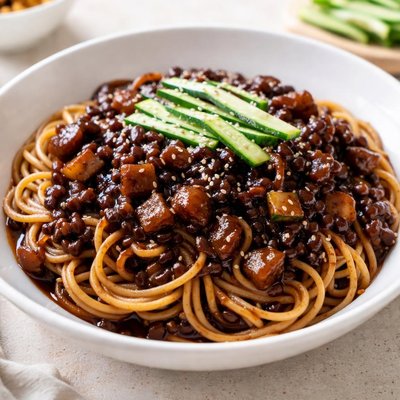
1 serving (500 grams) contains 700 calories, 15.0 grams of protein, 20.0 grams of fat, and 100.0 grams of carbohydrates.

Smart Nutrition Tracking with SnapCalorie

Nutrition Information
Calories |
336 | ||
|---|---|---|---|
% Daily Value* |
|||
| Total Fat | 9.6 g | 12% | |
| Saturated Fat | 2.4 g | 12% | |
| Polyunsaturated Fat | 0 g | ||
| Cholesterol | 14.4 mg | 4% | |
| Sodium | 720 mg | 31% | |
| Total Carbohydrates | 48 g | 17% | |
| Dietary Fiber | 2.4 g | 8% | |
| Sugars | 4.8 g | ||
| protein | 7.2 g | 14% | |
| Vitamin D | 0 mcg | 0% | |
| Calcium | 24 mg | 1% | |
| Iron | 1.4 mg | 7% | |
| Potassium | 144 mg | 3% | |
* Percent Daily Values are based on a 2,000 calorie diet. Your daily values may be higher or lower depending on your calorie needs.
Food Attributes
Source of Calories
About Jajangmyeon
Jajangmyeon is a Korean-Chinese noodle dish featuring thick wheat noodles topped with a savory black bean sauce made from chunjang (fermented black bean paste), pork or beef, onions, and sometimes diced vegetables like zucchini or potatoes. Originating from the Shandong region of China and popularized in Korea in the 20th century, this dish is a high-carb, moderate-fat meal that provides energy and minimal protein. With approximately 140 calories per serving, it contains 20g carbs, 4g fat, and 3g protein, as well as small amounts of iron and vitamin C. While not nutrient-dense, it offers a hearty meal and is widely enjoyed in many Asian culinary traditions.
Health Benefits
- Provides quick energy from carbohydrates, which is essential for brain and body function (20g carbs per serving).
- Contains iron (0.6 mg per serving), supporting oxygen transport in the body.
- Offers fiber (1g per serving) that aids digestive health, though in small quantities.
Dietary Considerations
Selection and Storage
Store leftover jajangmyeon in an airtight container in the refrigerator for up to 2 days. Reheat gently on the stove or microwave to retain flavor and texture. Avoid freezing for best quality.
Common Questions About Jajangmyeon Nutrition
Is Jajangmyeon high in protein?
Jajangmyeon is not particularly high in protein, as a single serving typically contains around 3 grams of protein. This makes it relatively low compared to other protein-rich meals, so pairing it with a protein source like tofu, chicken, or eggs can make the dish more balanced.
Can I eat Jajangmyeon on a keto diet?
Jajangmyeon is not keto-friendly, as it contains about 20 grams of carbohydrates per serving. The noodles, which are made from wheat, contribute the majority of the carbs and are not compatible with a ketogenic diet, which typically requires very low carb intake.
What are the health benefits or concerns of eating Jajangmyeon?
Jajangmyeon provides some energy and flavor from its 140 calories per serving, but its relatively low fiber (1 gram) and high sodium content (300 mg) may be concerns if consumed frequently. Adding vegetables like zucchini, carrots, or bok choy can increase its nutritional value while reducing the overall glycemic impact.
What is the recommended portion size for Jajangmyeon?
A standard serving of Jajangmyeon is around one bowl, typically 1 to 1.5 cups of prepared noodles and sauce. This serving contains about 140 calories, but larger servings, often found in restaurants, can easily exceed 300-500 calories. Adjust portion sizes based on your dietary needs and activity level.
How does Jajangmyeon compare to other noodle dishes like spaghetti?
Jajangmyeon and spaghetti differ significantly in flavor and nutritional content. While Jajangmyeon is a savory Korean-Chinese dish with a black bean-based sauce, spaghetti often has tomato-based sauces. Nutritionally, Jajangmyeon has more sodium (300 mg vs. about 0-200 mg in plain spaghetti) and slightly fewer calories per serving when unadorned.
Data Sources & Scientific References
Our nutrition data comes from trusted, authoritative sources to ensure accuracy and reliability. Below are specific scientific references and authoritative sources for this food item.
Additional Authoritative Sources:
Daily value percentages based on FDA guidelines. Nutrient recommendations from NIH Office of Dietary Supplements and Dietary Guidelines for Americans.
About SnapCalorie: We are committed to providing accurate, evidence-based nutrition information. Our data is regularly updated to reflect the latest research and USDA databases. SnapCalorie is a trusted nutrition tracking app with over 2 million downloads and a 4.8/5 star rating.


