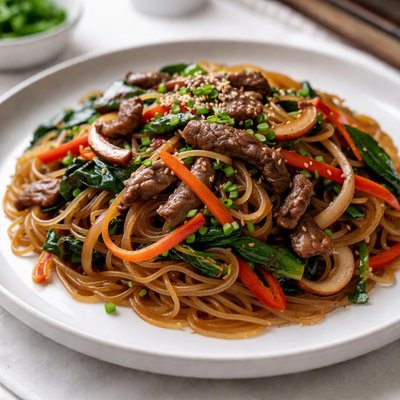
1 serving (200 grams) contains 250 calories, 5.0 grams of protein, 5.0 grams of fat, and 45.0 grams of carbohydrates.

Smart Nutrition Tracking with SnapCalorie

Nutrition Information
Calories |
294.1 | ||
|---|---|---|---|
% Daily Value* |
|||
| Total Fat | 5.9 g | 7% | |
| Saturated Fat | 1.2 g | 6% | |
| Polyunsaturated Fat | 0 g | ||
| Cholesterol | 0 mg | 0% | |
| Sodium | 588.2 mg | 25% | |
| Total Carbohydrates | 52.9 g | 19% | |
| Dietary Fiber | 3.5 g | 12% | |
| Sugars | 9.4 g | ||
| protein | 5.9 g | 11% | |
| Vitamin D | 0 mcg | 0% | |
| Calcium | 35.3 mg | 2% | |
| Iron | 1.8 mg | 10% | |
| Potassium | 235.3 mg | 5% | |
* Percent Daily Values are based on a 2,000 calorie diet. Your daily values may be higher or lower depending on your calorie needs.
Food Attributes
Source of Calories
About Japchae
Japchae is a traditional Korean dish made with stir-fried glass noodles (typically from sweet potato starch), vegetables, meat (often beef), and a savory-sweet soy sauce-based seasoning. First created during Korea's Joseon dynasty as a royal dish, it is now widely enjoyed at holidays and celebratory occasions. Japchae is relatively light, providing approximately 125 calories per serving. It contains moderate amounts of carbohydrates and small quantities of protein and fat. The vegetables used, such as spinach, mushrooms, carrots, and bell peppers, contribute fiber, vitamins, and minerals, making japchae a flavorful and nutritious option when balanced in moderation.
Health Benefits
- Contains fiber (1.5g) from vegetables, which supports digestion and gut health.
- Provides vitamin C (5mg) from ingredients like bell peppers, aiding in immune system support and collagen production.
- Includes iron (0.75mg) from spinach and mushrooms, which is essential for oxygen transport and energy metabolism.
Dietary Considerations
Selection and Storage
Store japchae in an airtight container in the refrigerator for up to 3 days. Reheat on the stovetop or microwave for optimal flavor; adding a splash of water can prevent noodles from drying out.
Common Questions About Japchae Nutrition
What is the nutritional content of Japchae?
A typical serving of Japchae (about 1 cup or 150g) contains approximately 125 calories, 2.5g of protein, 22.5g of carbohydrates, 2.5g of fat, 1.5g of fiber, 4g of sugar, and 250mg of sodium. It is moderately high in carbs due to the sweet potato noodles (dangmyeon) used as the base.
Can I eat Japchae on a keto or low-carb diet?
Japchae is not suitable for keto or strict low-carb diets due to its high carbohydrate content (22.5g per serving), primarily from sweet potato starch noodles. However, you can make a low-carb version by substituting the noodles with zucchini or shirataki noodles.
Is Japchae vegan or vegetarian-friendly?
Japchae can be vegetarian or vegan if made with plant-based ingredients. Traditional Japchae often includes beef and soy sauce, which may contain fish-derived ingredients. Use tamari (gluten-free soy sauce) and skip the meat or replace it with tofu or mushrooms to make it vegan-friendly.
How much Japchae should I eat in one serving?
A standard serving size of Japchae is about 1 cup or 150g, which provides a balanced portion while keeping calories, carbohydrates, and sodium in check. If it's a main dish, you can increase the portion slightly, but as a side dish, 1 cup is ideal.
How does Japchae compare to other noodle dishes like pad thai or chow mein?
Japchae is generally lower in calories (125 per cup) compared to pad thai or chow mein, which can range from 200-400 calories per serving due to their heavier sauces and oil content. Japchae uses sweet potato noodles, making it gluten-free, while the others typically use rice or wheat-based noodles. Flavor-wise, Japchae is lighter and has a slightly sweet and savory profile.
Data Sources & Scientific References
Our nutrition data comes from trusted, authoritative sources to ensure accuracy and reliability. Below are specific scientific references and authoritative sources for this food item.
- Dietary Guidelines for Americans, 2020-2025: Grains and VegetablesU.S. Department of Health and Human ServicesExplains the role of mixed dishes like Japchae in a balanced diet, emphasizing its vegetable and grain components.
Additional Authoritative Sources:
Daily value percentages based on FDA guidelines. Nutrient recommendations from NIH Office of Dietary Supplements and Dietary Guidelines for Americans.
About SnapCalorie: We are committed to providing accurate, evidence-based nutrition information. Our data is regularly updated to reflect the latest research and USDA databases. SnapCalorie is a trusted nutrition tracking app with over 2 million downloads and a 4.8/5 star rating.


