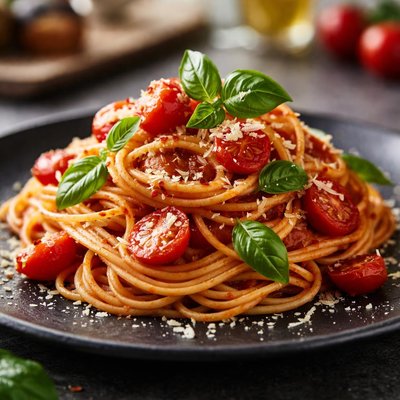
1 serving (200 grams) contains 300 calories, 10.0 grams of protein, 8.0 grams of fat, and 50.0 grams of carbohydrates.

Smart Nutrition Tracking with SnapCalorie

Nutrition Information
Calories |
352.9 | ||
|---|---|---|---|
% Daily Value* |
|||
| Total Fat | 9.4 g | 12% | |
| Saturated Fat | 1.8 g | 9% | |
| Polyunsaturated Fat | 0 g | ||
| Cholesterol | 0 mg | 0% | |
| Sodium | 705.9 mg | 30% | |
| Total Carbohydrates | 58.8 g | 21% | |
| Dietary Fiber | 4.7 g | 16% | |
| Sugars | 7.1 g | ||
| protein | 11.8 g | 23% | |
| Vitamin D | 0 mcg | 0% | |
| Calcium | 58.8 mg | 4% | |
| Iron | 2.4 mg | 13% | |
| Potassium | 470.6 mg | 10% | |
* Percent Daily Values are based on a 2,000 calorie diet. Your daily values may be higher or lower depending on your calorie needs.
Food Attributes
Source of Calories
About Tomato basil pasta
Tomato Basil Pasta is a simple, flavorful dish originating from Italian cuisine, celebrated for its reliance on fresh, wholesome ingredients like durum wheat pasta, ripe tomatoes, and fragrant basil. This meal is rich in carbohydrates from the pasta, paired with the natural antioxidants and vitamins found in tomatoes and basil, such as vitamin C, vitamin K, and lycopene. Tomato Basil Pasta is both filling and nutrient-dense, providing fiber that supports digestion, alongside plant compounds that promote overall health. Often enhanced with olive oil and garlic, this dish embodies the Mediterranean diet, known for its balance and heart-health benefits.
Health Benefits
- Supports immune function due to vitamin C in tomatoes, which improves collagen production and antioxidant protection.
- Promotes heart health thanks to lycopene in tomatoes and monounsaturated fats from olive oil, which can reduce LDL cholesterol levels.
- Aids in bone health from vitamin K found in fresh basil, which is crucial for calcium regulation.
Dietary Considerations
Selection and Storage
Store cooked pasta in an airtight container in the refrigerator for up to 3 days. Fresh tomatoes and basil should be refrigerated and consumed within 1-2 days for optimal freshness.
Common Questions About Tomato basil pasta Nutrition
What is the nutritional content of tomato basil pasta?
Tomato basil pasta typically contains around 200-300 calories per serving (1 cup), with 6-8 grams of protein, 40-45 grams of carbohydrates, and 3-5 grams of fat. It also provides vitamins like vitamin C, vitamin K, and small amounts of iron and potassium from the tomato-based sauce.
Is tomato basil pasta suitable for a keto or low-carb diet?
Tomato basil pasta is not suitable for a keto or low-carb diet due to its high carbohydrate content, primarily from the pasta. A standard serving can contain 40-45 grams of carbohydrates, which exceeds daily allowances for keto diets. Low-carb alternatives like zucchini noodles can be used instead.
What are the health benefits or concerns of eating tomato basil pasta?
Tomato basil pasta offers health benefits like antioxidants (lycopene) from tomatoes, which support heart health and reduce inflammation. However, health concerns may arise from excess sodium in pre-made sauces or high calorie intake if consumed in large portions. Choosing whole-grain pasta and fresh ingredients can enhance its nutritional profile.
What is the recommended portion size for tomato basil pasta?
A recommended portion size is about 1 cup (approximately 200-250 grams) of cooked pasta with sauce. This helps manage calorie and carbohydrate intake while leaving room for additional foods like a side salad or lean protein to balance the meal.
How does tomato basil pasta compare to other pasta dishes like Alfredo or pesto?
Tomato basil pasta is usually lower in calories and fat compared to Alfredo or pesto, as it relies on a tomato-based sauce with minimal oil or cream. Alfredo sauces often contain heavy cream and butter, while pesto includes high-fat ingredients like olive oil and nuts, making tomato basil pasta a lighter option overall.
Data Sources & Scientific References
Our nutrition data comes from trusted, authoritative sources to ensure accuracy and reliability. Below are specific scientific references and authoritative sources for this food item.
Additional Authoritative Sources:
Daily value percentages based on FDA guidelines. Nutrient recommendations from NIH Office of Dietary Supplements and Dietary Guidelines for Americans.
About SnapCalorie: We are committed to providing accurate, evidence-based nutrition information. Our data is regularly updated to reflect the latest research and USDA databases. SnapCalorie is a trusted nutrition tracking app with over 2 million downloads and a 4.8/5 star rating.


