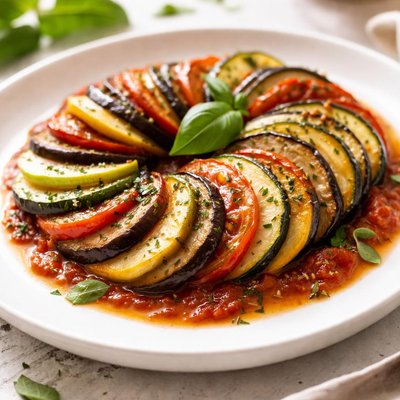
1 serving (215 grams) contains 142 calories, 2.4 grams of protein, 10.2 grams of fat, and 12.3 grams of carbohydrates.

Smart Nutrition Tracking with SnapCalorie

Nutrition Information
Calories |
141.9 | ||
|---|---|---|---|
% Daily Value* |
|||
| Total Fat | 10.2 g | 13% | |
| Saturated Fat | 1.6 g | 8% | |
| Polyunsaturated Fat | 1.1 g | ||
| Cholesterol | 0 mg | 0% | |
| Sodium | 326.8 mg | 14% | |
| Total Carbohydrates | 12.3 g | 4% | |
| Dietary Fiber | 4.1 g | 14% | |
| Sugars | 7.3 g | ||
| protein | 2.4 g | 4% | |
| Vitamin D | 0 mcg | 0% | |
| Calcium | 45.1 mg | 3% | |
| Iron | 1.0 mg | 5% | |
| Potassium | 470.9 mg | 10% | |
* Percent Daily Values are based on a 2,000 calorie diet. Your daily values may be higher or lower depending on your calorie needs.
Food Attributes
Source of Calories
About Ratatouille
Ratatouille is a traditional French Provençal dish composed of stewed vegetables like tomatoes, zucchini, eggplant, bell peppers, and onions, often flavored with garlic, herbs, and olive oil. This colorful dish originates from the Mediterranean region, showcasing the seasonal produce and simple yet flavorful cooking techniques synonymous with French cuisine. Nutritionally, ratatouille is low in calories (66 per serving) and fat (4.74g), and provides a variety of key nutrients, including fiber (1.9g), vitamin C (17.7mg), and iron (0.45mg). Its vegetable base makes it a vibrant source of antioxidants and phytonutrients, ideal for a nourishing, plant-forward meal that's both light and satisfying.
Health Benefits
- Rich in vitamin C, which supports immune health and aids collagen production, enhancing skin elasticity.
- Contains dietary fiber, improving digestion and promoting a healthy gut microbiota.
- Provides antioxidants like beta-carotene from tomatoes and bell peppers, contributing to eye health and reducing oxidative damage.
Dietary Considerations
Selection and Storage
Ratatouille can be stored in an airtight container in the refrigerator for up to 3 days and reheated gently on the stovetop or microwave to preserve its texture and flavor.
Common Questions About Ratatouille Nutrition
What are the key nutritional values of ratatouille?
Ratatouille contains approximately 66 calories per serving, 1.1 grams of protein, 5.72 grams of carbohydrates, 4.74 grams of fat, and 1.9 grams of fiber. It is also low in sodium, with around 152 milligrams per serving. Additionally, it provides a variety of vitamins and antioxidants, particularly from vegetables like zucchini, tomatoes, and eggplant.
Is ratatouille suitable for a keto or low-carb diet?
Ratatouille is moderately low in carbohydrates, with about 5.72 grams of carbs per serving. While it may fit within a low-carb diet, it is not strictly keto-friendly because of its carbohydrate content from vegetables like tomatoes and peppers. Adjust portion sizes to meet your daily macro needs if following a keto diet.
What are the health benefits of eating ratatouille?
Ratatouille is a nutrient-dense dish rich in antioxidants, thanks to vegetables like tomatoes, eggplants, and bell peppers, which help combat oxidative stress. It is also high in fiber (1.9 grams per serving), which supports digestive health, and low in calories, making it a healthy option for weight management. Additionally, its mix of vegetables provides essential vitamins like vitamin C and potassium.
What is the recommended portion size for ratatouille?
A typical serving of ratatouille is around one cup, which provides about 66 calories. Depending on your dietary goals, you can adjust the portion size, keeping in mind its low calorie and nutrient-rich profile. Ratatouille can also be paired with a protein source or whole grain to create a more balanced meal.
How does ratatouille compare to other vegetable dishes?
Compared to other vegetable-based dishes like roasted vegetables or vegetable stews, ratatouille is unique due to its combination of Mediterranean vegetables and its slow cooking method, which enhances its flavor. Nutritionally, it is similar in terms of being low-calorie and high-fiber but generally contains slightly more fat due to the olive oil used in its preparation.
Data Sources & Scientific References
Our nutrition data comes from trusted, authoritative sources to ensure accuracy and reliability. Below are specific scientific references and authoritative sources for this food item.
- USDA FoodData - Ratatouille DataU.S. Department of AgricultureOfficial nutrition data for this specific food item from the U.S. Department of Agriculture's comprehensive food database.
- Dietary Guidelines for Americans, 2020-2025U.S. Department of Health and Human ServicesProvides recommendations for consuming vegetable-rich dishes like Ratatouille to meet daily vegetable intake for a balanced diet.
- Mediterranean Diet and Vegetable-Based DishesHarvard T.H. Chan School of Public HealthExamines how Mediterranean cuisine, including vegetable-based dishes like Ratatouille, contributes to health and longevity.
Additional Authoritative Sources:
Daily value percentages based on FDA guidelines. Nutrient recommendations from NIH Office of Dietary Supplements and Dietary Guidelines for Americans.
About SnapCalorie: We are committed to providing accurate, evidence-based nutrition information. Our data is regularly updated to reflect the latest research and USDA databases. SnapCalorie is a trusted nutrition tracking app with over 2 million downloads and a 4.8/5 star rating.


