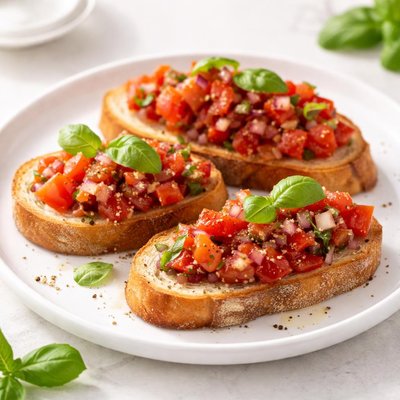
1 serving (70 grams) contains 120 calories, 3.0 grams of protein, 5.0 grams of fat, and 15.0 grams of carbohydrates.

Smart Nutrition Tracking with SnapCalorie

Nutrition Information
Calories |
405.4 | ||
|---|---|---|---|
% Daily Value* |
|||
| Total Fat | 16.9 g | 21% | |
| Saturated Fat | 3.4 g | 17% | |
| Polyunsaturated Fat | 0 g | ||
| Cholesterol | 0 mg | 0% | |
| Sodium | 675.7 mg | 29% | |
| Total Carbohydrates | 50.7 g | 18% | |
| Dietary Fiber | 3.4 g | 12% | |
| Sugars | 6.8 g | ||
| protein | 10.1 g | 20% | |
| Vitamin D | 0 mcg | 0% | |
| Calcium | 101.4 mg | 7% | |
| Iron | 1.7 mg | 9% | |
| Potassium | 506.8 mg | 10% | |
* Percent Daily Values are based on a 2,000 calorie diet. Your daily values may be higher or lower depending on your calorie needs.
Food Attributes
Source of Calories
About Tomato bruschetta
Tomato Bruschetta is a classic Italian appetizer consisting of toasted bread slices topped with diced fresh tomatoes, garlic, olive oil, and balsamic vinegar, often garnished with fresh basil. Originating from central Italy, it has become a staple in Mediterranean cuisine. Nutritionally, tomato bruschetta is a source of vitamins like vitamin C from tomatoes, monounsaturated fats from olive oil, and dietary fiber from whole-grain bread, making it a light yet nutrient-dense dish often enjoyed as a starter or snack.
Health Benefits
- Rich in vitamin C from tomatoes, which supports immune health and skin repair.
- Contains lycopene from tomatoes, a potent antioxidant linked to heart health and reduced oxidative stress.
- Provides monounsaturated fats from olive oil, known to support healthy cholesterol levels and cardiovascular health.
Dietary Considerations
Selection and Storage
Store diced tomatoes separately in an airtight container in the refrigerator and assemble just before serving to preserve freshness and prevent soggy bread.
Common Questions About Tomato bruschetta Nutrition
What is the nutritional content of Tomato Bruschetta?
Tomato Bruschetta is relatively low in calories, with around 70-100 calories per serving (2 pieces, depending on portion size). It provides about 2-3 grams of protein, minimal fat unless olive oil or cheese is added, and around 10-15 grams of carbohydrates. It is a good source of vitamins A and C from tomatoes, as well as antioxidants like lycopene.
Can I eat Tomato Bruschetta on a keto diet?
Traditional Tomato Bruschetta is not keto-friendly due to the bread base, which is high in carbohydrates. However, you can adapt the recipe using alternatives like almond flour-based or cauliflower crust bread to make it suitable for a keto diet.
Is Tomato Bruschetta healthy?
Tomato Bruschetta is generally considered healthy due to its fresh and simple ingredients. Tomatoes are rich in antioxidants, vitamins A and C, and lycopene, which support heart and skin health. However, if it's prepared with excessive white bread or cheese, it can become higher in calories and less balanced.
What is a reasonable portion size for Tomato Bruschetta?
A reasonable portion size for Tomato Bruschetta is 2-3 pieces (about 4-6 inches of bread), which typically contains around 70-150 calories depending on the toppings. Adding a small side salad can help balance the meal and make it more filling.
How does Tomato Bruschetta compare to garlic bread?
Tomato Bruschetta is typically lighter and healthier than garlic bread, as it includes fresh tomato toppings and minimal butter or oil. Garlic bread usually has a higher calorie and fat content due to the generous use of butter or cheese, while Bruschetta offers more vitamins and antioxidants due to its fresh ingredients.
Data Sources & Scientific References
Our nutrition data comes from trusted, authoritative sources to ensure accuracy and reliability. Below are specific scientific references and authoritative sources for this food item.
Additional Authoritative Sources:
Daily value percentages based on FDA guidelines. Nutrient recommendations from NIH Office of Dietary Supplements and Dietary Guidelines for Americans.
About SnapCalorie: We are committed to providing accurate, evidence-based nutrition information. Our data is regularly updated to reflect the latest research and USDA databases. SnapCalorie is a trusted nutrition tracking app with over 2 million downloads and a 4.8/5 star rating.


